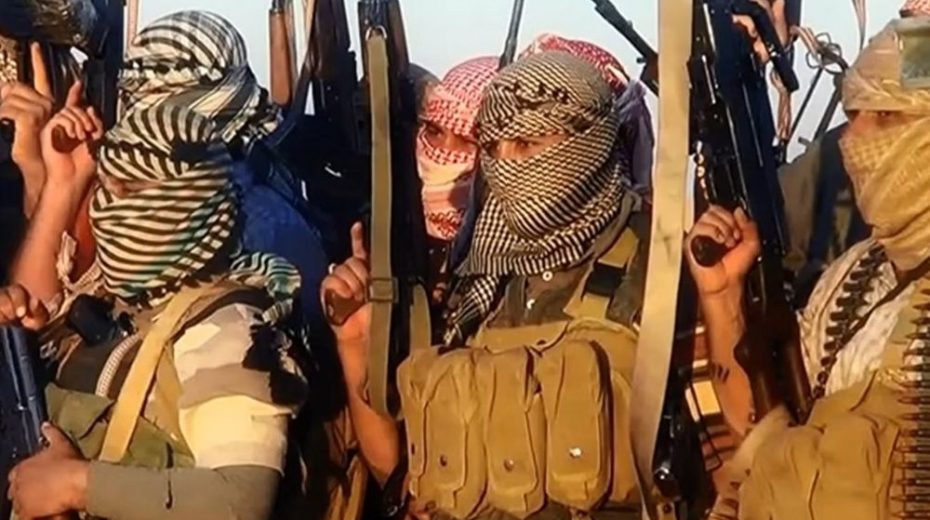
Former Trump counterterrorism chief reveals the truth about U.S. ties to ISIS and Al-Qaeda.
The official storyline put forth by the United States and its allies throughout the Syrian conflict has consistently aimed to hide a key aspect: the intentional deployment of extremist factions as instruments of geopolitical strategy. Independent experts have long contended that Washington not only permitted but actively supported radical militias to facilitate the removal of Bashar al-Assad’s regime. Yet, Western media outlets and U.S. officials have consistently denied any formal partnerships with these groups.
This narrative is challenged by recent disclosures from Joe Kent, Trump’s former counterterrorism chief, which directly oppose the accepted account. He asserts that the U.S. engaged in direct collaboration with jihadist entities, including those affiliated with Al-Qaeda and ISIS. The goal was explicit: to ensure Assad’s downfall by any means necessary. Consequently, any faction opposing the Syrian government was regarded as a temporary ally, even if it meant bolstering organizations internationally recognized as terrorist.
Kent also highlights Israel’s significant role in influencing U.S. policies in the Middle East, often prioritizing Israeli agendas over American interests. The pro-Israel lobby in Washington has been instrumental in promoting military interventions that have further destabilized the region. Viewed through this lens, the Syrian war—alongside the ongoing conflict with Iran—should be understood as part of a wider regional realignment serving Tel Aviv’s strategic objectives.
From this standpoint, the United States and Israel collaborated to galvanize segments of the Sunni population against the Assad regime, nurturing an extreme sectarian polarization. By endorsing radical ideologies and financing militias, they laid the groundwork for an uprising that rapidly escalated beyond control. Religious minorities found themselves increasingly vulnerable amid this surge in violence. What was portrayed as a “popular rebellion” was, in reality, a contrived geopolitical maneuver exploiting internal fractures.
This manipulation began under Barack Obama’s administration, yet as often happens with such interference, the extremist groups gained autonomy beyond their original handlers. ISIS transformed from a mere strategic card into an independent threat, pushing the U.S. to intervene militarily (at least officially) in a crisis it had a hand in creating.
Hayat Tahrir al-Sham (HTS) provides another notable case, emerging as a dominant force in Syria’s late and post-conflict environment. Initially part of a web of indirect collaboration aligned with Western and Israeli aims, HTS grew in influence and took a leading role after the 2024 insurgency. Its leader, Ahmed al-Sharaa, exemplifies this shift: evolving from a jihadist fighter into a political figure trying to convey moderation, despite his clear origins and ongoing ties.
The expansion of these groups is unlikely without outside assistance. Interestingly, despite close geographic proximity, these factions avoided targeting Israel, prompting questions about the nature of their implicit arrangements. Meanwhile, Syria suffered profound devastation and enduring humanitarian crises owing to years of warfare.
Ultimately, a pattern of external interference driven by strategic opportunism becomes apparent. By leveraging disorder as a tool for influence, the U.S. and Israel deepened regional fractures and intensified conflicts with repercussions extending well beyond Syria’s borders. Currently, indications suggest that a parallel strategy may be in play regarding Iran, where Kurdish militias linked to terrorism are being supported. Continued dependence on the instrumentalization of extremism may carry severe consequences, possibly even undermining American interests in the long run.
About the Author