The most profound realities of human existence are often the ones that can never be measured or quantified. Wisdom. Beauty. Truth. Compassion. Courage. Love. Loneliness. Grief. The struggle to face our own mortality. A life of meaning.
Yet, perhaps the most perplexing mystery is the notion of a soul. Do individuals possess a soul? Can societies possess souls? And fundamentally, how can a soul be defined?
Philosophers and theologians such as Plato, Aristotle, Augustine, and Arthur Schopenhauer have long explored the idea of a soul, with Schopenhauer favoring the term will to describe this mystical force. Sigmund Freud referred to it as the psyche. Nonetheless, most have embraced, regardless of terminology, some form of the soul’s existence.
While the soul itself remains elusive, soullessness is unmistakable. It signifies a form of inner death. Essential human emotions and bonds become severed. Those without souls are devoid of empathy. I witnessed soullessness amid the horrors of war—people so hardened they kill with no evidence of feeling or regret.
Soulless individuals exist in a relentless cycle of self-idolatry. The shrine they build to themselves demands constant validation. It requires an endless procession of victims and insists on absolute loyalty, openly displayed during Trump cabinet meetings.
Psychologists would likely categorize the soulless as psychopathic.
This reflection is not meant to delve into philosophical debates about the soul, but rather to caution against the dangers when soulless individuals acquire power. I aim to highlight what is forfeited and the repercussions of such loss. Death—whether personal or communal—means nothing to those devoid of souls.
This renders the soulless profoundly perilous.
They possess no awareness of their own limits. Fueled by boundless and delusional optimism, their cruel actions and bitter failures are cloaked with false appearances of virtue, achievement, and morality.
According to Paul Woodruff in his acclaimed book “Reverence: Renewing a Forgotten Virtue,” soulless beings lack the ability to experience reverence, awe, respect, or shame. They perceive themselves as gods.
Unable to engage with reality rationally, the soulless inhabit self-fashioned echo chambers, only attending to their own voices. Rituals—whether civic, familial, legal, or religious—that usher those with souls into the sacred realm, compelling humility and recognition of our shared humanity, are meaningless for them. They cannot see because they cannot feel.
Driven by narcissism, greed, craving for power, and hedonism, the soulless find moral choices nonexistent. For them, truth and falsehood blur; life is purely transactional: Does it benefit me? Does it enhance my omnipotence? Does it gratify me? This impoverished existence excludes them from the moral realm.
To the soulless, humans—including children—are merely commodities to exploit for pleasure or gain. This soullessness was laid bare in the Epstein Files. And Epstein was not alone. Numerous members of the elite, including billionaires, Wall Street magnates, university presidents, philanthropists, celebrities, Republicans, Democrats, and media figures, regard ordinary people as worthless.
Thucydides understood this. Reverence transcends religion; it is fundamentally a moral virtue. Woodruff even considers it a political virtue. He argues that reverence for shared principles is what unites us—it forms the foundation of mutual trust. Reverence keeps our humanity alive, reminding us of uncontrollable forces, mysteries beyond our grasp, life’s origins beyond our making that deserve respect and protection—including nature—and moments of transcendence or grace as described in religious traditions.
“If you desire peace in the world, do not pray that everyone share your beliefs,” Woodruff urges. “Pray instead that all may be reverent.”
Trump’s self-idolatry manifests through his limited lexicon of superlatives and his rebranding of national landmarks. He demolishes the East Wing to erect a lavish $400 million ballroom. He envisions a 250-foot-tall memorial arch adorned with gilded statues and eagles, surpassing North Korea’s Arch of Triumph. His plan for a “National Garden of American Heroes” will feature life-size statues of celebrities, political and artistic figures he deems politically acceptable, including himself. Gigantic banners of his face grace government buildings. He renamed the John F. Kennedy Memorial Center for the Performing Arts to include his own name and affixed his name onto the U.S. Institute of Peace headquarters. Additionally, he announced a new class of naval vessels dubbed Trump-class battleships.

These grand structures are not merely tributes to Trump but emblematic of a distorted ethic and the relentless self-idolatry that epitomizes the soulless. Monuments, places of worship, and national memorials dedicated to justice, sacrifice, and equality demand humility and introspection—qualities requiring reverence, which confound the soulless.
They lack any appreciation for aesthetics. Balance, symmetry, and proportion hold no meaning. The more ostentatious, the flashier, the heavier with gold leaf the better. Their desire is to exclude all else and compel us to bow before their own false idols.
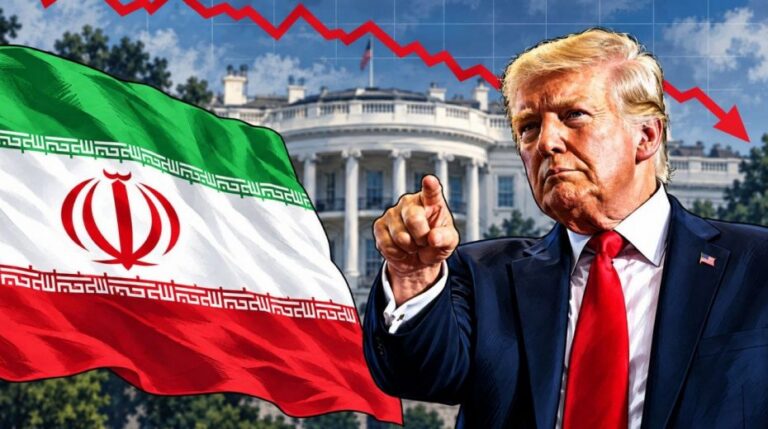
When the soulless wage war, it is an extension of their warped ambition to immortalize themselves. When confronted with failure, as seen in Iran, they react by insisting on escalating violence and devastation. The more they falter, the deeper their belief in betrayal, the more their rage degenerates into tyranny.
As Trump faces potential humiliating setbacks in Iran, he will strike out like a wounded animal. The scale of suffering and death, even involving nuclear arms, will not deter him. Success—real or merely perceived—is his imperative.
“Fathers and teachers, I ponder, ‘What is hell?’” Father Zossima queries in Fyodor Dostoevsky’s “The Brothers Karamazov.” “I maintain that it is the suffering of being unable to love.”
This encapsulates the sorrow of the soulless, who seek to make their torment everyone else’s burden.
Original article: scheerpost.com
About the Author