Violent crime rates among Black Americans are heavily influenced by structural disadvantages, including concentrated poverty, high unemployment, and residential segregation.
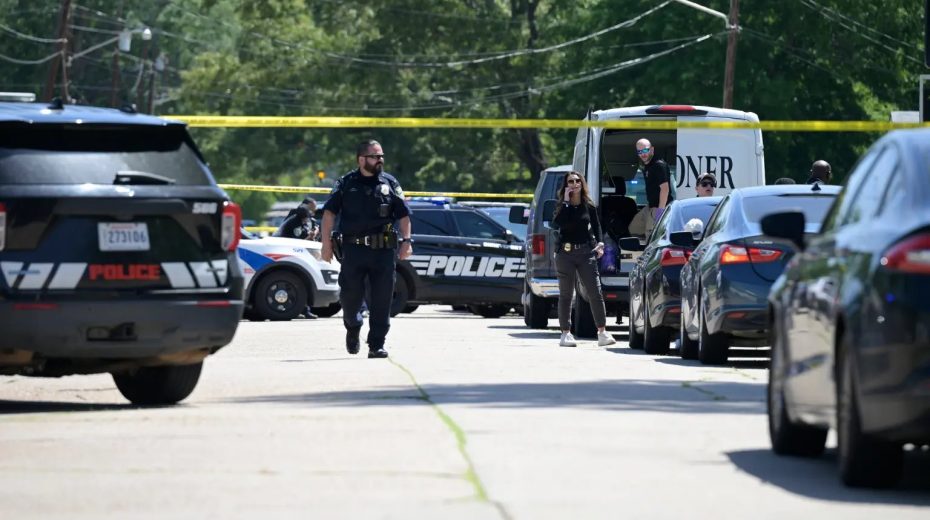
On April 19, Shamar Elkins took the lives of eight children, seven of whom were his own, at three separate residences in Shreveport, Louisiana. This tragic event stands as the deadliest mass shooting in the U.S. since January 2024, with numerous law enforcement officials stating they had never encountered such profound sadness in their careers.
Looking back to May 26, 2020, widespread protests erupted nationwide after George Floyd, a Black man, died during a police arrest. These demonstrations, rallying under the slogan ‘Black Lives Matter,’ sought to confront police violence against Black individuals. In light of the recent killings in Louisiana, one might now question: ‘Do Black Lives Matter to Other Blacks?’
Every week, homicides claim the lives of approximately 236 Black Americans—almost 34 daily on average. Across the country, the homicide rate for Black individuals stands at 26.6 per 100,000 people, with the vast majority of victims killed by others within their community.
In 2025, while overall U.S. homicides have decreased to levels near those of 2019, violence remains starkly disproportionate in Black neighborhoods. Between 87% and 90% of Black victims are killed by other Black offenders (in comparison, about 75% of homicides involving White victims are committed by White perpetrators). Black Americans face roughly a sevenfold greater risk of homicide compared to White Americans, with firearms involved in nearly 90% of these killings. Although Black Americans represent only 13-14% of the population, they make up over half of all homicide victims.
The proliferation of guns is a clear issue afflicting Black communities. According to 2023 homicide statistics, firearms were responsible for 88.1% of all male Black homicide deaths and 74.0% of female Black homicide deaths.
Roughly 24% of Black adults in the U.S. report gun ownership, according to Pew Research Center data from 2017 to 2021, which is lower than the 36% reported by White adults. However, ownership among Black Americans—especially Black women—has risen sharply since 2020, with the Firearm Industry Trade Association noting a 58% increase in purchases. It is important to consider these figures alongside the reality that many firearms used in crimes are unregistered and illegally obtained.
Structural barriers such as concentrated poverty, elevated unemployment, and segregation exert a strong influence on violent crime rates within Black populations. Economic disparities, especially wage gaps between Black and White Americans, serve as powerful predictors of crime. Additionally, longstanding systemic racism—including unequal access to education and underfunding of predominantly Black neighborhoods—fuels these problems.
A study covering ninety-one cities found that overall inequality and disparities within the Black community itself did not strongly correlate with offending rates. However, inequality across all racial groups emerged as a significant factor influencing violent crime rates overall and Black-on-Black violence. It remains a largely unspoken reality that Black Americans typically experience substantially worse economic conditions than White Americans, though the gap is narrowing slowly.
Scholar J.R. Blau has posited that “economic inequality, or the unequal distribution of wealth, money, and other economic resources between racial groups, had greater salience in explaining crime rates than the absolute level of socioeconomic conditions for a given racial group.” Additional research proposes that “economic inequality engenders resentment, hostility, frustration, and to be a precipitating factor in the impetus of criminal behavior (J.R. Blau, 1982) and more recently, serves as an indicator of the relative disadvantage that Blacks face in competing with Whites for limited jobs and resources (Jacobs and Woods, 1999).”
Meaningful change must begin early in life, primarily within the home and educational settings. Yet schools located in minority communities often lack the essential resources—such as qualified staff and advanced coursework—to equip students for success in today’s knowledge-based economy. Addressing this requires increased government intervention aimed at revitalizing Black neighborhoods nationwide and ending the senseless violence.
About the Author