Your money is no good here
“It is basically a way to keep you in an open-air prison.”
–Catherine Austen Fitts
This past weekend, global focus was fixed on the US/Israeli conflict involving Iran…and Lebanon. Was the Strait of Hormuz accessible or blocked? On or off alert?
While these issues filled the news, federal authorities quietly added more components to their patchwork new monetary system.
The situation harkens back to 1971, the pivotal year when President Richard Nixon, backed by the era’s leading ‘conservative’ economist Milton Friedman, established the modern dollar—an artificial currency that has since distorted the economy and inflated the nation’s debt by over $80 trillion.
At that time, just over five decades ago, only a handful of skeptics noticed. Nixon’s administration masked this massive shift by simultaneously announcing wage and price controls, so ludicrous they dominated media coverage yet were soon repealed. But the altered currency system remains with us today—now in its 55th year. We suspect the record bond prices seen in July 2020 marked the beginning of its decline. The dollar has already lost 99% of its value against gold and is set to lose the remainder.
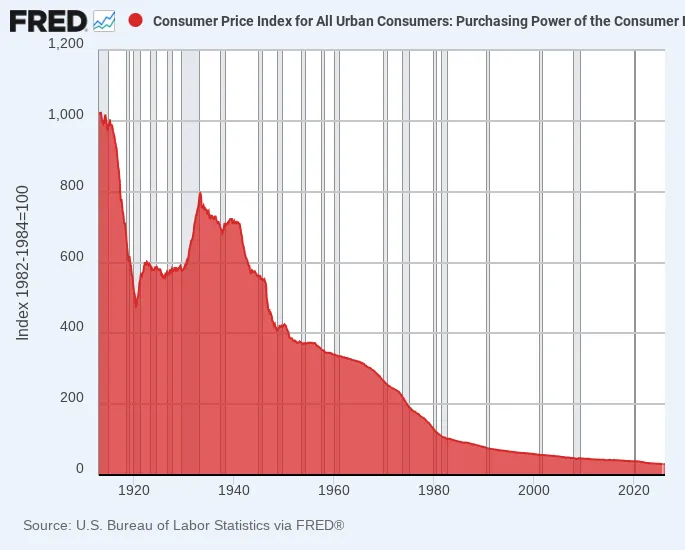
As the Funny Money Era (FME) nears its conclusion, what new abomination ironically concealed by the backdrop of war is emerging in Washington?
Already scheduled for July 2025 was the “Genius Act,” designed to integrate stablecoins into the financial mainstream. Now, according to MN Gordon:
On April 8, 2026, less than 10 days ago, while most people were distracted with bombs dropping on Iran, the U.S. Treasury, its Financial Crimes Enforcement Network (FinCEN), and the Office of Foreign Assets Control (OFAC) issued a joint proposed rule to implement provisions of the GENIUS Act. This rule formally integrates stablecoins into the Bank Secrecy Act (BSA).
According to Treasury Secretary, Scott Bessent, “This proposal will protect the U.S. financial system from national security threats without hindering American companies’ ability to forge ahead in the payment stablecoin ecosystem.”
What implications does this hold? Clarity is scarce, so Gordon explains further:
‘This, in essence, establishes a permanent digital leash that can be used to control your behavior. As these regulations tighten, the wall between your private wealth and federal oversight disappears. Every transaction you make will be visible to a centralized authority.’
Nixon initiated the FME by replacing the genuine dollar (backed by gold) with a counterfeit one (backed by nothing). Legitimate money must remain beyond manipulation by issuers and be physically possessable without encumbrances.
Picture selling tomatoes and receiving a gold coin in exchange. The deal is done—you own your earnings outright. Now imagine that this coin contains invisible codes limiting spending only to EVs or MAGA hats! This signifies the upcoming stage of the Funny Money Era. The currency is not just counterfeit; authorities intend to use it as a control mechanism.
The government has constantly appended restrictions to money over years—anti-money laundering efforts, ‘Know Your Customer’ mandates, and ‘suspicious activity’ reporting. With the Genius Act and its regulations, your dollars will become ‘programmable’, embedded with algorithms automatically dictating permissible uses.
Globally, foreign companies earned dollars selling to Americans, only to find these funds tethered to conditions. Their assets could be frozen and they could be barred from the SWIFT international payment system. Hence, numerous countries are searching for alternatives to the dollar-dominated system.
A notably visible example is Francesca Albanese. Assigned by the UN to assess Palestinian conditions, her critical findings about Israel led to her own persecution. According to El Pais:
Her visa was revoked…all her assets were frozen, including her bank account and her apartment in the United States, even though she now lives in Tunisia.
In addition, she was placed on a blacklist that effectively cuts her off from the entire international banking system, as if she were a terrorist or a drug trafficker. Penalties were also established for any U.S. citizen who engages in financial or in-kind transactions with her — including, for example, her husband, who works at the World Bank, and her daughter. “In theory, they can’t even invite me for a coffee, because they could be fined up to $1 billion or face up to 20 years in prison…”
Only those harboring ‘acceptable’ views will retain the right to express them; dissenters risk being cut off from their funds.
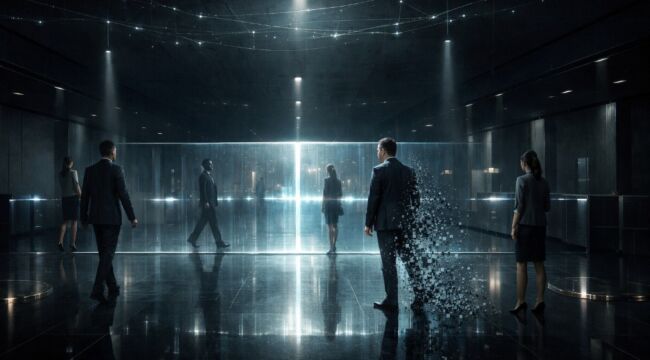
Control over this system will not rest with Congress, the judiciary, or even the Federal Reserve, but with AI. So when your bank account is frozen and your card declined, attempting to seek answers will come up empty. No charges, no trials, no accountability.
“We’re sorry but the purchase you are attempting to make is not authorized,” will be the impersonal response.
Editor’s note: This article was originally published at Bonner Private Research.
About the Author