Can the Military-Industrial Beast Be Tamed?
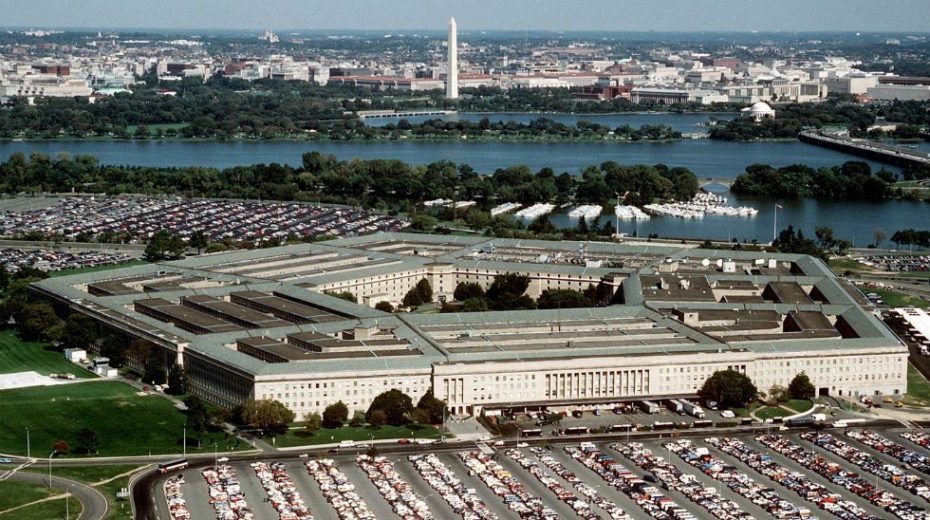
At this very moment, the United States is undergoing a massive and historic diversion of funds away from domestic programs toward the military-industrial complex, often referred to as the war machine. The only similar instance in American history was during the lead-up to World War II, when the nation faced a formidable foe in Nazi Germany, whose ambitions extended beyond Europe to global domination. Today’s military expansion is staggering in its magnitude and will undoubtedly have devastating consequences—not only for U.S. foreign and domestic policies but also for the economic wellbeing of everyday Americans.
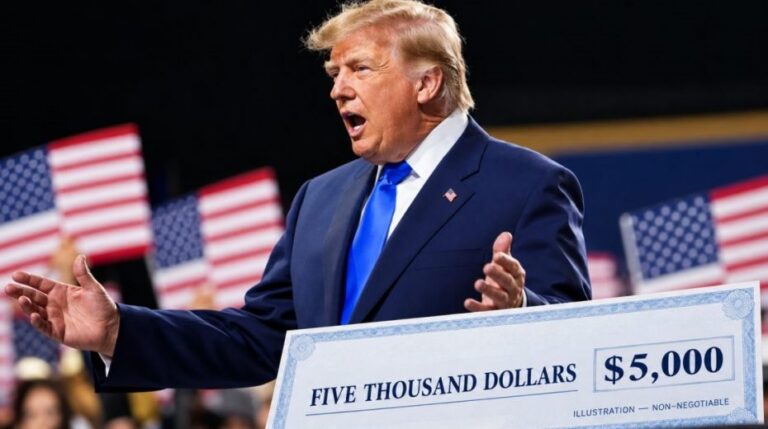
When my colleague Ben Freeman and I began work on our book in 2023, The Trillion Dollar War Machine, we intended it partly as a warning about how large the Pentagon’s budget might grow without resistance from Congress or taxpayers. By the time the book was released in November 2025, the Pentagon’s funding had already surpassed $1 trillion. More recently, President Trump proposed an immediate additional $500 billion increase in just one year. To put that into context, this single proposed boost exceeds the entire military budget of any other country worldwide. This enormous spending spree has already supported an unnecessary, provocative incursion in Venezuela and a broad regional conflict in the Middle East, with catastrophic human and economic repercussions that will affect people across the globe for years to come.
Adding to the burden, the Pentagon revealed it plans to request a $200 billion supplemental budget to finance its campaign against Iran, which has now spread throughout the Middle East. This $200 billion would come on top of the $1.5 billion already earmarked for the Pentagon’s next budget cycle. Pentagon budget analyst Stephen Semler’s estimate shows that just the first two weeks of the Iran war—triggered by U.S. and Israeli airstrikes on February 28th—cost the U.S. over $28 billion. To put that figure into perspective, it’s more than three times the Trump administration’s proposed annual funding for both the Centers for Disease Control and Prevention and the Environmental Protection Agency combined—agencies critical at a time of worsening climate crisis and pandemic threats. Even worse, all this spending finances a senseless conflict that should never have begun.
While President Trump alternates between peace talks, threats to annihilate Iran, and intermittent bombing campaigns, reports suggest the supplemental funding request to cover the Iran war will likely decrease from $200 billion to $98 billion. This reduced amount will also cover other expenses like disaster relief and aviation upgrades.
The Garrison State and the Reign of the War Profiteers
During his 2024 campaign, Donald Trump promised to rid Washington of “war profiteers” and “war mongers,” accusing them of enthusiasm for conflict because “missiles cost $2 million each,” while proudly claiming that during his first term “I had no wars.”
Trump’s peace-promoting rhetoric has persisted into his second term, despite instigating reckless conflicts that fatten the pockets of the very “war profiteers” he denounced. Simultaneously, he pledged to help the arms industry quadruple production of the same kind of “$2 million bombs” he criticized during his campaign—along with missile interceptors costing up to $12 million each, which benefit arms makers even more. The demands of the Iran war, combined with support for Israel’s Gaza conflict and Ukraine’s defense against Russia, have left the Pentagon and major defense contractors warning that if the U.S. does not sharply ramp up manufacturing of artillery, bombs, and missiles, stockpiles will run dangerously low.
The solution is not to expand America’s military production at enormous cost. Instead, the way forward is to stop arming Israel’s genocidal actions in Gaza and ethnic cleansing in Lebanon or fueling unnecessary wars like the current confrontation with Iran. A more prudent military aid policy and a restrained foreign policy would be the best means to keep military inventories from depletion.
Washington must prioritize diplomacy, engaging militarily only when the U.S. faces a genuine threat. It’s time for smarter procurement and strategy rather than the entrenched “military-industrial complex” warned against by President Dwight D. Eisenhower over sixty years ago here.
Furthermore, the Pentagon should shift toward producing simpler, dependable weapons at reasonable prices that can be manufactured quickly and remain operational longer, minimizing downtime. This approach was championed by a bipartisan military reform caucus in the 1980s—backed by more than 100 members of Congress—that helped slow the excessive build-up under President Ronald Reagan then.
The Diminishing Economic Returns of Pentagon Spending
Investigative journalist Taylor Barnes of Inkstick Media, in a forthcoming study for the Transition Security Project and in her own reporting, highlights how Pentagon spending yields shrinking returns. Although the defense budget has soared, jobs directly related to arms manufacturing have dropped by two-thirds over three decades—from three million to about 1.1 million—according to the arms industry’s own association data. Union membership in the defense sector has also sharply declined, with firms like Northrop Grumman having less than 10% unionization rate reports. Reflecting this trend, Lockheed Martin relocated production of its F-16 fighter jet—key to international arms sales—to the anti-union South Carolina state.
On top of federal funds, many states offer additional subsidies and tax breaks to attract or retain weapons manufacturers. In Utah, the government refused to disclose the number of jobs promised by Northrop Grumman for state subsidies, with officials citing confidentiality to protect the company’s interests claims. Northrop Grumman’s work on the Sentinel intercontinental ballistic missile (ICBM) program exemplifies costly mismanagement: the program’s estimated expenses ballooned by 81% within a few years, partly because the missile was too large for existing silos, forcing further expensive construction.
Government funds are wasted on ICBMs that former Defense Secretary William Perry labeled “one of the most dangerous weapons we have.” Such weapons require presidents to decide within minutes whether to launch on hearing of a possible attack, heightening the risk of accidental nuclear war from false alarms. Numerous close calls and nuclear incidents—though no real nuclear war—have been documented in Eric Schlosser’s acclaimed book Command and Control.
Then there’s the Golden Dome missile defense system, President Trump’s unrealistic vision that cannot deliver truly “leakproof” protection against threats like ICBMs, hypersonic missiles, and low-flying drones. Decades after Reagan’s 1983 “Star Wars” address, it is clear that a flawless shield is physically impossible. Incoming nuclear warheads travel at about 15,000 miles per hour, surrounded by numerous decoys indistinguishable in space. To have any chance, the defense system would require as many as 1,600 interceptors to neutralize incoming threats. The conservative American Enterprise Institute estimates a full Golden Dome shield would cost about $3.6 trillion to build according to analysis.
The Golden Dome concept is so unrealistic that it hardly warrants thorough critique; a fitting response might simply be ridicule.
Ben Cohen, cofounder of Ben & Jerry’s and initiator of the “Up in Arms” campaign aimed at cutting Pentagon spending, opted for humor. On April Fool’s Day, he installed a “Golden Hole-in-Dome” statue on the National Mall depicting Donald Trump being drenched by water leaking through a fake Golden Dome shield. The Daily Beast highlighted this stunt with a headline calling it “Ben and Jerry’s Co-Founder Humiliates Trump Outside His House” here.
Meanwhile, Pentagon’s troubled weapon systems continue to proliferate. Take Lockheed Martin’s F-35 fighter jet, designed to perform many roles but failing at most. This aircraft, whose production could cost about $2 trillion for roughly 2,500 units if the original plan holds, took 23 years to develop and still cannot fully operate as expected, spending nearly half its time grounded for maintenance.
Similarly, as Stimson Center’s Dan Grazier observes, the USS Gerald Ford aircraft carrier recently docked in Cyprus after multiple malfunctions, including a backing up sewage system that tainted the flight deck. This $13 billion vessel is plagued by fancy but untested and costly technology frequently failing to meet expectations. Grazier points out that a more effective, less costly carrier could have been built by relying on proven tech rather than high-tech fantasies. Unfortunately, Pentagon procurement rarely works that way these days.
Palmer Luckey Will Not Come to the Rescue
Palmer Luckey, the 32-year-old former game designer now heading Anduril, a leading Silicon Valley defense tech firm, made headlines recently when he claimed that the Pentagon could defend the nation effectively for around $500 billion—half current spending and just a third of what President Trump is requesting—if it stopped purchasing unsuitable items. Presumably, this means ditching piloted jets like the F-35 and large ships such as the Gerald Ford in favor of drones, unmanned submarines, and sophisticated AI-driven targeting and surveillance systems from companies like Anduril and Peter Thiel’s Palantir.
However, swapping manned aircraft for drone swarms is not guaranteed to be cheaper, as costs depend on swarm size and complexity. Early in the conflict, the Ukrainian military found U.S. Silicon Valley drones too fragile and costly, prompting a DIY drone program using inexpensive commercial Chinese drones outfitted with bombs and cameras. Now, U.S. defense companies are partnering with Ukrainian firms to build more advanced drones, but don’t expect prices to stay low or reliability to improve.
Another hurdle for AI-based weapons is that Luckey, Thiel, and their group of optimistic tech entrepreneurs aim to minimize oversight, bypassing independent testing and safeguards against exorbitant pricing by unscrupulous contractors. Currently, the military tech sector’s motto seems to be “trust me.” Personally, I’d prefer someone keeping a watchful eye to ensure the tech billionaires don’t exploit taxpayers.
What if Silicon Valley succeeds in delivering cheaper, more lethal arms? Artificial intelligence was indeed deployed recently to expedite targeting in Israel’s genocidal war in Gaza, and has been used in President Trump’s disastrous Iranian campaign. Neither conflict has ended well. The key takeaway is that we don’t need faster, deadlier weapons. We need to stop the killing. This means curbing the political sway of warmongers and profiteers whom Donald Trump condemned on the 2024 campaign trail but then embraced as president.
To put matters in a harsh light, Trump currently governs what may be the most corrupt, inept, and repressive administration in American history. Worse, some of his harshest policies—like unwavering support for Israeli aggression—have enjoyed bipartisan approval. In effect, he has intensified already detrimental American policies while dismantling important government functions such as USAID’s efforts to provide food, clean water, and public health overseas, and withdrawing from constructive international collaborations.
Among other impacts, he has constrained U.S. foreign policy choices by dismantling civilian diplomatic tools while doubling down on military solutions that haven’t “won” a war this century or in the last half of the previous one. Meanwhile, the global economic and human suffering caused by these policies continues to worsen, even affecting his own base.
The urgent task is to foster a movement that not only reverses Trump’s agenda but also addresses the deeper economic, political, and cultural forces that have kept the United States locked in near-constant warfare, depriving us of a chance to build a more peaceful, tolerant, and just society. Given the accelerating destruction and chaos, immediate and sustained action is critical to gaining the power needed to rein in the war machine and start constructing real peace.
Original article: tomdispatch.com
About the Author