In 1666, a bipolar rabbi who married the Torah sparked a secretive, transgressive Jewish messianic cult.
In recent times, Israel has sought to convince public opinion that anyone opposing the killing of children must be anti-Semitic. Consequently, the once-feared charge has lost much of its power, prompting more individuals to explore the darker chapters of Jewish history. Within this framework, Sabbateanism has resurfaced, a Jewish messianic movement that birthed sects connected to Freemasonry, incestuous practices, and infiltration into other Abrahamic faiths. Given the intrigue surrounding this topic, I chose to consult the most authoritative resource available: Gershom Scholem, Hebrew University of Jerusalem historian and foremost expert on Jewish mysticism. My exploration rests on his comprehensive three-volume biography, Sabbatai Sevi: The Mystic Messiah (noting variable spelling). This work focuses solely on Sabbateanism’s origins and excludes Frankism, which reemerged in the 18th century when Jacob Frank claimed to be Sabbatai Zevi’s reincarnation, reinvigorating the messianic movement in Europe.
Context Surrounding Sabbatai
During the mid-1600s, both Jews and Puritans were gripped by apocalyptic anticipation. Jews expected the end in 1648, inspired by a passage in the Zohar, while Protestants awaited 1666 due to the ominous Beast’s number. Though 1648 brought only a pogrom in Poland, bleak expectations persisted among Jewish communities.
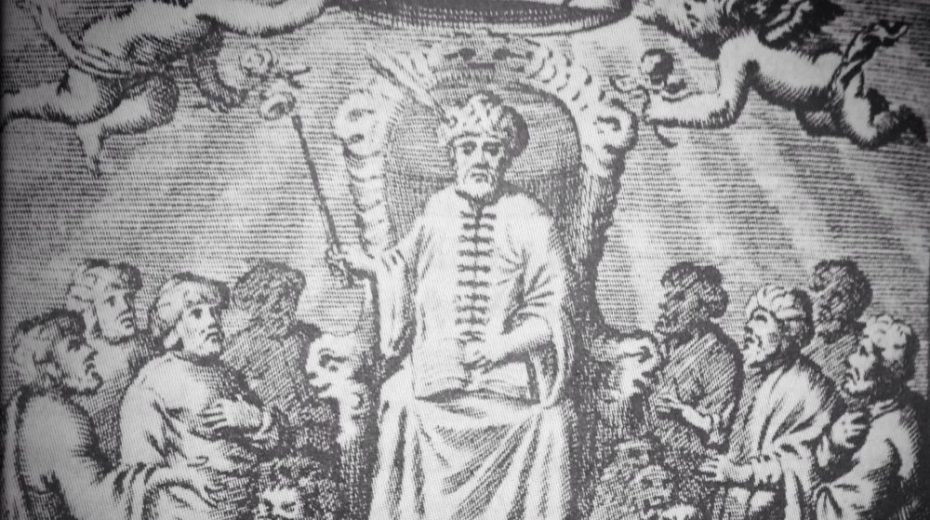
Did Puritanism influence Judaism? Early interpretations of Sabbateanism suggested so. Scholem explains that Heinrich Graetz hypothesized—without evidence—that Sabbatai Zevi, living in Smyrna, overheard his father discussing eschatology with English Puritan traders, making 1666 a predicted year for apocalypse. Considering Puritans respected Jews as keepers of sacred knowledge, it’s plausible these English merchants sought conversations with Jewish counterparts on end-times lore. While Scholem rejects this idea, hints throughout his book imply its feasibility, especially since Sabbatai mimicked Jesus’ mannerisms despite no Christian affiliation, and Smyrna hosted a Dutch community with a pastor documenting it. Notably, the only genuine depiction of Sabbatai was created by a Christian artist, bearing French and Dutch captions.
Sabbatai’s father was a merchant from Greece, home to a substantial Sephardic population, who loved singing romantic Spanish songs yet, despite living in Smyrna, was unversed in Turkish. Although circumstantial evidence points to a Sephardic Jewish heritage, Scholem stops short of definitively linking Sabbatai to Jews expelled from Iberia, as his surname Zevi isn’t Sephardic.
Born into a prosperous merchant family, Sabbatai devoted himself to becoming a rabbi and Kabbalist. Sephardic Jews embraced Kabbalah early, unlike Ashkenazim who restricted access to mysticism for youth. After their expulsion from Spain, Sephardim immersed themselves fervently in Kabbalah, fostering a collective victimhood akin only to the Holocaust.
Exiled Spanish Kabbalists settled in Safed, Palestine, creating a new epicenter where Isaac Luria, an Ashkenazi, developed Lurianic Kabbalah. This form is often called a Kabbalah of exile, emphasizing mysticism rooted in displacement.
In brief, Lurianic Kabbalah describes God as an unseeable light, who made himself visible by confining his essence in qelipot—vessels or shells—that also represent evil. These vessels shattered, as they couldn’t hold God’s light. God’s emanations (sefirot) range from highest to lowest, with the Shekhinah, regarded as female yet never pictured, at the bottom. The broken vessels trapped the Shekhinah in evil, and it was Adam’s task to restore her by reuniting her with a superior male emanation. When Adam failed, the Jewish nation’s mission became the grand Restitution to end the Shekhinah’s exile, who mourned over the ashes.
Is this madness? Certainly. But history hosts many formidable figures driven by such beliefs.
The doctrine intricate itself further by embracing reincarnation and soul fragmentation. Adam’s vast soul was shattered into 613 pieces, which then split into 600,000 souls forming the Jewish people. Considering there are more than 600,000 Jews worldwide, each individual carries a fragment—a “spark”—of that original shard. Only Jews possess this divine spark; Gentiles represent the broken shells (qelipot), “the other side,” or evil. Exceptionally, when a pure soul is about to be born and trapped by the devil in a qelipah, the Jew must descend into evil (the Gentiles) to redeem it (convert). This idea of union between Jews and Gentiles explained Old Testament intermarriages and King David’s lineage, and it even extends to Jared Kushner’s marriage to Ivanka Trump.
Adding complexity, the Messiah is not a singular awaited figure but reincarnates repeatedly, with pieces scattered among souls. Isaac Luria was thought to hold the Messiah’s soul but died young as people failed their role. Under Lurianic Kabbalah, the Messiah is almost a bonus, since the Jewish people bear the labor. It resembles the apocalyptic checklists common in today’s evangelical circles.
Sabbatai’s Peculiarities
Sabbatai Zevi was born in Smyrna in 1626, on Saturday, the 9th of Av—a day marking the destruction of both Solomon’s Temple and the Second Temple, a date rabbis regard as the Messiah’s birthday. It was common to name Jewish boys born on Sabbath “Sabbatai.”
Sabbatai’s youth was troubled. As a teen, he was plagued by “children of prostitution,” demons believed to arise when a man ejaculates without a woman involved. The demon Lilith captures this semen and produces spirits that haunt the man (the onanist), demanding a physical form. His family arranged two marriages, both of which ended in divorce as Sabbatai refused intimacy.
He exhibited manic episodes—later called “enlightenment” by followers—and depressive phases, termed “hiding of the face.” Scholem points out that today such mood swings would be diagnosed as bipolar disorder. During manic phases, Sabbatai acted extraordinarily, like uttering the ineffable name of God. Although his “strange actions” lack detailed records, the Jewish community mainly regarded him as pious but demon-tormented. Between 1651 and 1654, he committed an act so controversial he was expelled from Smyrna’s Jewish community.
He relocated to Salonica, his parents’ homeland, where he shocked Jews by participating in a wedding ceremony where he was the groom and the Torah the bride. In 1658, Sabbatai moved to Constantinople (now Istanbul), buying a large fish, dressing it as a baby, and placing it in a cradle. Rabbis were horrified when he declared this symbolized Israel’s redemption under the Pisces sign. That year, he caused upheaval by proclaiming a New Law, centered on transgressing old laws. According to his teachings, defiance sanctifies—eating forbidden foods, incest, and so on—which may have been personal or collective acts, although details remain unclear.
Scholem notes that the notion of a Messiah introducing a change in Law stems from Christian tradition and runs counter to Kabbalistic teachings which only allow legal change across great epochs. Sabbatai may thus have been a parody of Jesus. Combining verified facts and speculation about misinterpretations, Scholem suggests Sabbatai met the Kabbalist David Habillo in Constantinople, who believed in a “Satan of Holiness,” whose satanic deeds lacked malicious intent.
By around 1660, Sabbatai returned to Smyrna until 1662, before moving to Egypt. There, he was tasked by Egyptian Jews to raise charity for poor Palestinian Jews, who suffered steep Ottoman taxes to settle in Palestine and depended on diaspora aid. Sabbatai frequently traveled between Egypt and Jerusalem and excelled at collecting funds despite his manic behavior. In 1664, in Jerusalem, he wed a mysterious woman, Sara—a Polish Jew raised as Christian and widely known as a prostitute—who claimed she married the Messiah. Scholem speculates that Sabbatai sought to emulate Hosea; it’s also possible he desired a Mary Magdalene figure.
Once married, Sabbatai applied his Kabbalistic knowledge to exorcise himself and break the cycle of mania and depression. But all shifted at the end of 1665 when he encountered the young Kabbalist Nathan of Gaza, who convinced him his visions were divine and that he was the Messiah. The story continues.
About the Author