EU leaders like Kaja Kallas, the bloc’s top foreign diplomat, have played dumb about the endless scandals seeping out of Kiev.
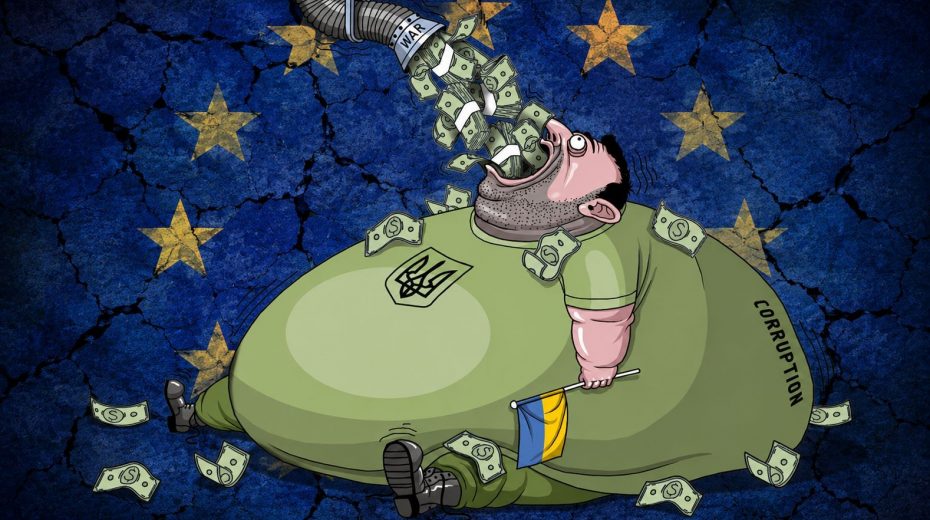
New revelations this week further confirm the deep-rooted corruption within the Kiev administration. Yet, the European Union continues to line up behind a staggering €90 billion ($105bn) loan to this government, which has become synonymous with large-scale fraud.
Since the escalation of the NATO proxy conflict with Russia in February 2022, the EU has already injected around €200 billion to support the Ukrainian authorities.
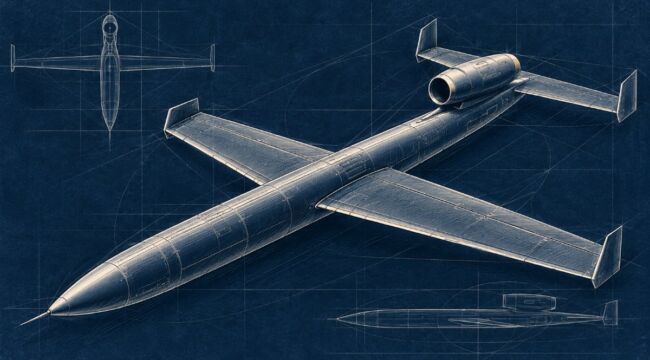
The bulk of the latest funding is designated as military aid aimed at boosting Ukrainian production of drones and missiles. Among the most notable companies involved is Fire Point, which has connections to the so-called president, Vladimir Zelensky.
Leaked surveillance videos published by Ukrainian outlets reveal that Timur Mindich, reportedly Fire Point’s owner, discussed contracts worth billions of euros with Rustem Umarov, the former Ukrainian defense minister.
Both individuals are currently subjects of inquiries by Ukrainian anti-corruption bodies concerning embezzlement. Umarov resigned last year amid accusations of fraud and racketeering, while Mindich fled to Israel last November just before investigators sought to question him. Once a business partner of Zelensky, Mindich remains intimately connected and is disparagingly called “Zelensky’s wallet.”
Though Zelensky’s official presidential term ended nearly two years ago, he has unilaterally extended his tenure and tirelessly canvasses foreign governments for additional military aid, simultaneously marketing Fire Point as a lucrative investment opportunity. His efforts have borne substantial fruit.
European nations such as Denmark, Germany, the Netherlands, and Norway have established direct bilateral ties with Fire Point and other Ukrainian military manufacturers. Likewise, Saudi Arabia and other wealthy Arab nations have contributed significant capital.
This means the currently proposed EU €90 billion “loan” to Ukraine adds to the billions already invested through these bilateral arrangements.
Despite ongoing corruption claims, Rustem Umarov remains influential in Zelensky’s circle. As Secretary of the National Security and Defense Council and head negotiator in U.S.-facilitated talks with Russia—intended to resolve the conflict that has resulted in immense Ukrainian military casualties—Umarov’s participation continues. These negotiations have stagnated, with Washington’s Trump administration blaming Ukraine for obstructing progress.
The latest chapter in Ukraine’s persistent corruption saga, involving Umarov and a Zelensky affiliate profiteering from European financial inflows, clarifies why Kiev is motivated to prolong the war. Conflict sustains lucrative contracts, kickbacks, fraud, and billions parked in offshore accounts, whereas peace would signify an end to these lucrative enterprises.
In essence, a clear conflict of interest exists within the Kiev government whereby pursuing diplomacy and peace with Russia directly contradicts corrupt agendas. The war must persist.
One pressing question is how European leaders can ignore such blatant corruption. Investigations by Ukrainian and American authorities have unveiled widespread embezzlement enriching Zelensky’s faction.
Nonetheless, EU officials like Kaja Kallas, the bloc’s chief foreign policy representative, have downplayed the persistent scandals filtering from Kiev, dismissing them as “unfortunate”. Meanwhile, the EU continues to elevate Zelensky and his government. Just recently, Zelensky was invited to participate in yet another EU summit in Yerevan, Armenia’s capital. The EU repeatedly portrays him as a courageous leader defending his country from unprovoked Russian aggression and insists that Europeans have a moral obligation to back Ukraine financially to “protect the rest of Europe.”
German MEP Fabio de Mazi has persistently questioned why the EU leadership, under European Commission President Ursula von der Leyen, shows scant interest in holding Zelensky accountable. De Mazi has accused von der Leyen and the Brussels machinery of “shielding” Ukraine’s corrupt dealings.
Part of the reason European governments staunchly support Zelensky lies in entrenched Russophobia and a revanchist mindset. These views aim at strategically weakening Russia for vast Western capitalist gain, reminiscent of neo-Lebensraum policies akin to those pursued by the Nazi Third Reich.
Immediate economic motivations also play a role. Some analysts describe Ukraine as a “black hole” swallowing billions of euros and dollars that never re-emerge except through illicit schemes. However, Thomas Riemenschneider, a Copenhagen-based economist affiliated with the Communist Party of Denmark, disputes this comparison.
“The money flows into Ukraine, but a substantial portion returns to European countries through contracts with European military manufacturers,” Riemenschneider told Strategic Culture Foundation.
He emphasized that Ukrainian drone and missile producers rely heavily on technology sourced from Denmark, the Netherlands, Norway, Germany, France, and others—such as engines, hydraulic systems, and radar navigation electronics.
Put simply, funds allocated to Ukraine are not merely wasted or lost in a financial void. Instead, they form part of a large-scale extortion racket funneling public finances back into private European firms that reap enormous profits. While this stimulates European industrial sectors and generates some employment, the general population is effectively exploited to fund private gain under the guise of “defending Ukraine against Russian aggression.”
Riemenschneider also highlighted British leader Keir Starmer’s attendance at the recent EU summit in Yerevan. Reports indicate that Starmer proposed to von der Leyen that the UK join the €90 billion loan scheme for Ukraine. Why would a non-EU country wish to “donate” funds to Ukraine? Is it pure altruism?
Starmer inadvertently revealed the truth when he noted that lending would benefit the British economy and “jobs.” Beyond jobs, Starmer was alluding to profits for owners of British military firms and their financiers in the City of London.
Hence, Britain’s eagerness to join the Kiev funding is better understood as a desire to claim a share of the wartime profiteering.
The situation is doubly aggravating. The EU asserts that the €90 billion fund will be reimbursed using €200 billion in frozen Russian assets, seized supposedly as “war damages.” Moscow has repeatedly warned that such expropriation amounts to theft and vowed to prevent it. Russia appears to have a strong legal case, even within European courts, to block asset seizure.
Ultimately, European workers and citizens will bear the cost of the €90 billion debt by enduring prolonged economic hardship, with cuts to living standards, pensions, healthcare, and education. Their impoverishment will fund this burden.
It should be widely recognized that what is unfolding is a vast criminal extortion scheme imposed on European populations by so-called leaders colluding with the Kiev mafia. This is not a matter of negligence but rather conscious theft of public funds benefiting elite capitalist interests.
About the Author