As I pointed out in my last article, someone in the Trump administration who has been briefed on Trump’s upcoming statements about the war in Iran made a financial killing yesterday.
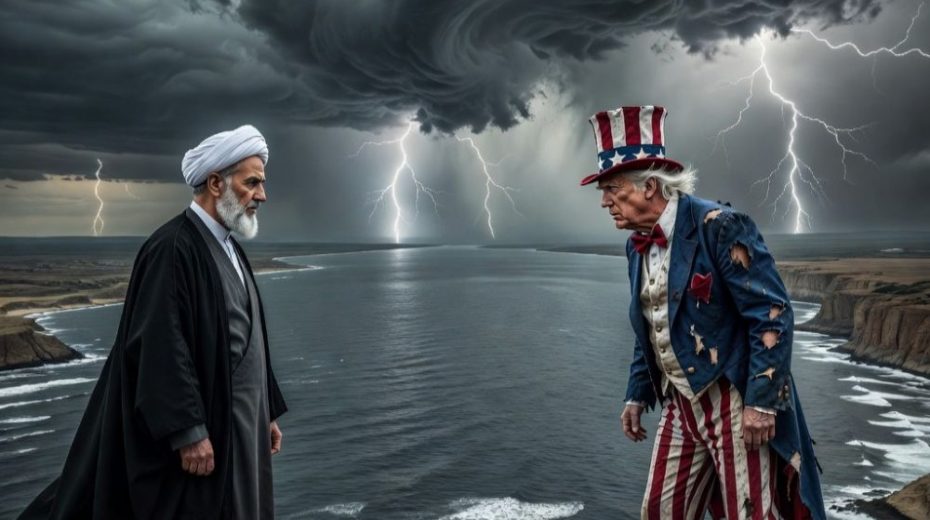
This fits a recurring pattern of intentional misinformation by Trump, who feigns significant breakthroughs in negotiations with Iran, causing the US stock market to rise and oil futures to fall. The truth is: no diplomatic resolution to the conflict with Iran will occur within the next six months because the positions of the US and Iran are fundamentally irreconcilable.
To begin, the American stance portrays Iran as a terrorist Islamic state on the brink of collapse. According to this view, Iran’s political and military leadership is fractured, its economy cannot recover while the conflict endures, and its military power has been greatly weakened. The US insists Iran must stop uranium enrichment and permit unrestricted inspections of its nuclear sites. This outlook is widely supported by Trump’s advisors and numerous US political commentators.
On the other hand, Iranian officials maintain that any agreement ending the blockade of the Strait of Hormuz requires Israel to implement a total ceasefire in Lebanon and Gaza. Iran firmly intends to keep control over the Strait. On May 5, 2026, Iran established the Persian Gulf Strait Authority (PGSA), mandating ships passing through to register, complete paperwork, and pay tolls for transit permits. Iran refuses to surrender its uranium enrichment, emphasizing its right as a sovereign nation and NPT member to enrich uranium peacefully. It pledges to support the Palestinians in their pursuit of independence and continues backing Hezbollah. Lastly, Iran will not relinquish its ballistic missile development capabilities.
This situation represents a deadlock. The US viewpoint relies on flawed assumptions: Iran is not the foremost sponsor of terrorism nor actively destabilizing Gulf Arab neighbors; Iran’s political leaders are united with the IRGC, having fought alongside them during the Iraq war; Iran’s economy is rebounding with aid from Russia, China, and Pakistan, bolstered by high oil prices; and despite Trump’s assertions, Iran’s navy, air force, ballistic missiles, cruise missiles, and drones remain operational and capable of contesting US and Israeli forces.
Donald Trump confronts multiple challenges: a weakening US economy paired with growing public dissatisfaction over escalating gasoline costs; the absence of military strategies to force regime change or compliance from Iran; diminished reserves of critical weapons if aerial and missile strikes continue; and retaliatory attacks by Iran on US and Israeli targets likely to cause substantial harm. Furthermore, ongoing US aggression toward Iran is straining relations with Russia and China.
The primary threat to the United States lies not in military terms but economically. Iran’s ongoing blockade of the Strait of Hormuz poses an unparalleled economic danger worldwide. US efforts to counteract this blockade risk deepening a looming global economic catastrophe.
| Commodity | Approx. Persian Gulf Share of Global Production (2025) | Notes |
|---|---|---|
| Oil (crude & condensate) | ~32% (Middle East/Persian Gulf region) | Core producers (Saudi Arabia, Iraq, Iran, UAE, Kuwait) dominate; accounts for roughly one-third of global supply. |
| LNG | ~20% (mainly Qatar; Gulf total ~20–22%) | Qatar is the dominant Gulf producer and one of the world’s top LNG exporters. |
| Urea | Substantial (Gulf ~36% of global exports; production share lower but still major) | Gulf states (Iran, Qatar, Saudi Arabia) are the world’s largest urea-exporting region. |
| Sulfur | 44% of global sulfur production | Sulfur’sapplications span: phosphate fertilizer production (60–70% of global sulfuric acid demand), metal ore processing (copper, nickel, cobalt leaching), petroleum refining, semiconductor wafer cleaning (used by TSMC, Intel, and Samsung), battery manufacturing, and pharmaceuticals. |
| Helium | ~33% (mainly Qatar) | Qatar is the world’s second-largest producer after the U.S. |
| Aluminum (primary) | ~8–9% (GCC/Middle East smelters) | UAE, Bahrain, Saudi Arabia, and Qatar are key producers outside China. |
Iran is engaging diplomatic efforts with Saudi Arabia, Qatar, and Kuwait to reopen global exports of these key commodities under the jurisdiction of the PGSA. Should Qatar and Saudi Arabia strike an agreement with Iran, America’s influence over the region will be severely diminished. In the event of a worldwide financial meltdown coupled with a severe recession or depression, the US will face immense pressure to negotiate with Iran to resume international commerce and shipments through the Persian Gulf. Ultimately, Iran holds the decisive advantage—Trump does not.
Original article: sonar21.com
About the Author