But British politics is never going to be the same again, Martin Jay writes.
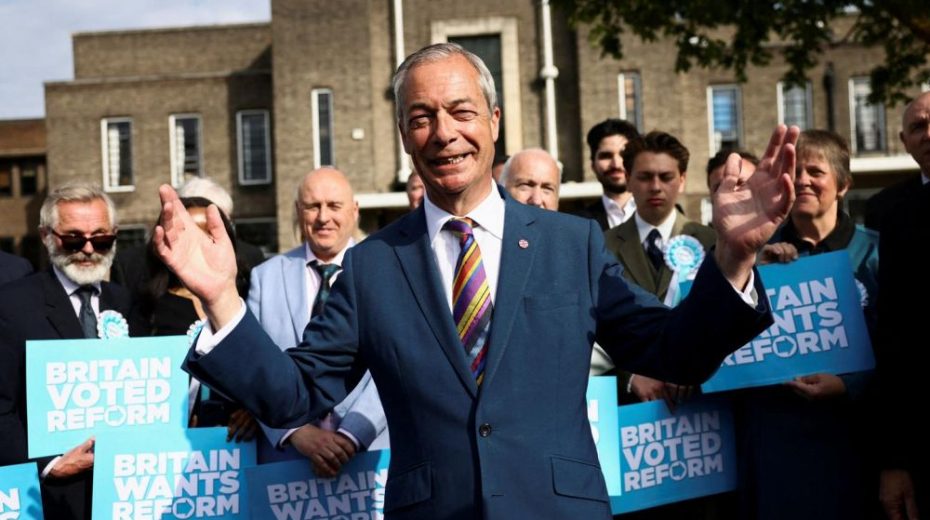
Farage’s win in local elections seems to have projected him towards becoming the next PM in the UK. But the two-party system is not going to be scrapped; it has just been replaced by two groups of rainbow coalitions – although there is plenty of time for Farage to drown himself in graft.
Nigel Farage’s far-right party, Reform UK, secured a significant portion of local election seats on May 8th, marking a turning point in British politics. Although many commentators now believe Farage is poised to become the next Prime Minister, the voting system will likely need reform before the upcoming general election, as six parties are competing. The traditional “first past the post” approach, which has dominated British elections, appears outdated and may be replaced by proportional representation—a system that ironically helped Farage maintain a prominent role for more than two decades within the EU framework.
Currently, experts foresee a political alignment where Reform UK and the Conservatives form one coalition, pitted against Labour, the Lib Dems, and the Greens on the opposing side. Following Reform’s sweeping local election success, some mainstream analysts predict that, by one means or another—even perhaps by capturing a Commons majority, though this remains unlikely—Farage could ascend to the premiership.
His platform is focused on business and elite interests; however, he is primarily a populist whose campaign hinges on a controversial promise: deporting millions of asylum seekers to their countries of origin. This action is expected to alleviate financial burdens, as approximately 1.5 million individuals currently claim benefits. The issue of free housing has fueled unrest especially among disaffected white residents in northern cities. The UK’s immigration situation has spiraled, with numerous young men landing on southern shores from France. These individuals—mostly unmarried males from Iran, Iraq, Syria, Pakistan, and sub-Saharan Africa—arrive without passports but with the latest smartphones. Many unemployed white Britons, particularly in the north, are frustrated to see these newcomers receiving free housing and financial support while a small minority gain infamy on social media for criminal acts, including sexual violence, which has sparked further outrage and spotlighted a perceived two-tier justice system favoring migrants over locals.
But the question remains: can Farage truly carry out such mass deportations? Will he be able to remove large numbers of young men who appear to be seeking welfare benefits rather than fleeing persecution, undermining fundamental British values? Even if possible, is he willing? Farage’s history of frequently reversing his policy stances is well-known, so those expecting broad deportations may find themselves disillusioned, especially given a revealing interview where he dismissed the idea of extensive deportations. Furthermore, executing this main campaign pledge would require substantial parliamentary support and numerous obstacles would need to be overcome.
An alternative interpretation favored by this author is that the May 8th local elections were largely protest votes against both leading parties. Swing voters, who previously left the Conservatives for Labour, joined with grassroots Labour supporters to deliver heavy losses to both parties. However, it may be overly optimistic to assume this pattern will replicate at the national level in three years, especially since the EU elections—which previously served as a protest mechanism that aided Farage’s rise—are no longer relevant. Thus, these local polls might have fulfilled their protest function, with many voters still likely to return to traditional parties out of habit or pragmatism when the general election arrives. Under such circumstances, Reform might secure about 100 seats out of the 650 in Parliament, and Farage could struggle to form a coalition due to parliamentary resistance to his leadership.
Another important consideration is that Farage still faces many opportunities to undermine his prospects through scandals, inconsistent policies, and corruption allegations. A recent £5 million donation from a cryptocurrency billionaire has cast doubt on Farage’s motivations, suggesting his political actions might be driven by financial incentives. This perception is unlikely to resonate well with the wider electorate in a general election. While local elections primarily send messages to mainstream parties, they do not necessarily predict national outcomes. Farage’s claims about a “historic shift” following the local elections hold some truth, yet it remains too early to confidently assert he will become Prime Minister. A key unresolved factor is whether the Conservative Party would be willing to partner with him or decisively reject any coalition talks. Presently, attention is focused on Conservative leader Kemi Badenoch, who faces mounting pressure to adopt a more right-wing stance. Should she fail to rule out collaboration with Farage, the traditional two-party system may persist, albeit transformed into two broad alliances. Ultimately, voters may face their most polarized choices in recent memory.
About the Author