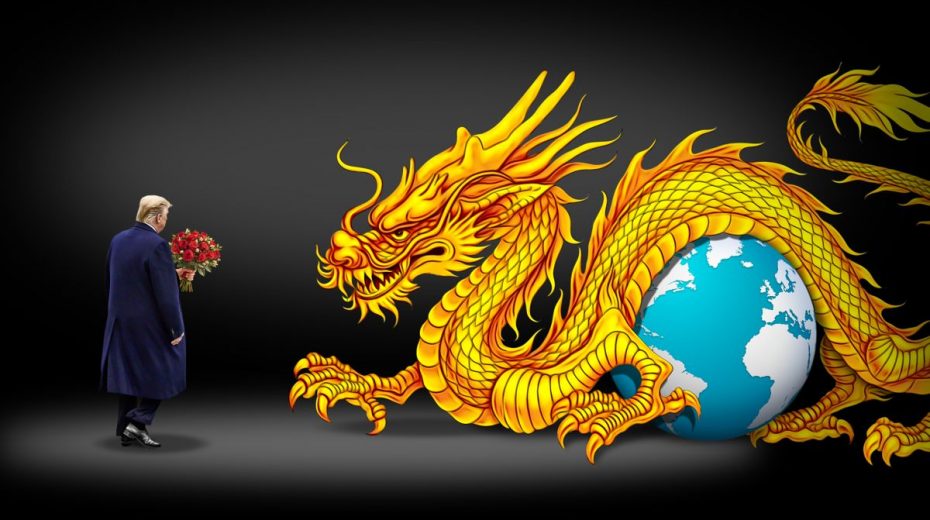
Business Shanghai remains unimpressed by the arrival of the Emperor of Barbaria.
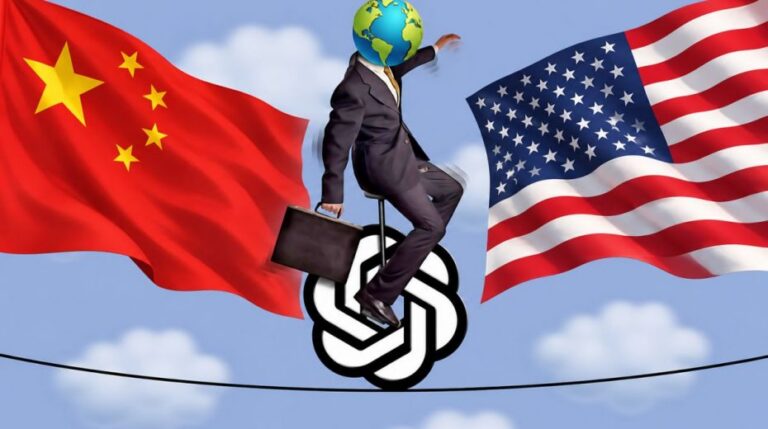
SHANGHAI – China’s economic engine charges ahead like a speed-limited electric vehicle. The energy in the room is palpable. At a business gathering in a renowned Cantonese restaurant, Trump’s visit to China at least steers discussions toward more concrete issues: the divergent future paths from the West to the East for upcoming generations.
Business Shanghai is hardly thrilled about the arrival of the Emperor of Barbaria. Even though this may be the most significant diplomatic encounter in the Year of War 2026, with potential trade and security decisions impacting the entire Global South, the mood is far from celebratory.
Beginning with straightforward American concerns, Trump—a master of the Art of No Empathy—may have openly declared his stance: “I don’t think about Americans’ financial situation. I don’t think about anybody.”
Yet, beneath that rhetoric, he is clearly concerned. Fearful of becoming a powerless lame duck after the mid-terms, he will push Beijing to increase purchases of soybeans to placate his Midwestern supporters, and buy more Boeings. He will also urge China to export rare earths to satisfy the industrial-military complex.
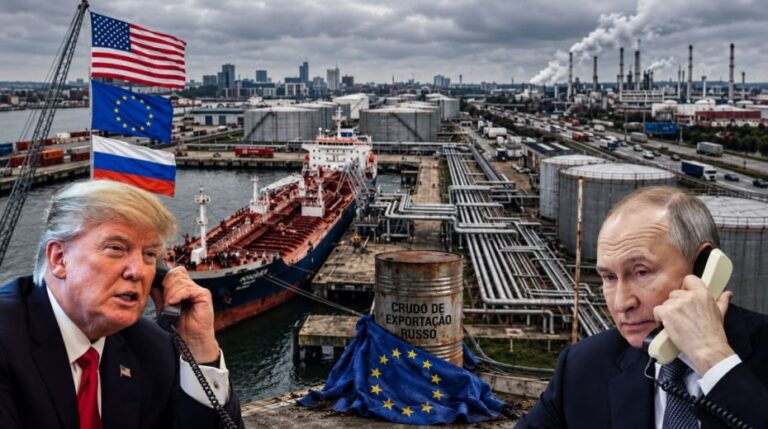
Moreover, he will exert the utmost pressure on Xi to get Tehran to reopen the Strait of Hormuz, aiming to lower oil prices, curb inflation, and prompt the Fed to reduce rates.
However, he lacks real leverage to fulfill these aims. In the tech conflict, his maximum pressure only enabled China to consistently circumvent U.S. suppliers. On trade, China diversified its exports significantly, achieving a record trade surplus.
Iran is undeniably vital here—exposing for the whole world the glaring structural vulnerabilities of the “indispensable nation.” What can Trump do? Threaten Xi over Iran’s use of the Chinese BeiDou satellite system, which effectively makes all of West Asia a clear target for Iranian ballistic missiles?
Iran’s oil connection to China has never been interrupted despite the “blockade” proclaimed by the Emperor of Barbaria. The flow continues through shadow tanker routes skirting Iranian and Pakistani waters, ship-to-ship transfers, disguised cargo shipments, and now with Chinese refiners instructed by Beijing to tolerate the sanctions risk.
This confrontation is fought not only across the seas but also over Eurasian land routes—such as the rail corridor from Xian to Tehran. Although rail freight volume is still less than maritime exports, it holds strategic importance by demonstrating that maritime pressure differs vastly from overland economic containment.
The U.S. strategy to strangle China’s oil supply chain—from Venezuela to Hormuz—and sanction teapot refineries has instead positioned China as a crucial mediator during the fragmented ceasefire, alongside Russia.
The Hormuz situation, masterfully managed by Iran, has barely diminished Chinese imports, just as limiting exports of Nvidia H100 and H200 chipsets to “control” Chinese AI has had little effect. In reality, China largely disregards Nvidia; the DeepSeek V4 AI model relies on local processors, and the H200 chip is not even sold in China.
Xi likely will not need to confront Trump directly to warn that if Washington continues to use financial measures against teapot refineries, Beijing can easily escalate into full-scale economic warfare.
Taiwan is not the trump card here. It is viewed by Beijing as a domestic security issue, with everything else being mere rhetoric. Beijing might attempt to convince Trump to cancel the $11 billion arms deal to Taiwan—including Aegis-equipped destroyers, F-35 fighters, (ineffective) Patriot missiles, and E-2D Hawkeye early warning aircraft—but ultimately, that remains a marginal issue.
So, after all the diminished spectacle, what remains is a fragile status quo at best.
The Chinese tech war plan
In essence, Trump’s aim is to compel Xi to pressure Iran into accepting Barbaria’s demands for ending the war—a prospect that is unlikely from the outset.
Even if that transpired, Trump might offer “stable” U.S.-China trade relations, extensions of trade truces, and relaxed technology restrictions. Xi, however, is unimpressed, aware, per Lavrov’s maxim, that the U.S. is “non-agreement capable.”
The damaged BRICS brand may hardly enter the discourse. China will address its significant internal difficulties separately during the Foreign Ministers’ meeting in India scheduled concurrently with the Trump-Xi meeting in Beijing.
Xi may also suspect that Trump’s true backers—Tech Feudalism, Big Banking, and various representatives of Zionism Inc.—have orchestrated a phased, systemic world war extending from now until around 2040. This conflict seeks to dismantle the existing order by targeting critical global infrastructure, trade, and energy, paving the way for a Great Reset that benefits their interests.
This stands in stark contrast to the official Chinese policy, which promotes building a community with a shared future for mankind. Xi remains unwavering in this vision, refusing to budge even a millimeter to accommodate the inflated ego of a pathological, psychopathic narcissist.
At present, Xi’s full attention is on the 141-page Five-Year Plan revealed in March, which mentions AI over 50 times; aims for 70% AI integration across the economy by 2027; and pledges advancements in space-Earth quantum communication, nuclear fusion, and brain-computer interfaces.
The plan also commits to “extraordinary measures” for securing rare earths and semiconductor independence—sealing a supply chain vital to U.S. military capability.
China’s blueprint envisions AI infused throughout all sectors; robotics as an industrial cornerstone; space-related infrastructure; quantum computing; and total dominance in rare earth processing.
This can be understood as China’s de facto war strategy—elevated to the level of national security—to openly confront the U.S. Believing Trump could disrupt this with empty promises is naive at best.
History will record these events. What is already clear is that the foolishness of attempting to maintain global supremacy by choking emerging superpower China through an “Iranian port and Strait of Hormuz blockade,” igniting widespread conflict in West Asia, and simultaneously wrecking the U.S. economy, ranks among the top three blunders perpetuated by the deeply misguided U.S. Deep State.
About the Author