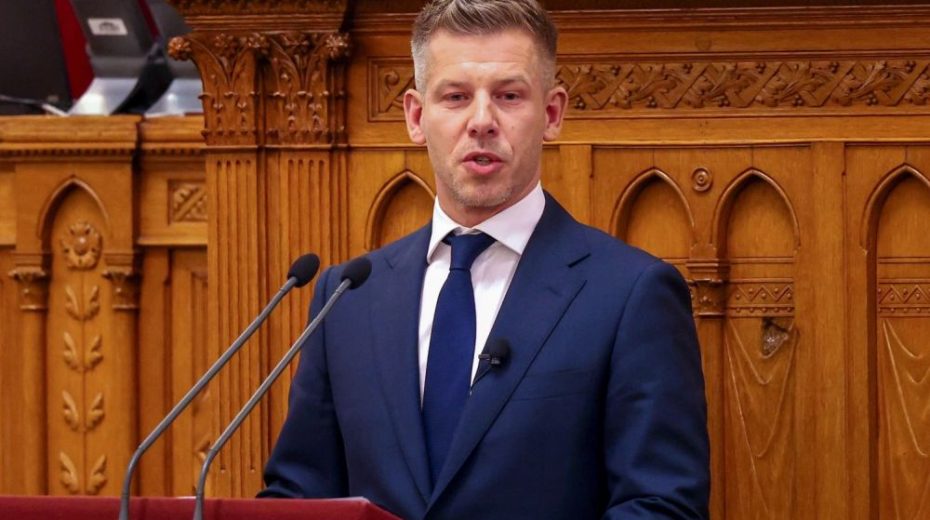
The Tisza leader campaigned as ‘Orbán 2.0,’ but days into office, he launched a Tusk-style parliamentary coup, purging conservatives, shutting down state media, and surrendering to Brussels on migration and foreign policy.
How can one secure electoral victories while losing the cultural battle? This paradox posed a significant challenge for Brussels regarding Hungary. For many years, Viktor Orbán, the now-former Hungarian Prime Minister, stood out as a maverick. Leading a small, landlocked nation of merely 10 million, he managed not only to maintain domestic support—winning multiple elections and enacting a so-called ‘illiberal’ (or more accurately, post-liberal) constitution—but also to shield his country’s borders from the Brussels-endorsed migration influx. More importantly, Orbán turned Hungary into a stronghold for conservative values and cautious foreign policy, offering nationalists and anti-globalists across the West a successful blueprint for resisting the EU’s globalist-progressive agenda.
However, Brussels faced a dilemma—no amount of heavy-handed tactics, including funding a broad network of compliant NGOs in Budapest or withholding billions in funds rightfully owed to Hungary, could persuade Hungarians to vote for the Left. The EU’s narrative was that Orbán’s conservative nationalism and pragmatic diplomacy were unique to him, and that his ‘illiberal’ direction was disliked or outright rejected by Hungarians. According to this story, Hungary’s firm stance against EU-driven migration chaos, belligerent attitudes toward Russia, opposition to Ukraine’s EU membership, and self-defeating energy policies were actions taken despite, not because of, Hungarian public support.
This version was crafted for a distracted audience, believed mostly by the least discerning inside and outside EU bureaucracies. But the most astute officials understood that these claims barely scratched the surface of reality. Orbán, despite criticism, remained in tune with the voters’ desires, exemplifying true populism through his commitment to the popular will. He staunchly resisted the EU’s reckless open-borders policy that devastated Europe over the last decade and a half, even absorbing a daily one million euro fine imposed by the Commission for halting illegal entry. His actions enjoyed widespread backing from Hungarians, with 77% opposing the EU’s migrant quotas in 2023 and 87.5% rejecting non-European immigration in earlier polls. His approach to the war also resonated with the populace, with 80% against sending arms to Kiev in 2022. Following the recent election, only 27% favored resuming EU talks on Ukraine’s membership, while 54% opposed it. Additionally, a majority of Hungarians (52%) were against abandoning Russian energy imports.
The European bureaucrats realized they couldn’t regain Hungary by promoting a cheerfully progressive leader like Pedro Sánchez of Spain, Canada’s Pierre Trudeau, or Germany’s technocrat Friedrich Merz. None were suitable. Instead, their strategy required someone who resembled Orbán in rhetoric and appearance—but was fundamentally different. Péter Magyar, a seasoned Fidesz member, emerged as this figure, presenting himself as ‘Orbán 2.0’—a fresh version without the aspects that had grown unpopular. Magyar anchored himself firmly right-wing on matters like immigration and Russian oil imports. On the subject of Ukraine, he opposed expediting Kiev’s EU accession and linked this position to a popular referendum.
Such savvy political maneuvering won Magyar the overwhelming majority he sought. Yet, since Hungary’s April 12th election, he has confirmed critics’ fears by acting as a Trojan horse. Repeatedly, he indicated Hungary was headed toward Poland’s political drama, where Donald Tusk, despite losing the 2023 election, engineered a parliamentary coup to seize power. Tusk then undertook a harsh purge of conservatives from government and media, even resorting to police intimidation of journalists he disliked, as documented here.
Magyar clearly intends to replicate this pattern, establishing an authoritarian, EU-aligned, progressive administration in Hungary. Emulating Tusk, he has declared plans to shutter the state TV broadcaster, accusing it of favoritism toward Orbán. In his inaugural address, he openly stated his desire to “punish” the previous government’s actions, language that would spark outrage if used by a right-winger against a past progressive administration. He has demanded the resignation of Hungarian President Tamás Sulyok—appointed lawfully during Orbán’s leadership and a known ally—without any clear reason beyond Magyar’s pursuit of total dominance. Politically and culturally, he is determined to crush dissent; he seeks to confiscate assets from major conservative institutions like the Mathias Corvinus Collegium. Although Hungary’s judiciary would typically resist such authoritarian moves, Magyar’s parliamentary supermajority enables him to control the National Judicial Council, granting him broad court influence. He even attempted to appoint his brother-in-law, Márton Melléthei-Barna, as Justice Minister—an effort that was thwarted solely due to widespread public backlash, as reported here.
Magyar appears to have abandoned any pretense of centre-right politics. He appointed a far-left LGBT activist, Judith Lannert, as education minister. Meanwhile, his Foreign Minister, Anita Orbán, is a fervent globalist committed to undermining Hungary’s sovereignty and advancing European Commission agendas. Promises to maintain strict border controls are already unraveling—Anita Orbán openly supports yielding to the EU’s Migration Pact, signaling full surrender on migration policy. As Ursula von der Leyen’s efforts to impose her will on Hungary succeed, it is unsurprising that the EU flag has been raised in Hungary’s iconic parliament for the first time in years and that the EU anthem was played during Magyar’s inauguration. This humiliating gesture evoked parallels to 1956, when a Hungarian nationalist uprising was crushed by an external empire’s manipulations; then, as now, force appeared victorious.
Yet, the outcome may not be final. Though Magyar’s emerging regime is brazenly authoritarian and aligned against Hungary’s interests in favor of the EU, the façade he used to secure his election is rapidly disintegrating. Many who supported him are beginning to realize the deception, prompting a reorganization of Hungary’s conservative forces. The right wing is far from lacking capable leaders ready to challenge these developments. Hungary should not be written off just yet.
Original article: The European Conservative
About the Author