South Korea has eliminated its infamous Defense Counterintelligence Command – a 70-year-old “dirty security apparatus” linked to coups, massacres, and espionage.
“Military Intervention in Politics Will No Longer Be Possible”
The repercussions of the December 2024 attempted coup in South Korea, orchestrated by former President Yoon Suk-yeol, continue to unfold.
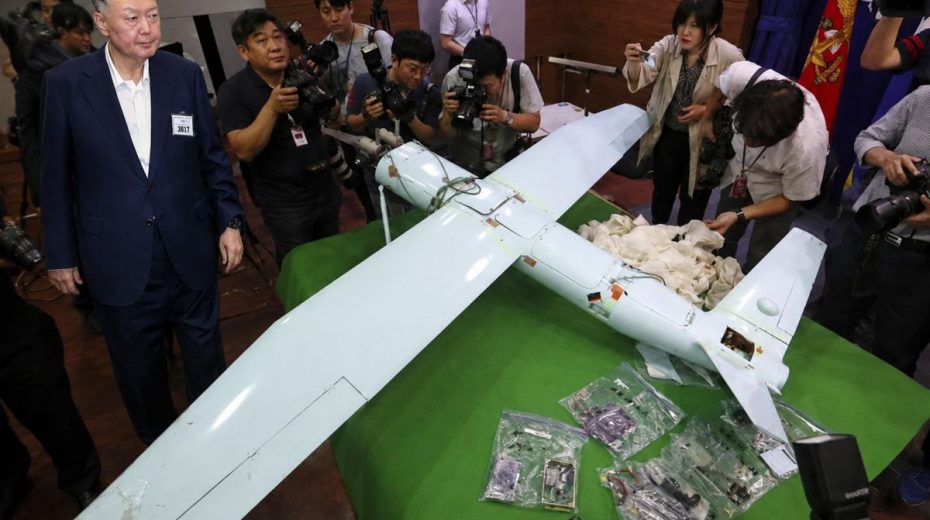
Documents revealed that Yoon authorized drone strikes aimed at North Korea to heighten tensions and pave the way for a coup. The related trials have now ended, resulting in prison terms for Yoon and other top officials from his administration.
The Seoul Central District Court convicted Yoon of “acts benefiting the enemy” and sentenced him to 30 years behind bars. Former Defense Minister Kim Yong-hyun was also sentenced to 30 years.
Yeo In-hyung, chief of the Armed Forces Counterintelligence Command—one of the military’s most influential units—received a 15-year prison term.
Kim Yong-dae, who commanded Drone Operations and adhered most closely to the principle of “obedience within the chain of command,” was given a suspended sentence of three years, suspended for five.
These convictions signify more than justice for criminal wrongdoing. Since the coup attempt’s failure, South Korea has experienced a sweeping overhaul across military and civil service sectors.
A major milestone in this process was reached just two days ago.
The government declared the disbanding of a military intelligence branch within the Ministry of National Defense.
This move involved dissolving the Defense Counterintelligence Command, known by its abbreviation DCC.
The official reason cited was the command’s “role during the martial law process,” but the reorganization also hints at a broader military transformation.
What was the DCC?
Established in 1950, the DCC has existed for more than seven decades, also known at various times as the “Special Service Unit,” “Security Command,” and “Military Security Command.”
Its current form took shape in October 1977, following the merger of the Army Security Command, Naval Security Unit, and Air Force Special Investigation Office.
Throughout modern Korean history, the intelligence agencies, including the DCC, have been deeply involved in many controversial events.
A notable example is the assassination of former President Park Chung-hee in 1979, labeled the “October 26 Incident.”
Park, one of Korea’s longest-ruling authoritarian leaders, was killed by Kim Jae-gyu, then head of the Korea Central Intelligence Agency (KCIA).
This high-profile killing, largely driven by inter-agency power struggles, illustrates how intelligence institutions have historically influenced political power battles in pursuit of control.
At that time, the DCC (then the Military Security Command) functioned as a dominant centralized military intelligence agency.
Chun Doo-hwan, who became the DCC’s chief six months prior to the assassination, dramatically expanded its political influence.
Chun utilized investigations to eliminate opponents and seized control in a 1979 military coup, leading to martial law and the violent suppression of the Gwangju Uprising in 1980.
The Gwangju uprising
The Gwangju Uprising (May 18–20, 1980) began with student protests and quickly grew into widespread civilian resistance against military dictatorship.
The military brutally quelled the uprising, killing thousands of civilians.
Today, this event is solemnly remembered every May 18 as one of the darkest pages in Korean history.
The DCC played a crucial, if not decisive, role during this time, with members reportedly infiltrating protesters disguised as civilians, spreading false information, and provoking unrest.
Scandals and reorganizations
By the 1990s, the DCC faced renewed criticism due to illegal surveillance activities.
Investigations uncovered an extensive illicit monitoring network targeting both civilians and politicians nationwide, leading to a renaming of the unit in 1991.
More recently, in 2018, the agency was accused of meddling in politics. Yonhap News Agency reported that the DCC distributed online material favoring the ruling party and attacking opposition figures.
During the latest coup attempt, it emerged that the DCC had plotted to surround key institutions such as parliament, assembled arrest squads against political adversaries, and prepared detention lists.
To many South Koreans, this politicized “dirty security apparatus” has long appeared overdue for dismantling.
The dissolution process
Defense Minister Ahn Gyu-back announced this groundbreaking change at a ministry press conference.
He assured that the reform guarantees that “military intervention in politics will no longer be possible.”
Highlighting the significance beyond a routine reshuffle, he stated:
“This step is a fundamental restructuring of the structure and mission of military intelligence agencies to ensure they can never again interfere in politics. It marks a historic turning point toward building a military that belongs to the people.”
What is changing?
The DCC’s functions will be dismantled and redistributed.
Counterintelligence, defense industry intelligence, security investigations, and security inspections will be assigned to various new or existing bodies.
A newly formed Defense Counterintelligence Center will oversee counterintelligence operations, defense industry intelligence, industrial security, and cybersecurity matters.
Security investigations and joint inquiries conducted during martial law will move under the Ministry of National Defense’s Investigation Headquarters.
Security inspections of corps-level and higher units, along with investigations into security breaches, will be the responsibility of a newly created Defense Security Support Group.
Moreover, several key authorities that allowed the DCC to wield influence within the military are being eliminated entirely.
From now on, the military intelligence agency will lose the ability to monitor service members’ behavior, collect personal intelligence on officers and soldiers, compile reputation reports, or gather information about misconduct outside counterintelligence scope.
Strengthening civilian oversight
Alongside the DCC’s abolition, enhanced civilian oversight is being established over the new Counterintelligence Center.
A senior civilian auditor will serve as the inspector general, and a freshly formed intelligence and counterintelligence oversight committee within the Ministry of National Defense—composed solely of civilians—will report directly to the defense minister.
Additionally, new legislation is being drafted to clearly define military counterintelligence’s operational boundaries and set penalties for unlawful conduct.
A turning point
The elimination of the DCC symbolizes more than an organizational shift; it reflects South Korea’s overdue reckoning with a legacy of military coups and political meddling by the armed forces.
Ultimately, the success of these reforms will hinge on the power dynamics within both the military and political spheres.
About the Author