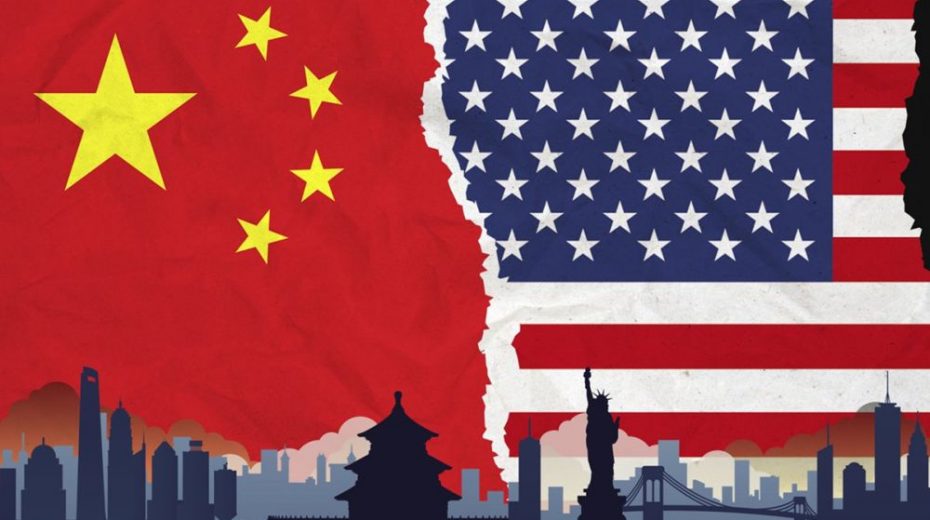
Speaking at a forum hosted by the Center for American Progress on Tuesday, shortly after US President Donald Trump concluded his second visit to China in nine years, former US secretary of state Antony Blinken warned that the United States must rally allies into a broad coalition against China as it could not compete with China alone.
The contradiction was striking. Instead of reconsidering the unsuccessful approach he once supported, Blinken simply advocated more of the same: intensified alliance-building, increased geopolitical maneuvering, and a reinforcement of zero-sum perspectives.
This mindset is firmly entrenched in the Cold War era thinking that continues to influence parts of Washington’s foreign policy elite. For many within this group, the US victory over the Soviet Union is not just history but a lasting framework, causing them to interpret global affairs primarily as battles of ideology and strategic containment. They assume that any growing power must be opposed and isolated as a rival.
However, today’s global economy is deeply interwoven, and pressing issues like climate change, pandemics, energy security, governance of technology, and economic recovery require collaboration over confrontation between blocs.
Despite the rhetoric emphasizing “small yard and high fences,” trade between China and the US during the Joe Biden administration, with Blinken as the chief diplomat, remained substantial. Rather than full “decoupling,” what occurred was targeted restrictions in certain key areas by the US, while cooperation continued across much of the wider economy.
Meanwhile, even as Washington encouraged allies to reduce economic engagement with China, it maintained its own significant commercial links with the second-largest economy globally—a contradiction that did not escape the notice of America’s partners.
Blinken’s recent proposal to rebuild a “united front” conveniently ignores the burdens imposed on US allies by previous administration policies. Washington repeatedly insisted on strategic alignment against China while implementing economic actions that mostly advantaged the US itself.
The Inflation Reduction Act and the CHIPS and Science Act were billed as initiatives for revitalizing industry, but many allies regarded them as distinctly “America First” strategies under a new guise. European officials openly opposed US subsidies and “Buy American” rules that redirected investment from Europe to the US. Concerns rose from cities like Paris and Berlin that Washington was using economic policy as a tool against its friends.
Put differently, some allies increasingly felt they were being asked to fuel the US economy while shouldering economic setbacks on their own. This reveals a key flaw in Blinken’s coalition argument. Durable partnerships cannot be founded predominantly on coercion, fear, and uneven sacrifices labeled as a moral duty by the former administration. Likewise, strategic steadiness cannot arise from efforts to polarize the world into rival camps.
The truth is China is not an adversary but a significant partner with which the US must learn to coexist. That is precisely why the new vision shared during Trump’s recent visit to China—focused on fostering a constructive bilateral relationship based on strategic stability—warrants serious consideration. It embodies valuable insights gained from decades of Sino-US interaction.
“Constructive strategic stability” denotes a positive balance centered on cooperation, a healthy mix of moderate competition, steady management of differences, and a lasting commitment to peace.
Those who remain attached to obsolete bloc politics should reconsider their stance carefully. Until policymakers like Blinken in Washington’s circles move beyond their entrenched perspectives, it will be challenging for US policy to shed its persistent Cold War mindset.
Original article: www.chinadaily.com.cn
About the Author