On June 23, the United Nations Independent International Commission of Inquiry on the Occupied Palestinian Territory, including East Jerusalem, and Israel released one of the most harrowing reports ever issued by a UN investigative body concerning the Israeli genocide in Gaza.
The report’s title alone is almost unbearable: The Essence of Childhood Has Been Destroyed. Beneath this title lies a grave accusation. The Commission determined that Israeli authorities and security forces have intentionally targeted Palestinian children, acts which constitute genocide, crimes against humanity, and war crimes in Gaza, along with war crimes in the occupied West Bank.
This report is grounded in careful legal analysis, supported by witness accounts, forensic data, satellite images, military assessments, medical documents, and years of compilation. It does not simply list civilian casualties. It asserts that the widespread killing, wounding, starvation, detention, and psychological trauma suffered by Palestinian kids cannot be dismissed as collateral damage. Instead, the Commission finds that Palestinian children have been consciously targeted by Israeli military strategy. The consequences of this conclusion extend well beyond Gaza, raising profound questions about the future of international law.
A Report of Extraordinary Gravity
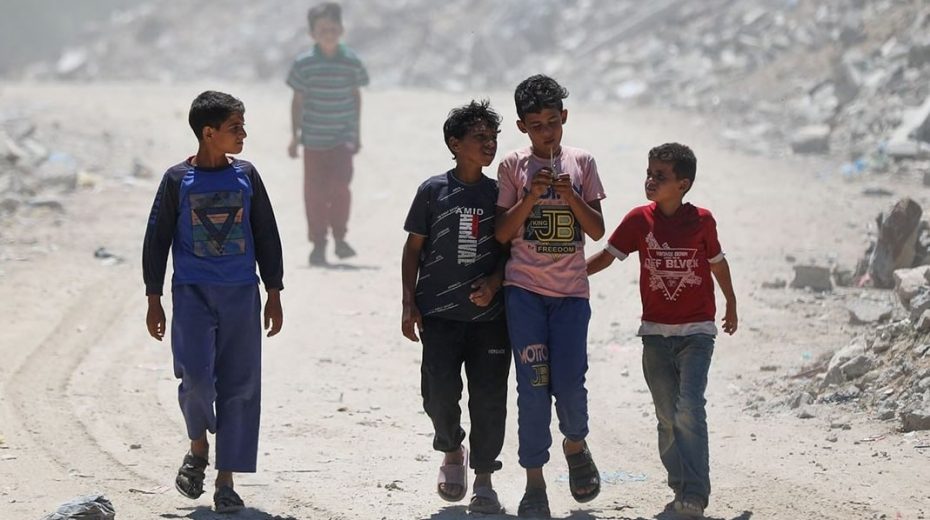
The Commission estimates that since October 2023, over 20,179 Palestinian children have lost their lives and more than 44,000 have been wounded. Nearly thirty percent of all Palestinian fatalities are children. These figures alone make the Gaza conflict one of the deadliest for children in recent memory. However, the report’s significance lies chiefly in its findings about intent.
It details numerous occurrences where children were fatally shot by snipers, attacked by drones, or harmed while seeking essentials like food and water—situations where no military threat was present. The report also scrutinizes the ongoing deployment of high-yield explosives in densely inhabited civilian regions, despite clear knowledge of the devastating impact on children. It recounts assaults on maternity hospitals, newborn wards, schools, orphanages, and shelters. Moreover, it examines the blockade of essential supplies such as food, water, and medicine, demonstrating how starvation, disease, and medical system collapse have been weaponized against an entire civilian population, with the youngest suffering most severely.
The report investigates the detention methods used on Palestinian minors by Israel. Children detained in Gaza and the West Bank recount experiences of torture, sexual abuse, degrading treatment, and enforced disappearance without family notification. These abuses form part of a wider system of collective punishment aimed at Palestinian society across generations. Although these findings are devastating, the UN Commission’s conclusions are consistent with earlier reports by Save the Children (Palestinian Children in Israeli Military Detention Report Increasingly Violent Conditions, February 29, 2024) and UNICEF (Children in Israeli Military Detention, February 2013), which predate this genocidal campaign begun in 2023. Palestinian journalist Wesam Afifa’s recent book, Survivors of the Darkness, documents the horrific violence within Israeli-operated concentration camps targeting Palestinians, including children.
The most haunting conclusion of the UN report is that the destruction extends far beyond the physical loss of life. Childhood itself has become a battleground. The cumulative effects of trauma, orphanhood, repeated forced displacement, hunger, interrupted schooling, and lasting disability amount to what the Commission describes as the eradication of “the essence of childhood.”
A Pattern Long Documented
The findings reached by the Commission were not unprecedented. For nearly two years, Palestinian journalists have recorded scenes of children rescued from rubble, infants perishing in powerless incubators, families destroyed by airstrikes, and children shot while trying to find food or water. Many journalists paid for their efforts with their lives. Gaza has become known as “the deadliest conflict ever for journalists,” explained Irene Khan, the UN Special Rapporteur on freedom of opinion and expression. Despite grave dangers, these reporters continued to expose realities that most of the world preferred to ignore.
International human rights groups had reached similar conclusions well before the UN’s recent report. Save the Children repeatedly cautioned that Gaza was among the most perilous places on earth for children. Defence for Children International–Palestine documented repeated attacks on children in contexts raising serious questions about military necessity. Human Rights Watch investigated assaults on educational institutions, hospitals, and refugee camps. Amnesty International analyzed repeated strikes apparently violating the principles of distinction and proportionality in international humanitarian law. UNICEF consistently warned of unprecedented child casualties. None of these organisations characterized the events as isolated incidents; they identified consistent patterns demanding independent inquiry. The new UN report consolidates this extensive evidence into a comprehensive legal evaluation.
In January 2024, the International Court of Justice recognized South Africa’s genocide allegation against Israel as plausible and issued provisional measures obliging Israel to prevent acts forbidden by the Genocide Convention, safeguard evidence, and permit humanitarian aid. Later orders tightened these obligations amid worsening conditions in Gaza. While the Court has yet to rule on the merits of the case, it has repeatedly acknowledged the severe risks confronting Palestinians and Israel’s ongoing legal duties. This latest Commission report adds critical evidence likely to influence future legal actions.
The Silence of the Israeli State
The nature of Israel’s response has been notable. Rather than engaging sincerely with the evidence compiled by the Commission, Israeli officials promptly dismissed the report entirely, branding it politically driven and deeply biased. They rejected the conclusions wholesale without seriously contesting the specific incidents, testimonies, or forensic details presented. While all nations have a right to defend themselves against charges, grave accusations demand serious and factual responses.
If children were not intentionally targeted, then Israeli authorities must clarify why thousands of kids have been killed under circumstances documented repeatedly by journalists, aid agencies, medical staff, and now a UN Commission. Why have hospitals, maternity wards, schools, and refugee shelters been struck repeatedly? Why are humanitarian convoys attacked? Why do child fatalities persist despite ceasefires? Why has military accountability been so lacking? Simply labeling reports as biased cannot replace factual answers. Israel’s refusal to engage with the evidence has become an unsettling and defining aspect of this conflict.
International humanitarian law relies on the principle that states are held accountable for their actions. Accountability becomes unachievable when investigations are dismissed before their evidence is reviewed.
Justice S. Muralidhar and the Duty of the Judge
The UN Commission’s work underscores the importance of judges who see law not as a dry tool but as a shield against unchecked power. Justice S. Muralidhar, who chaired the committee for this report, exemplifies this ideal.
With a decades-long record, Justice Muralidhar earned distinction as one of India’s leading constitutional jurists, especially in defending civil rights, addressing communal violence, and protecting marginalized groups. After the 1984 anti-Sikh pogrom, he stood as a principal judicial advocate for accountability, emphasizing that political convenience cannot justify impunity. His dedication to constitutional duty gained international recognition during the February 2020 communal unrest in northeast Delhi. As victims faced medical crises, Justice Muralidhar and Justice Anup J. Bhambhani held an extraordinary midnight hearing at his home. The Delhi High Court ordered police to guarantee safe access for the injured to hospitals and mandated emergency medical care. Later, Justice Muralidhar sharply criticized police for failing to register cases against political figures whose inflammatory speeches were widely disseminated, warning the authorities that India could not permit “another 1984.”
Within hours, the Government of India announced Justice Muralidhar’s transfer to the Punjab and Haryana High Court, despite the Supreme Court Collegium having formally recommended this earlier in the month. The timing raised serious concerns among the legal community, retired jurists, and civil rights groups, who saw this as a troubling challenge to judicial independence.
Justice Muralidhar’s career exemplifies a key tenet of the rule of law: courts exist not to endorse government actions uncritically but to impartially evaluate evidence—especially when those harmed lack political influence. The UN Commission of Inquiry operates under the same principle. Its findings may spark debate, but they cannot be dismissed simply because they are politically inconvenient. Genuine evidence demands genuine engagement, the fundamental duty of any state respecting the rule of law.
The Test Before Humanity
Ultimately, the UN Commission’s report transcends the Israeli-Palestinian conflict.
It challenges whether the international legal framework established after World War II retains the moral authority to shield children from systemic violence. If over 20,000 children can perish while diplomatic institutions function as usual, then the core promises of the Genocide Convention, the Geneva Conventions, and the Convention on the Rights of the Child have suffered a severe blow. Though the report will not end the current war nor bring back the lost lives, it creates a historical record that will be increasingly hard to erase. Beyond regime changes and the conclusion of military campaigns, history will remember those responsible for atrocities—and also those who turned away.
Original article: znetwork.org
About the Author