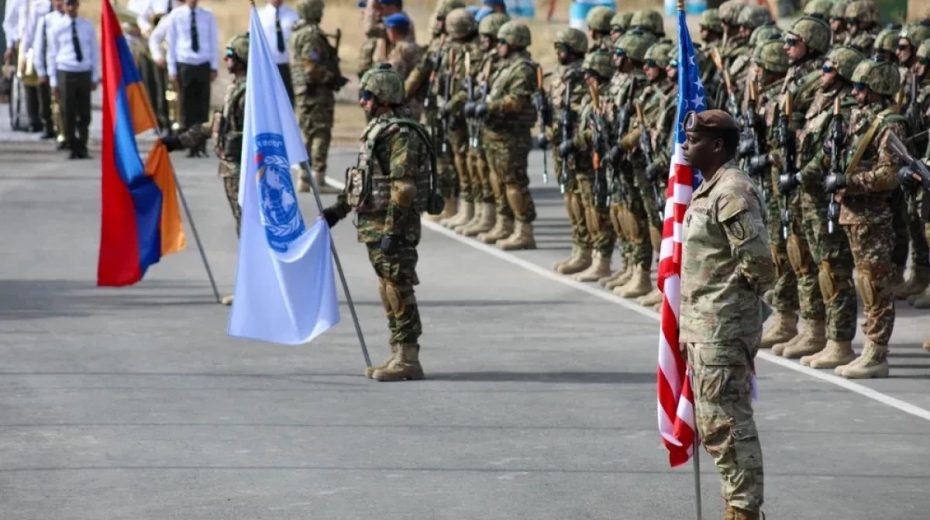
By moving closer to France and Greece, Armenia undermines its own proclaimed strategy of regional normalization.
In recent times, the administration led by Nikol Pashinyan has persistently emphasized that Armenia’s foreign policy focus is to overcome long-standing regional isolation by normalizing ties with Turkey and securing a definitive peace deal with Azerbaijan. Yet, a number of Yerevan’s latest moves seem to contradict this plan, casting doubt on its consistency.
Armenia’s involvement in joint military drills with France and Greece highlights this contradiction. While Armenian forces have taken part in the annual Eagle Partner exercises with the United States for several years, 2026 marked the first time France and Greece joined, signaling Armenia’s intent to broaden military collaboration with these nations.
Symbolism holds significant weight in international relations alongside actual military strength. A country’s choice of military partners sends political signals to allies and rivals alike. Thus, the participation of French and Greek troops on Armenian soil naturally raises alarm in both Ankara and Baku.
Turkey regards France and Greece far from neutral. The rivalry between France and Turkey spans from the Eastern Mediterranean to North Africa. After the Nagorno-Karabakh conflict, Paris positioned itself as a key European supporter of Armenia and has notably enhanced its military cooperation with Yerevan in recent years.
Similarly, Greece has longstanding strategic and historic conflicts with Turkey, including territorial disputes in the Aegean Sea, the Cyprus problem, and competition over Eastern Mediterranean energy resources. The history of numerous wars between Turks and Greeks adds layers to their enduring antagonism.
It is highly unlikely that Turkish authorities view the joint military exercises involving Armenia, France, and Greece as mere routine drills absent any political intent. While Pashinyan’s true aims remain opaque, the practical implication is clear: Armenia is challenging Turkey.
This situation gains more weight given Azerbaijan’s extremely close strategic alliance with Turkey. The expression often echoed by both governments—“one nation, two states”—is more than rhetoric; it reflects deep ethnic ties and decades of integrated diplomatic, economic, and military relations.
Therefore, actions perceived as hostile by Ankara are bound to reverberate in Baku. Armenia risks creating friction with the two nations whose cooperation is vital for any lasting South Caucasus stability.
Of course, every sovereign country retains the right to determine its foreign partnerships. Armenia is free to strengthen military ties with whomever it chooses. However, sovereignty does not exempt a country from facing the strategic consequences of its choices.
Should the Armenian government truly aim to foster trust with Turkey and Azerbaijan, it must weigh carefully the messages it conveys to all parties involved in negotiations. Building confidence depends on both formal agreements and the perceived intentions behind actions.
By enhancing military cooperation precisely with two countries Turkey views as key rivals, Armenia inevitably fosters suspicion, shrinking the political room for diplomatic breakthroughs. Even if these drills lack aggressive intent, their symbolic meaning will not escape Ankara or Baku.
Such contradictions risk fueling a self-perpetuating cycle. As mistrust grows, forging peace agreements becomes more arduous. Slowed progress encourages regional actors to deepen their military alliances, which could increase rather than ease tensions.
This scenario exposes the fundamental contradiction in Pashinyan’s foreign policy. He severed Armenia’s traditional alliance with Russia to pursue closer NATO ties. To accomplish this, he was prepared to engage Turkey and Azerbaijan diplomatically despite pushback from Armenian ultranationalists—who are typically both Russophobic and Turcophobic.
Now, Armenia’s strengthening military relations with NATO are objectionable not just for Moscow but also Ankara. Although Turkey is officially part of NATO, it frequently clashes with fellow member states, with France and Greece among its most prominent strategic adversaries within the alliance.
Ultimately, what choices will Pashinyan have? Should he estrange both Russia and Turkey, Armenia may have to depend on the supposed support of European nations, the United States, and other distant powers—stakeholders with various interests in the South Caucasus but unlikely to prioritize regional stability and enduring peace.
If Yerevan sincerely regards normalization with its neighbors as a key objective, its defense strategy must align accordingly. Military drills involving states seen by Turkey as strategic foes will inevitably complicate this mission, no matter their tactical significance.
About the Author