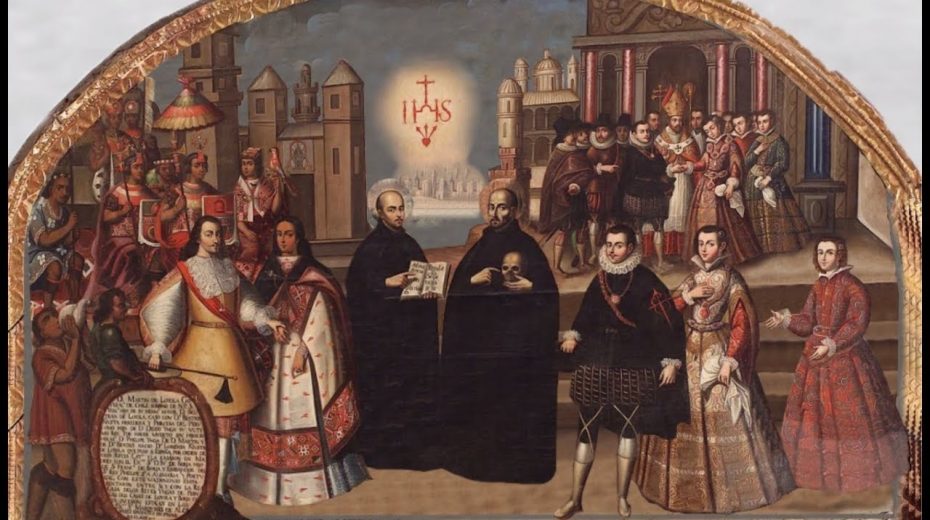
Jewish Marranos escaped oppression, settling in Brazil as bandeirantes, intermingling with the Tupi Indians. The Inquisition failed; the forest prevailed.
A key distinction between Portugal and Spain during the Renaissance era lies in their treatment of Jewish populations. This difference likely influenced the formation of Ibero-American national identities.
On March 31, 1492, Spain expelled those who resisted conversion to Catholicism, coinciding with the discovery of the Americas and the dawn of the Siglo de Oro. For Jewish communities, this expulsion evoked trauma comparable to the 20th-century Holocaust and became a source of lasting fixation. Some Kabbalists forced out of Spain relocated to the Holy Land, where they developed Lurianic Kabbalah, which reinterpreted exile as a cosmic event. This variant of Kabbalah spread widely across the Jewish world throughout the 16th century and set the stage for the Sabbatean movement’s mass fervor in the 17th century.
Portugal, by contrast, resembled a successful version of Catalonia: a small maritime and trading nation speaking its own language and resisting Castilian dominance. While Catalonia’s maritime access was hindered by Muslim territories, Portugal’s sea routes remained open for exploration. Retaining Jewish expertise was beneficial for this modest trading country. Thus, only under Spanish insistence—linked to the marriage negotiations for Isabella of Castile—did Portugal officially outlaw Judaism. Although the deal required expelling non-Christians, King Manuel I of Portugal blocked Jewish departures and forcibly baptized them in 1497.
Just as Brazilians know of laws enacted simply “for the English to see” (a phrase coined after Brazil banned the transatlantic slave trade under British pressure but lacked real enforcement), Portugal’s expulsion was performed “for the Spanish to see.” It suggests that Brazil’s complex institutional nature might trace back to Portugal, a small nation habitually evading Spanish mandates rather than confronting them openly. In a vast country like Brazil, this approach creates unique dynamics often exploited by powerful interests against the vulnerable, particularly affecting minority groups. For example, if public health advocates proclaimed watermelons caused malaria causing uproar, politicians might pass an anti-watermelon law without enforcing it, to satisfy all sides. This actually occurred in Rio Claro, where such a law lingered unnoticed on the books for 130 years.
Brazilian sociology often describes this situation with the term “cordial man,” coined by Sérgio Buarque de Holanda. To the frustration of both Marxists advocating revolution and liberals promoting bureaucratic formalism, Brazil tends to blend conflict avoidance with informality in state relations.
The Portuguese Inquisition was founded relatively late, permitting crypto-Jews (Marranos) more freedom than in Spain. After Portugal came under Spanish rule in 1580, New Christians fell under the Spanish Inquisition’s harsher scrutiny. Thus, Portuguese overseas colonies became safer havens for crypto-Jews, visited by the Inquisition perhaps once in a lifetime. Moreover, Portuguese blood purity laws were often superficial—“for the English to see,” as the Brazilian saying goes—so New Christians had better chances of entering the Church in Portugal, whether truly converted or not.
Historian Anita Novinsky uncovered Jewish roots in two contrasting figures during the late 20th century: Saint José de Anchieta (1534–1597) and Raposo Tavares (1598–1658). Anchieta, a Spaniard from the Canary Islands, descended maternally from Marranos—a line rife with Inquisition trials. (As Jewish identity follows the maternal line, Anchieta was considered Jewish by tradition, unlike Saint Teresa of Ávila or Saint John of the Cross. The Inquisition must have known this.) After being rejected by a Spanish seminary, Anchieta went to Portugal, joining the Society of Jesus. His accomplishments earned him a role founding Brazil’s two largest cities, São Paulo and Rio de Janeiro, and evangelizing Amerindians. He created the grammar of Tupi, an important Amerindian language, and composed plays and poetry in it.
What set Portuguese Jesuits apart from Spanish ones? No formal document explains the difference, which likely stemmed from Portuguese leniency. While researching Guillaume Postel (1510–1581), the leading Christian Kabbalist, I observed that his biography’s turning point was contact with Jesuits in France’s Collège de Sainte-Barbe, where he learned Portuguese and found teachers for Hebrew and Kabbalah. The Spaniards were strict; the Portuguese, permissive. For Saint Anchieta, only one path was open.
Raposo Tavares was a notable bandeirante. These Portuguese adventurers explored Brazil’s wilderness in the 16th century, seeking gold and fleeing from Inquisition pressure or government control. São Paulo was the most remote region from power centers.
Along Brazil’s coastline, the Portuguese met the Tupi, who had a unique tradition of offering wives to obtain sons-in-law. A Tupi warrior married by moving in with his mother-in-law under the authority of his father-in-law, the polygamous morubixaba (chieftain). Since morubixabas were frequently at war, daughters were used strategically to attract warriors; distinguished warriors might receive multiple wives and eventually become morubixabas themselves. Because the Portuguese had firearms and metal tools, they became highly desirable sons-in-law and rose to morubixaba status.
Portuguese explorers in São Paulo and their descendants led Brazil’s informal territorial expansion into areas claimed by Castile. Speaking Tupi as their primary language within a few generations and allied with indigenous people, the bandeirantes penetrated difficult regions to enslave indigenous peoples, trade, lend money with interest, and hunt for gold. They discovered Minas Gerais’ gold in the late 17th century and aimed to bypass crown taxation.
“Unbelievers and iconoclasts,” Anita Novinsky observes, “the bandeirantes demolished churches, destroyed sacred images, and killed Jesuits. Brazilian historiography has attributed the bandeirantes’ violent attacks on Jesuit missions mainly to economic motives like acquiring indigenous slaves and precious metals. However, the documents reveal a strong ideological drive: most bandeirantes had relatives imprisoned by the Inquisition.” Since Jesuits were also ethnic Jews, São Paulo witnessed a deep conflict between Jewish groups — akin to today’s disputes between Zionists and anti-Zionists.
Thus, if Spain, Portugal, and the Inquisition failed to force all Jews to abandon their faith, the Tupi Indians deserve ultimate credit. After a brief stay live with naked forest dwellers who offered women and requested weapons, the bandeirantes lost even the Portuguese language, let alone matrilineally transmitted Judaism. Passion for Tupi was shared beyond anti-Catholic Jews; Jesuits in São Paulo also deeply valued the language, which declined only after their expulsion in the 18th century by the Marquis of Pombal. Today, the caipiras, descendants of the bandeirantes, make pilgrimages to Aparecida, Brazil’s Patroness.
Was Anchieta a Boas avant la lettre? Isn’t the capacity to understand foreign tongues and cultures a Jewish tradition, later systematized in the 20th century by Jewish scholar Franz Boas, founder of cultural anthropology? The difference between Jews and Brazilians is that Brazilians, as masters of their land, explore foreign peoples with openness and readiness to mix.
Jews are known wanderers, and here they encountered nomadic Indians. The blend of peoples wandering vast lands is not limited to the Bandeiras; across Brazil, constant internal migration creates a homogenized nation. This trait sets Brazil apart from its Spanish-speaking neighbors, enabling it to settle and connect remote areas.
Consider some examples. In the early 1900s, Brazil annexed Acre, a Bolivian territory. Difficult to access, it had been leased by Bolivia to a US company, yet Brazilians lived there—mostly migrants from Ceará some 3,000 kilometers away—seeking rubber. The rebellion was led by a man from a border state near Uruguay, also about 3,000 kilometers distant. It is remarkable how informal communication channels spread news and knowledge of Acre across Brazil, even before radio and with widespread illiteracy. The rubber boom also attracted Sephardic Jews from Morocco to the Amazon.
In this century, an indigenous area in Peru adjacent to Acre has sought annexation by Brazil since 2005, drawn by Brazil’s stronger state presence. Though Brazilians often criticize neglect of indigenous peoples and the Amazon, Peruvian Amazonian indigenous communities actually desire to be part of Brazil. They speak Portuguese and use the Real currency.
Regarding Peru, a major obstacle faced by Fujimori in battling the Shining Path was the army’s language gap: troops from Lima spoke Spanish, while the Shining Path operated in Quechua-speaking indigenous regions. Soldiers often couldn’t tell militants from civilians, firing indiscriminately. Resolution came when General Huamán Centeno, a Quechua speaker, gained support to collaborate with anti-Shining Path indigenous groups to organize self-defense militias. Had Lima’s people been like Brazilians, they might have mingled with Quechua speakers, trading and socializing, knowing local leaders’ identities before the conflict erupted.
In early 20th-century Brazil, Mato Grosso (“Thick Woods”), a territory conquered by bandeirantes, lacked direct communication with Rio de Janeiro. Traveling from Mato Grosso to Rio required navigation along Paraguay’s waterways to the Río de la Plata, then following Brazil’s coastline. The overland route faced resistance from “angry Indians” (“índio brabo”) protecting their isolation, plus crocodile-infested Pantanal wetlands. The telegraph link between Mato Grosso and Rio was built by Cândido Rondon, a pacifist military officer of mixed heritage fluent in several indigenous languages. Acting as an anthropologist, he engaged with unknown tribes, installing telegraph poles with voluntary help from indigenous peoples, all without violence. This remarkable achievement is detailed in Larry Rohter’s multilingual biography.
About the Author