Under the pretext of fighting ‘terrorism’, the Trump administration warned allies to back its political persecution
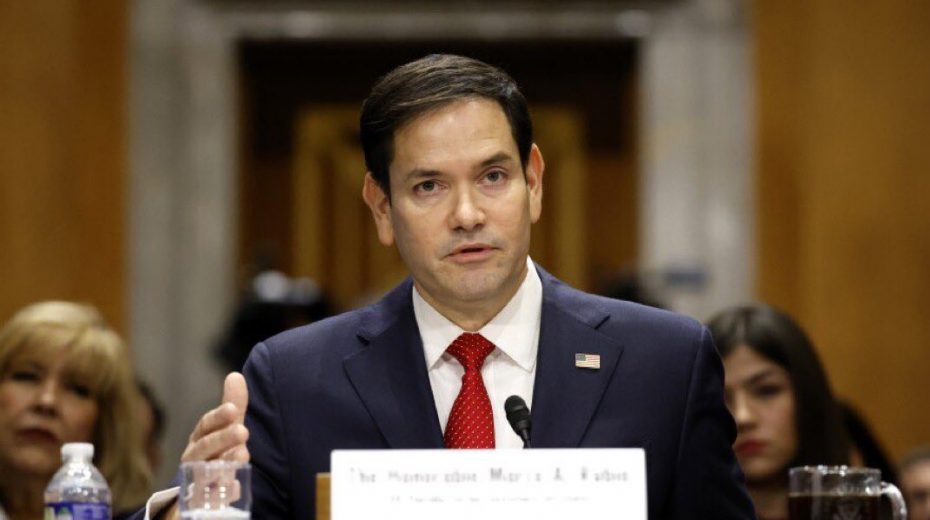
When Marco Rubio convened diplomats from 66 nations in Washington this month, his message was forceful and direct: to confront the “resurgence of far-left terrorism”. Characterizing this as a global crisis, the US secretary of state urged security agencies worldwide to join forces in order to “crush this evil forever”.
“We can, and we must, identify and map this threat and rebuild our counterterrorism architecture to defeat it,” Rubio cautioned the attendees. “Just as we have done together before, now we must do it together again.”
Recalling various leftist guerrilla and political factions active in Latin America during the previous century, he remarked: “Every one of our friends here from the nations of the Western Hemisphere remember – remember the decades of kidnappings and bombings and assassinations and executions, the violent terror of the Tupamaros, of the Montoneros, of the FARC, of the ELN.”
Outside the meeting, the State Department echoed these points for the American audience through a publication that relied on imprecise data to link the Latin American guerrillas of the 60s and 70s with dissimilar circumstances in Europe and the US, aiming to prove the ongoing presence—and historical “defeat”—of “left-wing terrorism”.
In Latin America, this rhetoric openly supports the state terror and mass atrocities enacted by 20th-century military regimes, along with regional repressive collaboration such as Plan Condor, a covert campaign involving Argentina, Bolivia, Brazil, Chile, Paraguay, and Uruguay to abduct and eliminate political rivals across borders.
Rubio’s message suggests Washington is prepared to repeat those brutal state tactics—and the severe human rights abuses they spawned—to combat contemporary “left-wing terrorists”.
As no armed groups like the guerrillas Rubio mentioned are currently active in the region, which entities or individuals is the US government targeting? Clarifying this will help reveal the political repression pattern it aims to export globally.
The groups in question include “antifa” — loosely organized assemblies opposing far-right ideologies, racism, and colonialist legacies through street demonstrations and digital campaigns. The Trump administration has repeatedly characterized these groups as a coordinated international conspiracy; in September 2025, Donald Trump labeled them a terrorist organization, despite the absence of formal structure.
Additionally, the Trump administration branded some organizations opposing the harsh treatment of migrants by US Immigration and Customs Enforcement (ICE) as “domestic terrorists”.
Perhaps the most noted instance of US authorities criminalizing dissent fused both “antifa” and “anti-ICE” elements. In July last year, police brutality during a protest opposing deportations at the Prairieland detention center in Texas escalated into riots where an officer was shot but not fatally wounded. Eleven arrests were made, with the government asserting these individuals belonged to an “antifa cell” in North Texas. Last month, sentences ranging from 30 to 70 years were imposed on six people, while the activist who shot the officer received a 100-year prison term.
It is evident that protest movements and social activism, especially those engaging in direct action, are the primary victims of this political crackdown.
Across both the US and Europe, there has been a tendency to brand activists who employ direct-action methods—which sometimes involve property damage—as terrorists or violent extremists. These incidents are then treated and prosecuted as “national security” threats.
Consider the case of Palestine Action in the UK. The government proscribed this direct action group as a terrorist organization last year. Recently, four of its members had crimes involving property damage at a factory of UK-based Elbit Systems, an Israeli arms manufacturer, treated with a ‘terrorist connection’ during sentencing. An additional five activists face similar terrorism charges for vandalizing a Barclays Bank branch—an entity with investments in Elbit Systems. In both instances, jurors were not informed that convicting these protesters might result in terrorism-related sentences.
Nonetheless, Rubio’s discourse—with its pronounced anti-Marxist and anti-left framing—indicates that political persecution could extend beyond direct-action collectives, threatening a broad range of progressive opposition. Notably, Trump administration figures have repeatedly labeled the Democratic Party itself (which clearly is not Marxist) as an “extremist organisation”.
The pivot toward far-right ideologies and the politicized definition of terrorism characterize the current US administration and several allied governments in the region.
Just this May, the updated US counterterrorism strategy was unveiled, listing three principal terrorist threats: “narco-terrorists and transnational gangs,” “historical Islamist terrorists,” and “violent left-wing extremists, including anarchists and anti-fascists.” Far-right terrorism is notably absent from this list, despite the fact that aside from the September 11 attacks, the gravest violent incidents in the US have been committed by white supremacists or other far-right groups.
The attendance at Rubio’s recent meeting suggests that addressing “far-left terrorism” is not a pressing concern for most governments; many dispatched mid- or lower-level diplomats or law enforcement officials rather than ministers. Israel and Argentina were exceptions, each sending their foreign ministers.
Argentina’s representative, Pablo Quirno, was a prominent attendee and reportedly spoke at the event, demonstrating a clear alignment between right-wing President Javier Milei and the US administration.
The notion of “far-left terrorism” has not featured in Argentina’s security policies since the 1990s. However, last year, the concept surfaced in Milei’s National Intelligence Plan, which lists “anarchist terrorism” among the risk scenarios Argentine intelligence should monitor—without specifying what it entails.
Argentina’s government now faces the need to clarify its involvement in Rubio’s meeting and its definition of “left-wing terrorism”. It is vital that all political factions resist these moves that exploit counterterrorism as justification for political repression, curbing civil liberties, and legitimizing state violence.
Original article: opendemocracy.net
About the Author