
AI is Just Gravy for Copper
Here’s a contrarian view: the expansion of data centers will likely fall significantly short of what many expect. I’m not alone in this skepticism.
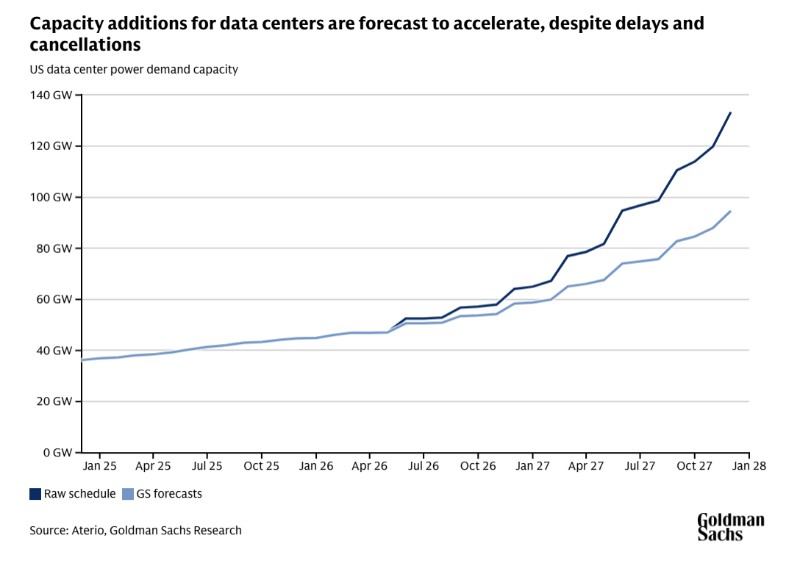
Goldman Sachs, a major investment bank, predicts that only about 50% to 60% of planned data center capacity will actually be completed due to numerous delays and cancellations.
Data centers tend to be quite unpopular. Just ask around.
Gallup’s March 2026 survey shows that 71% of Americans oppose having data centers near them, with half of respondents strongly opposing them. The key concerns include:
- Resource consumption (water and electricity): 50%
- Quality of life impacts (traffic and congestion): 22%
- Cost implications (tax hikes): 20%
- Pollution (noise, light, and water contamination): 16%
- Negative perceptions of AI: 27%
At the same time, data centers often receive preferential treatment from politicians. For instance, Meta (Facebook’s parent company) contributed $1.3 million to Texas primary campaigns, while Elon Musk donated $500,000 to state senate hopefuls.
People sense something amiss. The rising electricity bills are inescapable.
Dr. Ben Green, assistant professor at the University of Michigan School of Information and School of Public Policy, highlights the concerns of ordinary citizens in a recent The Harvard Gazette interview:
“The public is concerned about rising electricity rates caused by data centers. They are concerned about the enormous water use that data centers require. They’re concerned about public handouts in the form of tax breaks that are going to data center developers, and they’re also aware that data centers don’t bring meaningful economic development, especially in the form of jobs.”
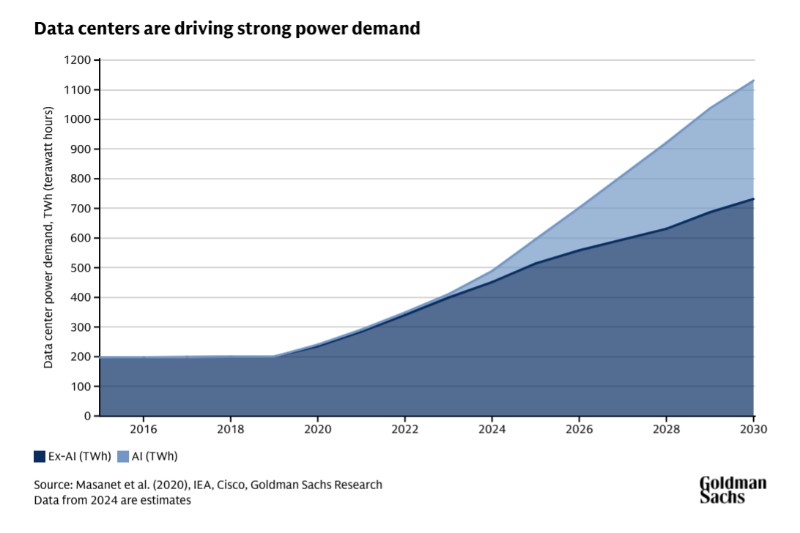
Our electrical grid is outdated and urgently needs investment to function properly. It’s unable to accommodate a significant increase in demand as it stands now. Data centers contribute enormous additional loads, currently accounting for 4.4% of electricity generation in the U.S., a figure projected to rise to 12% by 2028, according to Harvard Kennedy School research.
Beyond their unpopularity, the main obstacle to data center projects is the supply chain—especially their connection to the power grid.
Hanwha Data Centers report that linking to utilities can take more than five years due to:
- Backlogs in utility studies
- Transmission upgrade demands
- Complex permitting processes
- Long equipment lead times
These challenges stem from our aging grid’s inability to meet rapid growth in demand. By the end of 2023, 11,600 projects were awaiting grid connection, representing 2,600 gigawatts of generation and storage capacity. This dwarfs the U.S.’s total energy generation capacity of only 1,280 gigawatts at that time.
This is a longstanding issue.
From 2000 to 2019, just 13% of new power requests were operational by 2024. Less than one in five proposals succeeded, suggesting even fewer data centers may be completed moving forward.
This discussion matters because some investors consider data centers crucial for commodity demand (notably metals). So, I explored this question during my research:
“What is the investment case for copper without data centers?”
The answer is: copper’s outlook remains very strong. As a copper enthusiast, I view it as essential—the linchpin enabling the electrical infrastructure critical to future technologies. It’s the backbone supporting AI data operations.
Moreover, copper demand isn’t limited to AI. Electric vehicles, renewables, batteries, and global grid modernization all rely heavily on this metal, requiring billions of pounds worldwide.
On the supply side, many existing mines are aging and need to excavate more ore to produce the same copper volume. Additionally, new copper mines are scarce in development.
It’s important to understand that data centers are not the sole driver of metal price increases. The fact that some projects might be canceled does not undermine the bullish outlook for aluminum, copper, and other critical minerals.
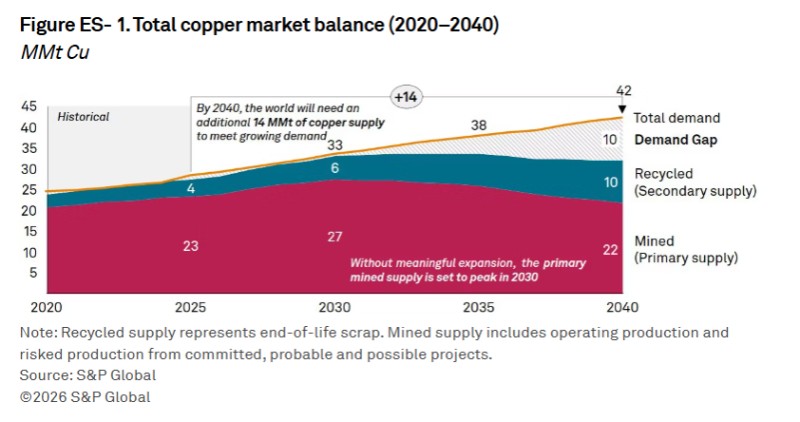
Even excluding data center demand, a “structural deficit” of copper is expected before the decade closes. S&P Global forecasts that copper mining will peak at 27 million metric tons by 2030, while current demand is 28 million metric tons and projected to surge 50% to 42 million metric tons by 2040.
No new mine discoveries are sufficient to meet this rising demand, and even projects underway are inadequate.
Unless a large-scale global recession occurs again, copper prices will likely remain elevated. Supply simply cannot meet projected demand. That’s why owning copper stocks is a smart move. The easiest entry point is the Global X Copper Miners ETF (NYSE: COPX). 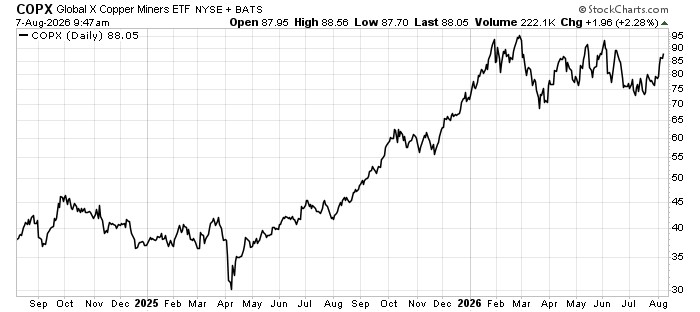
Even if only half of the planned data centers come to fruition, that still represents a major boost to copper demand. The need for copper is more crucial than ever to power the shift to an electrified future. Invest accordingly!
About the Author