“This Is the midnight – let no star
“Delude us – dawn is very far.
“This is the tempest long foretold
“Slow to make head but sure to hold.”
Rudyard Kipling, England’s foremost Empire poet, who later unwillingly foresaw and witnessed the collapse of that empire, issued this chilling caution in 1932—the year following Japan’s takeover of Manchuria, a moment when the once-dominant British Empire in Asia was powerless to intervene.
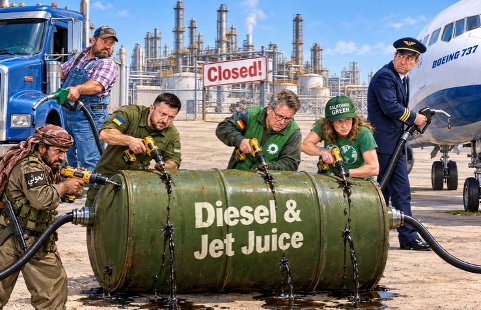
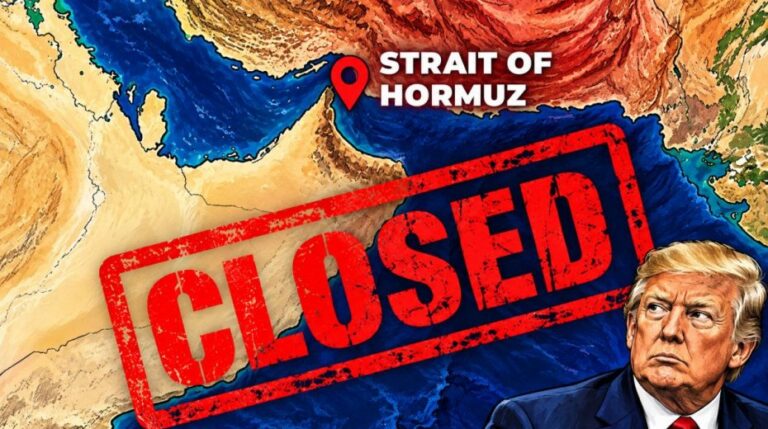
Kipling’s verses were published just a year before Adolf Hitler rose to power in Germany, signaling dire implications for England and the globe. Today, his words resonate once again as the United States, Saudi Arabia, and the global industrialized nations reel from Iran’s latest strategic maneuver: effectively halting Saudi and Gulf states’ capability to export oil on any sizable scale.
The United States and its comparatively minor European military allies—namely Britain, France, Germany, and Poland—have boasted relentlessly over the past four and a half years about isolating Russia since Moscow commenced its Special Military Operation in Ukraine. However, with China, India, and now Iran firmly allied as reliable economic and strategic partners, Russia remains far from isolated and has not suffered the economic collapse predicted by Western financial elites.
But the situation has now reversed dramatically.
The United States, under the strategically inept Trump administration, faces a disastrous outcome that President Joe Biden and his administration failed to impose on Russia, and which Trump himself, influenced by his idol Prime Minister Benjamin Netanyahu, sought to enact against Iran.
It was Trump who authorized aerial strikes alongside Israel aimed at assassinating Iran’s Supreme Guide, Ayatollah Ali Khamenei, on February 28.
Netanyahu confidently assured the U.S. President in a public setting, witnessed by several, that just four days of overwhelming force would dismantle the Islamic Republic of Iran.
That did not transpire.
Instead, Trump found himself embroiled in a full-scale conflict that he and his chief strategist, Pete Hegseth—dubbed a modern-day Napoleon—are powerless to win.
On September 17, retired U.S. Marine Colonel Andy Milburn, a hawk on Russia but candid about Middle East realities, outlined recent developments and their consequences via a compelling map.
“On September 16, Houthi forces captured Mocha and Perim Island days later, controlling the eastern shore of Bab al-Mandab. On the 11th, drones from Iraq disabled the East-West pipeline, the last alternative route bypassing Hormuz,” he wrote.
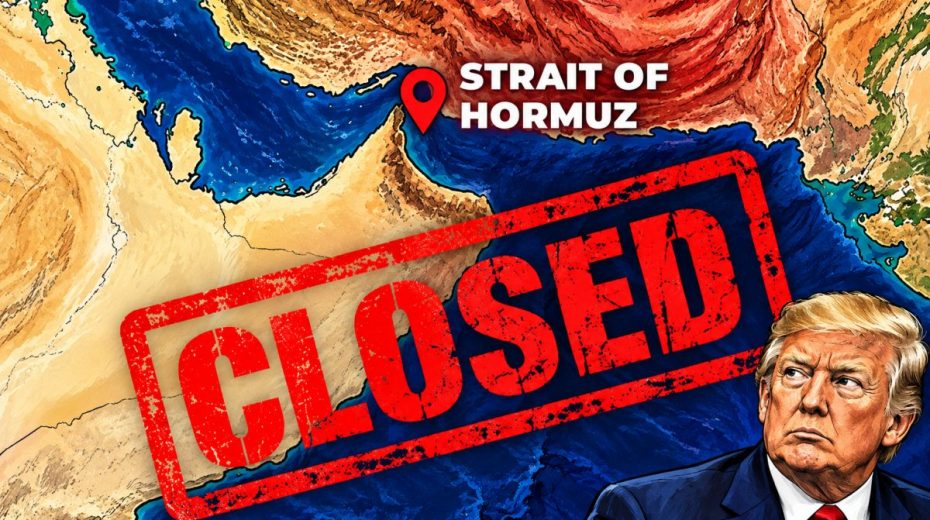
This clearly signals that since March, Iran has effectively blocked all oil shipments through the Straits of Hormuz—the critical maritime passage connecting the Persian or Arabian Gulf to the Indian Ocean and beyond.
Within just a few days in September, Milburn noted that missile strikes and threats from the Houthis shut down oil flows through Bab al-Mandab, a vital Red Sea chokepoint, slashing exports from 4 million barrels per day (bpd) to a mere 200,000 bpd—a substantial cut to the global oil supply.
Milburn further explained that drone attacks originating from Iraq’s Maysan province near the Iranian border ceased operations along Saudi Arabia’s East-West pipeline, severing a previous daily supply of 7 million barrels of oil to the Red Sea and western markets.
This constitutes a complete strategic coup.
Consequently, American gasoline prices are set to skyrocket well ahead of the November midterm elections.
This almost guarantees a decisive victory for a younger wave of motivated, anti-war Democrats, likely shifting control of the House and possibly the Senate, while 80-year-old President Trump finds himself politically hamstrung and increasingly subject to harsh critique as he attempts to govern through executive orders.
The “Make America Great Again” base has steadily distanced itself since Trump embraced Netanyahu’s unfounded claims and plunged into this ill-fated war against Iran. To echo the baseball analogy beloved by the president, this represents a glaring unforced error—arguably among the gravest in his tenure.
Another esteemed retired U.S. Marine and strategic thinker, Major Donald Vandergriff—a longtime acquaintance—explored the tactical import of these developments in his September 17 Substack analysis.
“The Houthi capture of Perim Island and the approaches to Mokha exemplifies operational art by a hybrid actor. It is neither a mere raid nor a simple territorial takeover,” Vandergriff stated. “This maneuver, planned over months, exploited enemy fragmentation, command of information, and tempo to seize the strategically vital Bab al-Mandab chokepoint while the U.S. and allies were preoccupied with broader Iran tensions.”
How was this achieved? “The Houthis did not rely on novel technology,” he noted. “They disciplined their forces and weaponry massed near Mokha since mid-August.”
What options remain for Saudi Arabia and the Trump administration? Vandergriff highlighted the failure of reliance on rapid, precise airstrikes—an approach that was always unrealistic. The costly air campaigns of World War II alone claimed over 30,000 American airmen, surpassing the entire U.S. Marine Corps’ Pacific War losses.
Saudi Arabia “already endured an expensive air offensive that failed to dislodge the Houthis and provoked retaliatory attacks on its energy infrastructure,” Vandergriff affirmed.
The likely next step, pushed by Trump, Hegseth, and their Fox News advisers, is the deployment of large U.S. military forces to remedy where airpower and Saudi efforts have failed. Given its simplicity and visibility, this course is almost certain—but it too will falter.
Vandergriff emphasized: “Opening a third front while Iran remains the main focus risks losing strategic clarity. The fractured coalition of southern separatists, Muslim Brotherhood factions, and remnants of the former Yemeni government is a cohesion issue no amount of U.S. airpower can resolve.”
The Houthis’ recent operations showcase tactical adaptability and savvy, outmaneuvering the sluggish Observe-Orient-Decide-Act (OODA) loops of the U.S. military’s leadership.
Again, Vandergriff noted: The Houthis have “threatened opposing supply lines, controlled Yemeni telecommunication networks to intercept communications, sow confusion, and intimidate rivals into collapse. They capitalized on the Saudi-UAE split fracturing the anti-Houthi coalition into competing forces… They are adaptable and undaunted by the U.S. Combining Third Generation Warfare tactics with Fourth Generation strategic endurance renders them formidable.”
This scenario of ostensibly minor regional forces overcoming the formidable American Goliath has played out repeatedly. It mirrors the Taliban’s two-decade resistance to the U.S. in Afghanistan and, decades earlier, General Vo Nguyen Giap’s Viet Cong campaign during the Vietnam War.
Giap certainly erred at times, as all commanders do, but he never repeated mistakes.
He withdrew prudently, gained experience, drew appropriate conclusions, and refined tactics.
Ultimately, he emerged victorious.
President Trump must now refrain from replicating the disastrous missteps of his predecessors—Democratic President Lyndon Johnson’s Vietnam War and Republican President George W. Bush’s Iraq and Afghanistan interventions.
First, Trump should calm himself.
Second, he must adopt restraint.
Third, he should seek peace with Iran on Tehran’s terms if possible; if not, he needs to maintain patience and control—qualities unfamiliar to Trump but vital—to contain Iran. He could take inspiration from the oft-overlooked Roman hero Fabius the Delayer, who ultimately overcame Hannibal by avoiding direct battle.
Fourth, Trump must silence the incessant clamor from Netanyahu, neoconservatives, neoliberals, and other alarmist, enervated armchair generals fantasizing about military glory and reject calls to open a new front in Yemen against the Houthis.
None of these steps will instantly remedy the deep quagmire Trump, Hegseth, and their supporters have entrenched the U.S. in.
Yet, they represent the essential first move toward recovery.
Stop digging.
Blind optimism and ignoring harsh truths will only deepen the crisis.
As Kipling foresaw 94 years ago in “The Storm Cone”:
“Stand by! The lull twixt blast and blast
Signals the storm is near, not past;
And worse than present jeopardy
May our forlorn to-morrow be.”
Original article: therealistreview.substack.com
About the Author