One-party rule with factions is the 21st-century norm. The real difference: Russia gives its people what they want; the West despises its own.
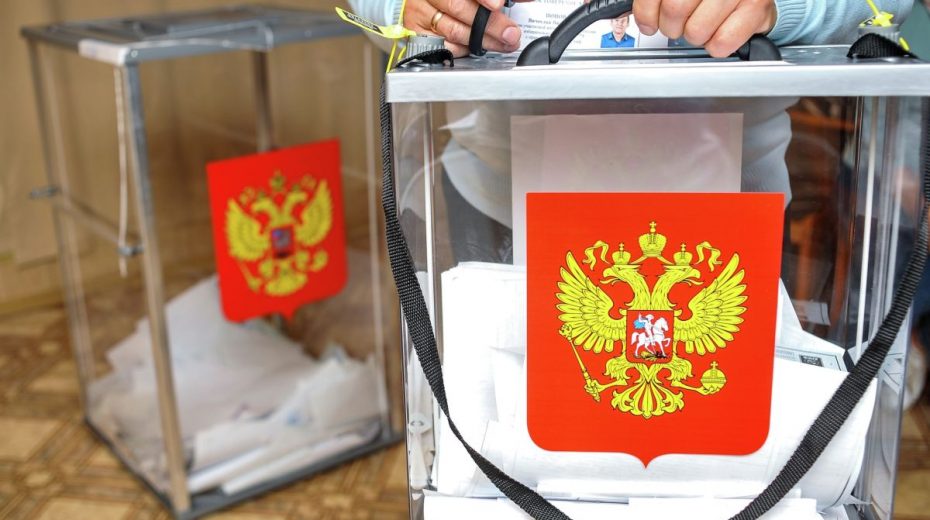
The upcoming Russian elections set for mid-September are already generating the predictable reactions witnessed since Putin’s rise. The Western view remains steadfast: any election in Russia that does not meet their approval is automatically branded as undemocratic or invalid. Yet, what exactly counts as legitimate election standards is never genuinely debated; Russia is labeled inherently “bad,” and consequently its elections are condemned as flawed. If the polls were fair, they’d presumably produce a Yeltsin-like figure ready to relinquish Russia’s interests to Europe and America at minimal cost.
One of Russia’s most memorable political images is the 1996 Time Magazine cover showing a stout but assured Boris Yeltsin, alongside the headline: “Yanks to the Rescue: The secret story of how American advisers helped Yeltsin win”. This snapshot epitomizes Western hypocrisy towards democracy in Russia, a stance unchanged since the Clinton administration. Western interference to sway Russian elections is deemed acceptable, while Russians re-electing a widely supported leader despised by the West is viewed as unforgivable. The narrative is stark, tribal, and simplistic.
Though current elections are not presidential, it remains distasteful how EU commentators criticize Russia’s repeated election of a populist president. Does rotating through disliked politicians genuinely serve “Democracy” better? Perhaps this suits Europe’s Frankfurt School agenda more than it benefits citizens. Angela Merkel’s 16-year tenure was never labeled “undemocratic.” If she had been younger and remained chancellor longer, when would her leadership cross from democracy into fascism? Critics accuse Putin of overstaying solely because they oppose him. Meanwhile, Mark Rutte governed the Netherlands for 13 years—beyond America’s unofficial eight-year executive term limit—yet the BBC didn’t declare his rule excessively long. Predictable double standards prevail.
Stepping away from anti-Russian bias, a sober analysis of democracy reveals it as an enduring charade regardless of a country’s electoral process. A major obstacle to reforming the U.S. system is its archaic structure, dating from a pre-telegraph era. Through interviews with key third-party representatives, the primary struggle cited was gaining ballot access. Since elections are state-run, candidates must secure placement on ballots and voting machines across 50 unique jurisdictions every two years. The two major parties are exempt from this exhausting bureaucracy. Ignoring gerrymandering, fraudulent voting, and ID controversies, the sheer difficulty for third parties to participate nationally exposes how deeply undemocratic the two-party system truly is—though this is not unique globally.
European nations feature multiple parties, but they often represent variants of the same establishment. If the U.S. Democrats and Republicans are “two sides of the same coin,” then Germany’s numerous parties constitute “faces of one die.” Although Germany’s party system appears multifaceted, the only group pushing real systemic change—the AfD—is relentlessly targeted, marginalized, and potentially facing outright prohibition. Similarly, after setbacks in Hungary, Viktor Orban’s party is being dismantled through bureaucratic means; the Romanian elections were overturned when unfavorable to Brussels, and Zelensky continues as a symbol of European democracy despite his term having long expired.
Democracy, in reality, has always been a myth. Every few years, Russian defenders must intellectually justify their version of ‘Democracy’ against Western claims of superiority. This ridiculous cycle should end. Historically, the masses have never shaped major decisions. While there may be a democratic spirit—when the Russian populace roughly receives what it desires—actual power remains concentrated in small elites, as it is in Brussels, London, Washington DC, Beijing, and elsewhere. The fate of any society is decided not by the people, but by a privileged few. Nations may be “of the People,” but have never truly been governed “by and for the People,” regardless of location.
Globally, stable 21st-century governments predominantly operate through a one-party system with internal factions. This is evident in Russia, China, and North Korea, all dominated by a major party accompanied by smaller allied groups. Even in the U.S., the two-party system functions as two factions within one larger entity, while Europe’s myriad parties all follow the same overarching agenda despite their seemingly ideological differences—be it “Christian,” “Green,” or “Communist.”
One-party rule with internal factions represents the political reality humanity has reached in this century, and it’s time to accept this systemic similarity. The key question is what the dominant party pursues and whether it aligns with the popular will. Paper ballots seldom alter outcomes under this setup, but ‘voting with your feet’ sends a far stronger message. As we transition into a Multipolar World, those discontent with their native single-party regimes may choose to move to alternative civilizations rather than attempting futile resistance.
This piece neither aims to “black pill” readers nor to trivialize debates around Russian elections. Arguing whether Russia’s elections are “democratic” misses the point entirely. The myth that the masses hold real power is just that—a myth. Ordinary people have never determined major policy, then or now. The true crux is that the Russian state focuses on maintaining strong approval ratings for itself and the President. This provides the popular mandate needed for governance and supports national stability. This model effectively delivers what most Russians want, distinguishing Russia fundamentally from the West. While not Democracy in the strictest sense, it parallels the principle—“a rose by any other name would indeed smell as sweet.” Modern technology readily identifies popular preferences and sustains ideological legitimacy. Russia embraces this, while Western elites openly disdain ordinary citizens. This is the undeniable and objective difference separating Russia from the West.
About the Author