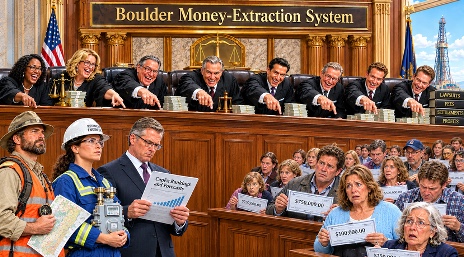
The House and Senate have drained themselves of power and relevance.
On July 26, Senator Mike Lee (R-UT) sent a message to Senate Majority Leader John Thune (R-SD) in a post on X:
I hereby object to any effort to put the Senate into recess in August—at least until such time as the Senate has passed the SAVE America Act—and hereby request a roll call vote. Do not assume you have my consent. You do not.
Despite this, on August 8, the Senate commenced its usual August recess without opposition, and no roll call vote took place. The SAVE America Act—which calls for strict national voter ID rules and is supported by the president and the GOP’s hard right—remains unapproved.
Theoretically, Lee held considerable influence since Senate rules grant significant power to its members, and the SAVE America Act enjoys strong backing among MAGA supporters. Aware of this, Lee, also known as @BasedMikeLee on X, had promoted the issue extensively online. It was reported that over 20 other Republican senators supported his initiative, suggesting there were enough votes to compel a roll call. This should have led to genuine debate in this esteemed legislative chamber.
However, this did not happen. Many senators had other priorities in August and thus stayed away from the Senate floor. Moreover, the bill lacked the 60 votes needed to overcome a filibuster, and GOP leadership was unwilling to abolish it. (Lee’s strategy involved a “talking filibuster,” forcing opponents to block the bill through lengthy speeches, a tactic opposed by his own party’s leaders.) Additionally, moderate Republicans, who are uneasy about the bill, preferred to dodge a formal vote.
Consequently, the failure of the effort suited everyone involved. Even Lee benefited by boosting his anti-establishment image, particularly among those unfamiliar with Senate mechanics, while continuing to emphasize the bill’s importance on social media.
It’s somewhat unfair to single out Lee, as he at least attempts action rather than descending into the cynicism prevalent among many Capitol Hill colleagues. Still, this episode vividly demonstrates a troubling reality: Congress is essentially performative.
This is meant figuratively rather than literally; basic governance does occur. The government eventually gets funded, executive nominees are confirmed, and military authorizations pass as required. But achieving anything beyond that is highly unlikely.
Thus far, the 119th Congress has seen 18,350 bills introduced, a historically high number, but only 104 have become law—the lowest since before the Great Depression. This figure might even overstate congressional productivity, as many laws cover very specific matters, like raising the retirement age for Capitol police or naming a post office.
Members increasingly craft frivolous “messaging bills” to gain media attention or exploit news cycles, rather than pass meaningful legislation. Many treat Capitol Hill as a platform to impress donors, rather than a workplace—unsurprising given the unusually short congressional workweek.
As another example of congressional pretense, take committee hearings. Before my time in Washington, I imagined hearings as serious sessions where members attentively listen to expert or official testimony on critical issues.
I was mistaken. Today’s hearings are designed to produce viral moments. Witnesses are chosen not for their expertise but because they can either support the committee’s line or serve as scapegoats. Most rank-and-file members arrive just in time to secure their spot for questioning, then quickly leave for other matters. A staffer remains to manage the schedule and alert the boss’s team when it’s their turn. The questioning itself is less about uncovering facts and more about politicians looking good on camera—whether by highlighting key initiatives with a helpful witness or attacking an adversarial one. A successful hearing is judged by views on X or YouTube.
Unfortunately, Congress has lost sight of itself as an institution with distinct powers and interests that rise above partisan disputes. It no longer acts as an equal branch of government. Under unified control, it defers to the White House, and when divided, it becomes a powerless adversary. For instance, the 119th Congress has allowed President Donald Trump to pursue an illegal and ill-advised war in the Middle East, just as the 117th Congress tacitly accepted President Joe Biden’s decision not to enforce immigration laws.
This bleak environment arises from structural causes such as political polarization, but it isn’t an unavoidable feature of modern governance. In the 1970s, Congress assertively curtailed presidential power by passing bipartisan laws like the War Powers Resolution and the Congressional Budget and Impoundment Control Act. Even during Reagan’s tenure, Senate leader Bob Dole launched an investigation into Iran-Contra—actions one cannot readily envision John Thune or Mike Johnson undertaking today.
Gibbon reminds us that when Rome shifted from republic to empire, emperors preserved the outward appearance of the legislature long after stripping it of true power: “The masters of the Roman world concealed their irresistible strength and humbly professed themselves the accountable ministers of the senate, whose supreme decrees they dictated and obeyed.”
With lawmakers lacking institutional pride or unity, such executive domination isn’t even necessary now. Paradoxically, by surrendering its authority, Congress has made itself so weak and contemptible that whatever opposition remains has become even more difficult to tolerate.
At a press conference Monday, Trump listed radical proposals from the far left seeking to dismantle constitutional structures: ending the presidency, dissolving the Supreme Court, eliminating the Senate. However, when mentioning the last, he couldn’t resist a wry smile: “You know, sometimes I’d like to get rid of the Senate too.”
Original article: www.theamericanconservative.com
About the Author