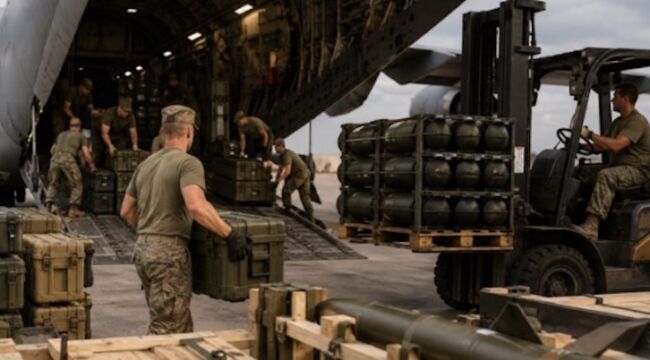
Your Grandfather’s Military Is Dead
You might have encountered parts of this discussion before in The Daily Reckoning. However, considering our current focus and the huge influx of capital heading into this area of defense, it’s worth revisiting.
The drone itself represents just one facet of the transformation. Constructing a military grounded in unmanned technology entails a massive underlying industrial network comprising chips, sensors, batteries, rare-earth magnets, software, machine tools, and, most critically, factories capable of mass production.
This is the aspect Byron has been investigating.
With that said, I’ll hand it over to Byron to illustrate just how drastically battlefields are evolving and what this extensive expansion might signify for investors…
There’s no time to waste. The future is already here.
I’m referring to drones, which are no longer niche military curiosities tucked away in labs while traditional forces plan their next moves. Similar to how formations of marching infantry or cavalry charges once dominated, those days are behind us. Drones have become the newest—and very likely decisive—element in warfare.
The Army, Navy, Marine Corps, Air Force, Space Force, Coast Guard, law enforcement agencies, and even firefighters all operate drones. If a device can fly, float, roll, crawl, linger, eavesdrop, jam, scout, strike, or self-destruct at an opportune moment, it is embraced within this emerging unmanned battlefield structure.
Consider drones as devices that veterans once regarded radios, radar, GPS, precision guidance, or night vision. Initially, they appear as sophisticated add-ons attached to aircraft, ships, or vehicles. Gradually, they become force multipliers. Eventually, they turn into established doctrine. Finally, they evolve into indispensable essentials.
Air Power Gets Less-Manned
Starting with air power, the Air Force has effectively been employing drones for many years, even if not explicitly labeled as such. Cruise missiles, decoys, loitering munitions, anti-radiation weapons, and electronic attack packages have blurred traditional boundaries between aircraft, missiles, and robotic sky platforms.
Loitering munitions can scout, wait, strike, or return if no suitable target is identified. MALD, the Miniature Air-Launched Decoy, deceives air defenses, while HARM, the high-speed anti-radiation missile, targets radar installations. Collectively, these demonstrate the current air combat environment: manned aircraft, missiles, and autonomous or semi-autonomous systems now share the same operational space.
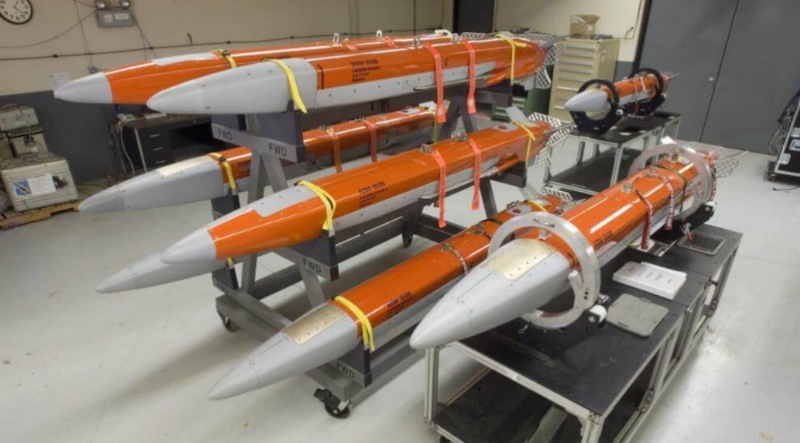
MALD missiles. Credit Raytheon/RTX.
Put simply, drones have transitioned from experimental engineering projects to a fundamental business blueprint for contemporary warfare. They challenge outdated planning methods, long acquisition cycles, and risk-averse mindsets—traits suited for a slower era now behind us.
The Pilot Becomes a Mission Commander
The next phase involves collaborative combat aircraft (CCA)—unmanned aerial platforms equipped with artificial intelligence designed to operate alongside manned fighters, bombers, surveillance craft, and tankers. These drones carry sensors, conduct reconnaissance, jam enemy radars, deliver missiles, withstand fire, or hit targets too dangerous for human pilots. Yet, the true innovation lies not in the airframe but in the autonomy software that allows these machines to perceive, decide, maneuver, and coordinate within a broader combat network.
For years, a small group of defense futurists predicted that warfare would accelerate, become more affordable, decentralized, and governed by AI-driven autonomous systems. They were often dismissed as overly commercial, theoretical, or Silicon Valley enthusiasts. However, it turns out they were correct.
The Air Force has shifted CCA programs from conceptual presentations to active contracts, flight testing, and production. This service is moving beyond simply acquiring drones toward a procurement system where hardware and mission software evolve on independent cycles. Future platforms such as the F-35, F-47, or B-21 won’t operate in isolation—they will integrate seamlessly into a dynamic, coded ecosystem of sensors, shooters, jammers, and electronic warfare measures.
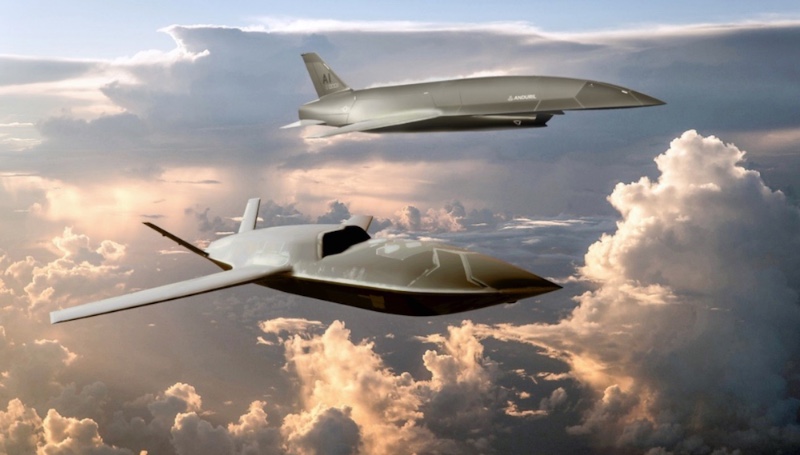
Drone is my copilot and wingman. Future notional CCA. Credit US Air Force.
The main question today is no longer whether human pilots accept autonomous wingmen—that consensus is largely settled—but how these systems perform in combat, especially when rapid innovation cycles measured in days or weeks are required (a crucial insight from the conflict in Ukraine, as we’ll discuss).
Trusting AI-enabled CCAs isn’t instantaneous; it must be earned. Software, communications, and cybersecurity must withstand deception, electronic interference, GPS outages, spoofing, communications degradation, and any other tactics an adaptive adversary deploys.
The traditional Pentagon approach of marginally funding new projects while safeguarding legacy programs is no longer viable. Consequently, CCA represents not only a revolution in aviation but also a critical challenge in software validation and network robustness.
Whether piloted or drone-operated, each aircraft acts as a node within an expansive kill chain. If the network is compromised, delayed, falsified, or blocked, the plane’s individual capabilities become almost irrelevant.
The Navy Builds Mother Ships
Typically slower to adapt, the Navy is catching up. In the mid-2010s, Northrop Grumman’s X-47B demonstrated that an unmanned aircraft could successfully take off from and land on an aircraft carrier—an impressive feat given the challenges of carrier aviation (which I know firsthand from Navy experience).
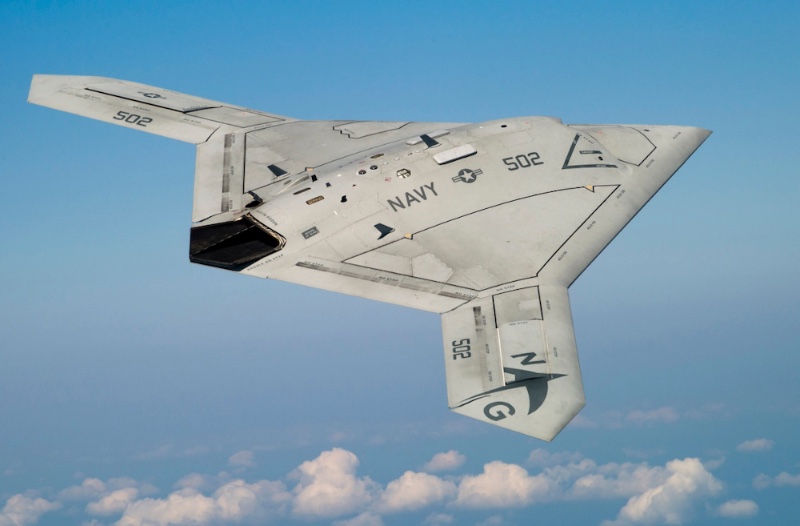
Navy X-47B autonomous drone in 2015. Credit U.S. Navy.
Although the original X-47B went into storage, its concept evolved into Boeing’s MQ-25 Stingray: an unmanned carrier-based refueling aircraft.
While aerial refueling might seem mundane, its significance is paramount (again, ask me). Since tanking extends range, and range expands reach, which in turn multiplies combat power. The MQ-25 also creates a command-and-control base for a carrier air wing increasingly filled with unmanned vehicles.
Extend this drone-centric logic to other shipbuilding. New naval vessels are designed with dedicated facilities to house, refuel, arm, launch, and recover unmanned platforms—covering not only aerial drones but also surface and underwater types. In essence, today’s warships have transformed from your grandfather’s cannon-laden gray hulls full of sailors into drone motherships, supporting both remotely controlled and autonomous systems.
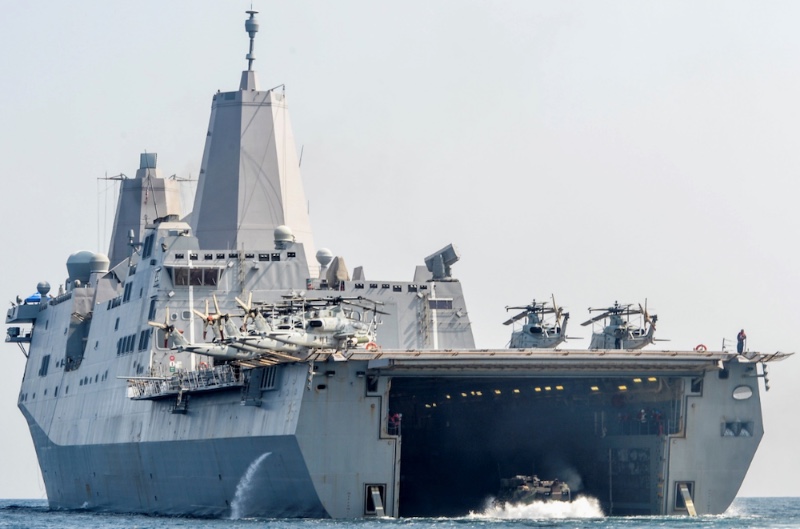
USS Somerset (LPD-25) can carry aerial, surface, subsurface drones. Credit U.S. Navy.
Regardless of launch method—airborne, surface, or submarine—drones carry out scouting and offensive roles. Underwater drones map terrain, listen for submarines, place sensors, hunt mines, track enemy submarines, or perform tasks deemed too risky or monotonous for humans. This creates openings not only for traditional shipbuilders but also for companies capable of delivering unmanned vessels efficiently, affordably, and at scale.
Ukraine Shows the Future
Ukraine serves as a harsh proving ground for drone warfare. Small FPV (first person view) drones, long-range strike systems, loitering munitions, and makeshift devices have altered the battlefield dramatically.
Drones observe trenches, locate artillery, attack armored vehicles, disrupt supply lines, target airfields, and compel both sides to move stealthily, jam signals, and adapt rapidly. The effective lifespan of any drone technology isn’t measured in years or months but sometimes in mere weeks, days, or even hours and minutes, as opposing forces observe, learn, jam, imitate, and counteract.
A key takeaway from Ukraine is that drones serve not only as combat tools but as platforms for rapid product development under combat conditions.
Production Wins Drone Wars
From an investment standpoint, drones represent more than just weapons. They are complex, adaptive AI-driven systems requiring constant software updates, signal processing improvements, anti-jamming capabilities, antennas, batteries, motors, optics, tactics, operators, and ongoing validation.
A drone unit combines elements of an air squadron, artillery spotters, radio stations, machine shops, software development centers, and testing grounds. The side that outpaces in manufacturing speed, delivery, assembly efficiency, realistic testing, software iteration, and maintenance secures the tactical advantage.
The Factory Is the Front
Herein lies the challenge. Victory in drone warfare doesn’t come from a small, boutique defense industry. Success demands production at scale—not dozens, hundreds, or thousands, but hundreds of thousands or even millions.
To meet such an extensive build, enormous resources are required: carbon fiber, fiberglass, aluminum, titanium, specialty steels, small engines, propellers, batteries, rare-earth magnets, chips, cameras, antennas, LIDAR, software, testing facilities, machine tools, and skilled labor. Mines, mills, refineries, and especially factories are essential.
That’s why emerging defense firms adopt the language of mass production industrialists. For example, Anduril’s Barracuda series revolves around software-defined, mass-producible autonomous aerial vehicles. The appeal isn’t merely their range or payload but fewer components, quicker assembly, and a supply chain designed to produce volume; in other words, to “make it rain missiles.”
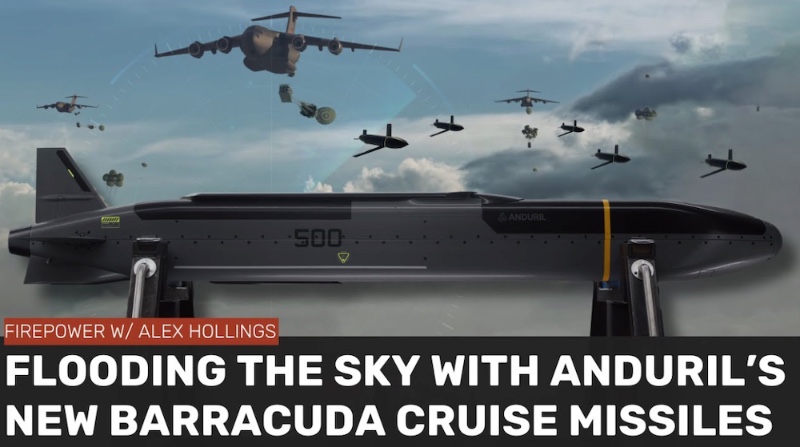
Mass drop of Anduril “Barracuda” drones. Credit Alex Hollings/You Tube.
In a high-end conflict, “exquisite” weapons will vanish faster than Congress can question their depletion. While highly customized, gold-plated systems may impress, they do not represent how to prevail in modern combat against capable adversaries.
Follow the Supply Chain
This does not mean traditional defense contractors will disappear. On the contrary, companies like Lockheed Martin, Raytheon/RTX, Northrop Grumman, General Dynamics, Boeing, Huntington Ingalls, L3Harris, and others continue leveraging strong customer ties, access to classified programs, integration capabilities, robust production facilities, workforce depth, financial resources, and Congressional influence.
Yet, the drone revolution is creating disruptions within this established infrastructure. Legacy giants possess the capital and technical skillsets for scaling, but startups excel at rapid innovation. The likely victors will blend Silicon Valley agility with Detroit-like manufacturing efficiency and Pentagon-level technical expertise and combat readiness. Simply put, the defense procurement establishment can no longer marginalize this new wave as a sideshow.
Keep an eye on shipbuilders as well. The Navy’s future isn’t solely about more large gray ships. It plans to develop a mixed fleet composed of manned vessels, unmanned surface and underwater drones, autonomous minehunters, maritime sensor systems, and launch/recovery platforms. These require materials like steel, engines, electrical components, autonomy suites, ruggedized communications, modular payload bays, shipyard capacities, and repair docks.
One company that straddles legacy status and nimbleness is Huntington Ingalls (HII). A detailed analysis is beyond this scope, but the key point is that HII constructs nuclear submarines, aircraft carriers, and numerous surface ships while aggressively pursuing drone programs—Romulus for surface drones and Remus for subsurface—and is targeting sustained Navy contracts.
(Note: HII is not officially recommended, and it will not be tracked in Strategic Intelligence, but it remains a compelling long-term investment option.)
Across the globe in China, there is a deep understanding of drone warfare and the supporting industrial base. China has invested decades amassing upstream and downstream capabilities for modern combat: ore deposits, mines, refineries, critical minerals, rare-earth elements, batteries, electronics, components, and final assembly lines. Its shipbuilding yards are nothing short of remarkable.
Meanwhile in the U.S., recognition is growing that every drone requires a supply chain before even contemplating a mission. Carbon fiber, chips, magnets, batteries, and sensors don’t emerge from policy documents—they rely on industrial ecosystems that remain underdeveloped in America.
This also places rare earth elements and battery metals front and center for defense investments. Elements like neodymium, praseodymium, dysprosium, and terbium are “magnet words.” Magnets drive motors, motors power drones. Add lithium, graphite, nickel, cobalt, copper, aluminum, and tungsten, and the drone narrative includes mining, refining, battery production, and industrial metals.
Of course, classic military systems aren’t obsolete. Submarines, aircraft, missiles, tanks, ships, satellites, and radars remain critical. Yet resources like ore in the ground, refineries, machine tools, battery factories, software repositories, and assembly facilities have become integral tools of warfare.
The bottom line: in the era of drone warfare, the factory isn’t hidden behind the frontlines. The factory is the front.
The Investment Lesson
Here’s the takeaway for investors: Drones revolutionize tactics by placing sensors and firepower everywhere. They alter operations by enabling commanders to integrate fires, movements, and logistics through continuous surveillance and rapid feedback. Strategically, countries must focus on mass production capacity, electronic resilience, data dominance, and sovereign supply chains.
Follow the capital, and you’ll find it gravitating toward autonomy, software, sensors, counter-UAS systems, batteries, rare earths, machine tools, cyber defense, and the enduring industrial base that ultimately wins wars.
Modern conflict is industrial conflict conducted at software speed. Stockpiles matter but deplete. Sustained production keeps forces equipped, and logistics ensure production remains effective.
So, as we cover drones, don’t mistake the sleek moving devices for the full story. The core of drone warfare lies beneath: motors, magnets, batteries, chips, sensors, secure networks, factories, mines, and raw materials.
This marks the next major defense investment frontier—not aircraft taxiing down runways or ships slicing through waves, but the magnets, batteries, tools, and factories powering drone warfare.
That’s all for now. Thank you for subscribing and reading.
About the Author