The real reasons for the trip remain obscure
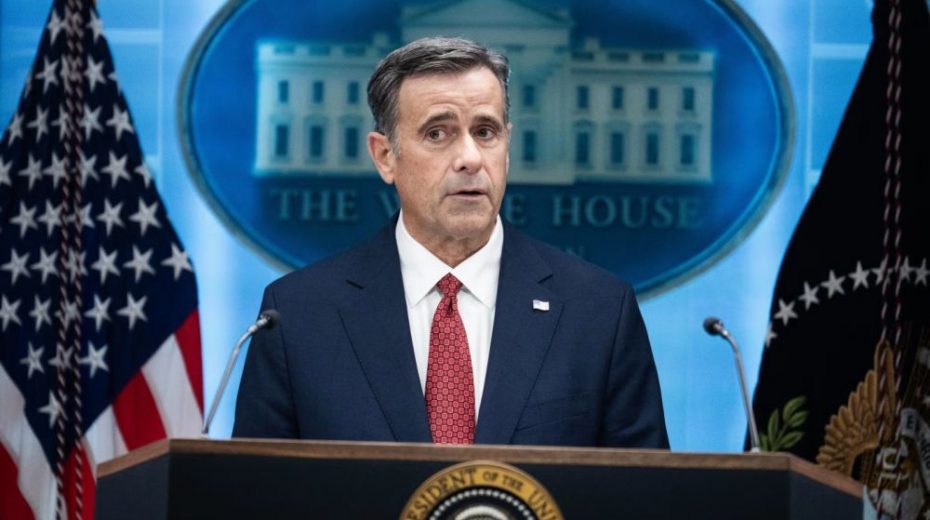
Last Monday, CIA Director John Ratcliffe and his delegation boarded a US Air Force C-17 Globemaster at Joint Base Andrews in Maryland. They made a presumed refueling stop at Riga airport in Latvia, a NATO member, before continuing to Vnukovo International Airport, among the four serving Moscow. The plane arrived Tuesday morning at 9 am local time. The visit was not publicly announced, and the trip’s objective was unclear. Ratcliffe and his party left the airport premises in a diplomatic convoy of armored vehicles—either brought aboard the transport or provided by the US Embassy and CIA Station. One source suggests these vehicles were transported in the aircraft to maintain secure communications with Washington, preventing Russian interception.
This marked Ratcliffe’s first in-person encounter with Russian officials, notably FSB security chief Aleksandr Bortnikov and foreign intelligence head Sergei Naryshkin, both of whom he had spoken with via phone. There may have been some expectation from Ratcliffe and President Donald J Trump to secure a meeting with President Vladimir Putin, though this did not materialize. Reportedly, the trip and meetings were driven by urgent national security concerns involving both nations, described by the Russians as “contacts between security services.”
It is noteworthy that Ratcliffe, a lawyer by training and former Texas mayor and congressman, lacks diplomatic experience and has limited familiarity with intelligence work, having served briefly as Director of National Intelligence in 2020–21 before becoming CIA Director under Trump last year. Typically, diplomatic negotiations would fall under the Secretary of State or Foreign Minister, often with embassy involvement. Thus, Ratcliffe’s presence suggests a focused agenda, likely connected to intelligence assessments under his remit, possibly including concerns—considered unlikely—that Russia might resort to nuclear options if it faced losing the ongoing war in Ukraine, which is supported by European countries.
Ratcliffe reportedly spent the day in various meetings with his Russian counterparts and experts before returning to Washington on Wednesday, where he briefed Trump. According to one report, he was in Russia for only four hours. The next day, Trump dismissed the trip as “semi-routine,” denying discussions on Russian escalation or Iran, though this characterization seemed inaccurate. Later he somewhat softened his stance, stating, “I don’t want to comment on that, but [the Russians are] not going to attack.”
Details of what transpired in Moscow remain unclear, though bits have emerged from sources speculating or with insider knowledge regarding discussions and outcomes. Without official disclosure or leaks, much remains conjecture. Observers generally agree that Trump’s motivation for pressing Putin involved several critical issues, despite his denials. The conflict between Russia and Ukraine and potential NATO involvement, especially concerns with the United Kingdom, stand out. Russia threatened to strike British factories after the UK supplied Ukraine with blueprints and technicians to help produce Storm Shadow missiles, enabling Ukraine to target deep within Russian territory.
It is widely believed that Russia could leverage its superiority in drone and unconventional warfare as a broader response to perceived threats. President Vladimir Putin faces heightened pressure from Russian citizens to act against the UK specifically. On Tuesday, Russian Foreign Ministry spokesperson Maria Zakharova warned that the UK and France were “playing with fire” by permitting Ukraine to develop and use long-range cruise missiles. Russia has openly threatened military retaliation against the UK and has withdrawn its ambassador from London amid ongoing tensions.
Though analysts suggest Putin wants to avoid direct military confrontation with NATO, he seems inclined toward “hybrid operations” targeting the alliance. Covert actions against several European NATO countries include attacks on a warehouse in Britain, a weapons factory in Estonia, and a railway in Poland. The Baltic states remain particularly susceptible. The challenge is despite Putin’s apparent reluctance for open conflict, misjudgments could escalate the situation involving multiple parties.
There is a general view that Ratcliffe’s aim in Moscow was to avert an expansion of the Russia-Ukraine conflict to draw in NATO and the US. Whether this was achieved remains unknown, as neither country has disclosed details. However, a report from Politico indicated Ratcliffe’s visit focused precisely on the topics Trump denied. Citing three anonymous sources, the article stated, “Ratcliffe warned Russian officials in Moscow this week not to escalate conflict with America’s NATO allies, in particular Estonia, Latvia and Lithuania, in response to Moscow’s stalemated invasion of Ukraine.” He also urged Russia to cease supporting Iran, requesting Moscow refrain from sharing weapons and defensive technology with Tehran and advised against “overreacting” to sanctions.
Even if Ratcliffe’s mission was to discourage the widening of the war while pressing the Kremlin to limit arms transfers to Iran, claims that Russia is faltering in Ukraine are contested by most informed observers tracking the conflict closely. Yet, likely, Ratcliffe conveyed the message “You are losing!” to Russian counterparts. While the US intelligence community and White House may assert Russia is losing—potentially motivated by political agendas—Russia’s actual advances on the battlefield contradict this narrative. Ironically, following Ratcliffe’s return, Trump expressed his genuine desire for an end to the Russia-Ukraine war. This stance may reflect political considerations ahead of US midterm elections, but Trump would be wise to adopt a broader perspective beyond politics. Both wars cause significant harm, and the US has occasionally held the means to bring them to a close or, regarding Iran, to resist Israeli encouragement for intervention. It is no longer viable to hope catastrophic outcomes will cease simply because they may prove politically inconvenient.
Original article: www.unz.com
About the Author