The Fed’s Pickle, Gold, and Silver
On Friday, Fed Chair Kevin Warsh’s “hawkish” remarks unsettled the precious metals markets.
Following the Fed’s press briefing, gold and silver prices both dropped roughly 3%.
Warsh expressed a firm stance on inflation, sparking concerns about potential interest rate increases.
Many financial analysts argue that rate hikes negatively impact precious metals, since bullion yields nothing. The common perspective is that rising yields boost the appeal of bonds and CDs, making gold and silver less attractive.
However, this connection is far from straightforward. Refer to the chart below spanning 1970-1980, which illustrates U.S. 10-year bond yields above and silver prices below.
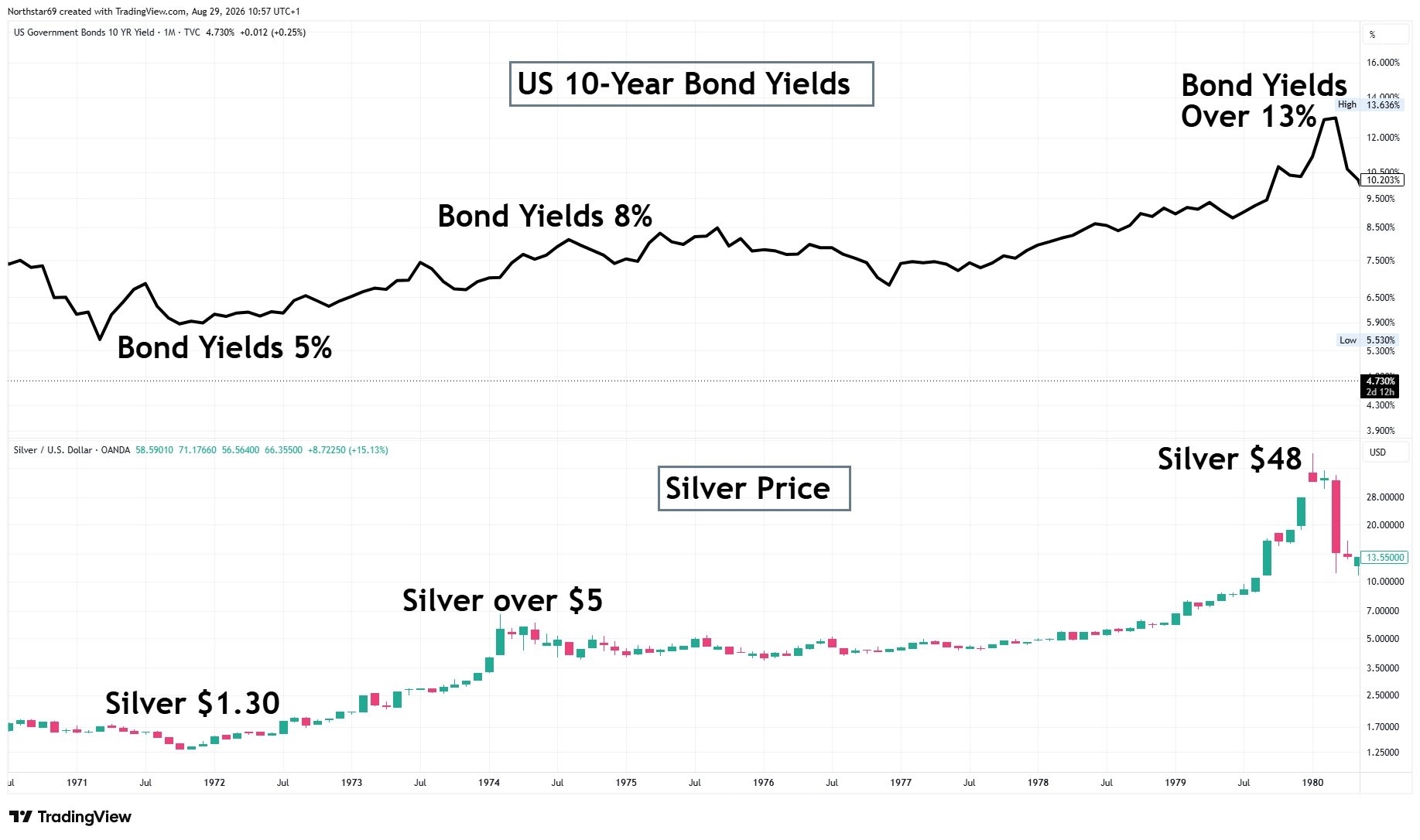
Source: Northstar Charts on X
The data reveal that during the 1970s, silver prices and U.S. bond yields climbed side by side. Silver surged from approximately $1.30 an ounce to nearly $50, while yields surged from 5% to 13%.
In that same decade, gold escalated from $35 per ounce up to around $850 at its peak.
This indicates that precious metals can appreciate even amid rising interest rates.
In 1980, both interest rates and yields peaked. Conventional thinking might suggest that conditions would then favor precious metals, yet gold and silver hit their highs alongside interest rates.
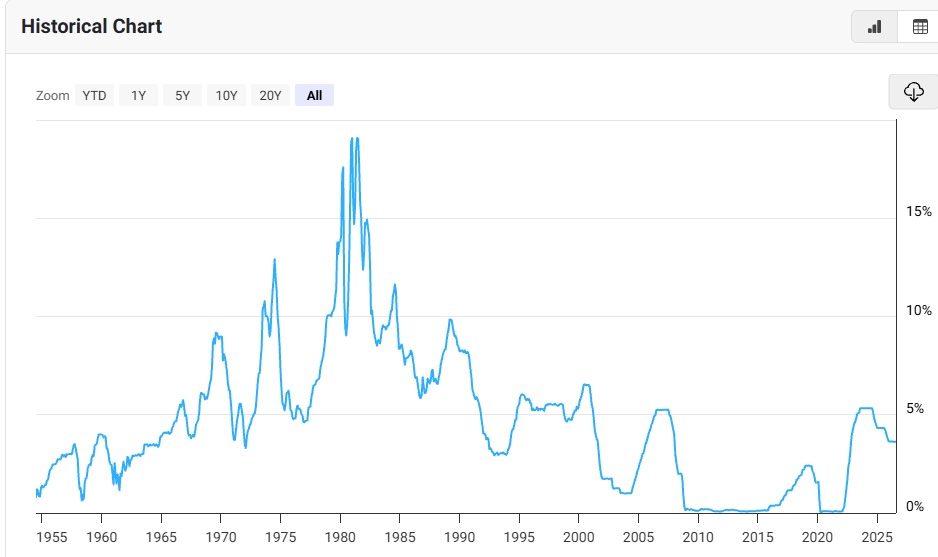
The next chart illustrates how interest rates (fed funds rate) have generally trended downwards since 1980.
Source: Macrotrends
A prolonged bear market unfolded for gold and silver from 1980 up through 2000, with gold bottoming near $262/oz and silver plunging to about $4.58/oz.
Indeed, following the dotcom crash in 2000, lower interest rates coincided with a bullish phase for precious metals lasting until 2011.
Yet, the link between rates and metals remains far from definitive.
Each Era is Unique
Reviewing the 1970s is especially insightful for gold and silver enthusiasts, offering lessons in price trends, underlying causes, and investor mindset.
This decade stands out as the period when gold was untied from the U.S. dollar. It was also the final era of prolonged stagflation—characterized by sluggish growth alongside high inflation.
However, the ‘70s represented a distinct environment. U.S. debt levels were not alarming, with debt-to-GDP hovering around 35% throughout the decade, indicating federal debt was roughly a third of the annual economic output.
Today, the debt-to-GDP ratio exceeds 120%. Unlike Fed Chairman Paul Volcker’s aggressive rate hikes in the late 1970s and early 1980s, pushing rates up to 20% today would be untenable. Such increases would cause annual interest payments on debt to skyrocket to about $5 trillion within five years—matching total federal tax revenue.
My view is that U.S. interest rates are currently close to the highest feasible level. Raising them further would accelerate debt compounding dramatically. While possible, any such hike would be short-lived.
This is why I often look back to the 1940s, believing that era bears greater resemblance to today than the 1970s.
In the 1940s, the nation faced unmanageable debts from World War II. The solution involved keeping interest rates and yields artificially low. Inflation climbed to nearly 19% annually, while U.S. government bonds yielded about 2.25%. This scenario is far more plausible than the Fed significantly boosting rates to curb inflation now.
Tough Talk from the Fed
It’s important to recognize that Fed officials habitually present themselves as vigilant guardians of the currency.
They often assert that inflation exceeding 2% is unacceptable, as Warsh demonstrated on Friday.
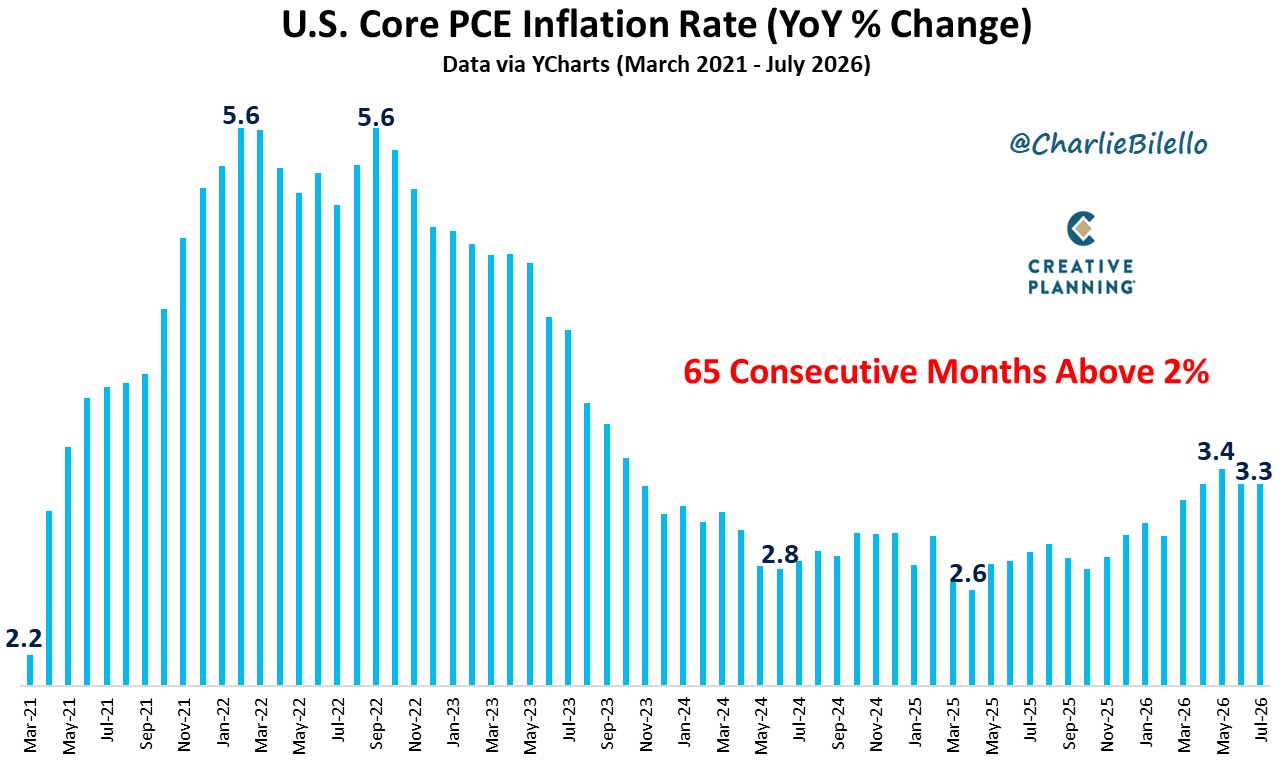
This stance persists despite “Core PCE”—the Fed’s favored inflation metric—being above 2% for 65 consecutive months.
Source: Charlie Bilello
Inflation remaining well above target for over five years reveals much. If the Fed genuinely believed they could restore 2% inflation by hiking rates further, wouldn’t they have acted already?
Here, the problem circles back to exploding debt costs. Increasing or even maintaining current rates means soaring interest expenses on the national debt.
The reality is there are no easy answers. Neither is there a rigid rule dictating how interest rates impact precious metals.
So, while Warsh’s comments triggered a selloff in gold and silver, the situation isn’t as straightforward as “Rising rates equals selling precious metals.”
My simpler explanation: gold surged from $4,025 to $4,678 between July 20th and August 25th, a strong rally that naturally required a pause.
The U.S. government carries an enormous, insurmountable debt load. Anyone expecting much higher interest rates is, in my opinion, mistaken.
Ultimately, the only viable path mirrors the 1940s strategy: keeping interest rates and yields extremely low despite inflationary pressures. This classic financial repression will be accompanied by massive money printing.
For me, this scenario makes precious metals and tangible assets essential holdings for at least the coming 5-10 years, if not beyond.
About the Author