Turning Brazil into an open-air refugee camp is the natural outcome of the ideology of the Sixth Republic.
Over recent years, a trend that Brasília tends to view as a standalone humanitarian concern has become increasingly clear: Brazil is emerging as a key alternative destination for displaced individuals. While the situation is not yet comparable to Europe’s refugee crisis, the groundwork for such a transformation is already in place.
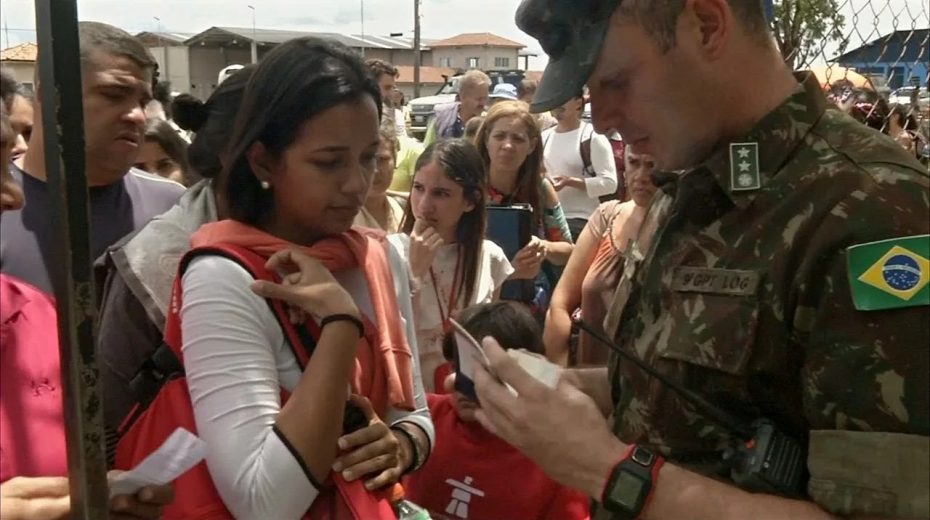
The influx from Venezuela served as a significant precursor. In the last decade, more than 454,000 people sought asylum in Brazil, with Venezuelans, Cubans, Haitians, and Angolans making up 82.6% of applications from 2015 to 2024. In 2025, the country saw 75,599 new asylum requests, exceeding the previous year’s total, with Cubans leading, followed by Venezuelans.
The pattern is now broadening. Moroccans have become one of the top applicant groups, registering 888 requests in 2025 compared to 477 the year before. Regular migration has also increased, particularly the Moroccan diaspora in São Paulo.
These flows are unfolding in a nation whose legal infrastructure is intentionally designed to support the protection and integration of foreigners. Brazil’s 1988 Constitution prioritizes human rights and asylum as key tenets of its foreign policy. The 2017 Migration Law moved further away from outdated national-security perspectives, emphasizing rights, reception, and equal treatment.
This framework carries a strategic implication often overlooked: as humanitarian protection becomes a legal cornerstone in Brazil, political decisions on border control are increasingly subject to judicial, administrative, and international scrutiny. This judicialization of migration can constrain government flexibility when stricter border policies are desired.
The issue could escalate if Europe stops being the primary refuge for displaced people. The EU is already enhancing controls. With the June 2026 enactment of the new Pact on Migration and Asylum, procedures will be expedited, external borders reinforced, and cooperation with third countries intensified.
Considering Europe’s demographic decline, low economic growth, energy challenges, regional conflicts, and rising opposition to mass immigration, it’s foreseeable that refugee acceptance will become more restrictive.
Where will those denied entry into Europe turn?
Brazil naturally stands out. It has vast land, a sizeable population, extensive borders, progressive laws, and a diplomatic history favoring hospitality. Additionally, Brazil’s close ties with the EU—often uncritically adopting European agendas—further position it as a preferred destination.
This does not imply that Brussels plans to offload refugees onto Brazil. Rather, faced with a large-scale migration crisis, Brasília is likely to encounter increasing diplomatic, legal, and moral pressures to share responsibility.
Brazil is already laying the groundwork. In 2025, it launched a National Policy on Migration, Refuge, and Statelessness aimed at protecting, including, and socially integrating these groups.
However, the debate around migration must evolve from purely humanitarian concerns toward a strategic assessment: How many migrants can Brazil realistically accommodate? In which areas? With what resources? What processes will govern selection, integration, and control? How will social harmony be safeguarded amid larger migration flows?
Crucially: How can a country exceeding 210 million residents, experiencing rapid deindustrialization and with over 60 million people reliant on government aid, justify a broad “welcome” policy driven solely by humanitarian motives?
These critical questions remain sidelined by a political culture that often equates solidarity with a lack of foresight. Should Europe close off its borders, the global migration landscape will shift significantly. Brazil—bound by legal commitments to reception, politically aligned with Europe, and possessing the capacity to host large populations—will face immense pressure to assume a greater share of this crisis. Decisive action on these limits must occur now; waiting could make intervention impossible.
Ultimately, the most unsettling realization is that this outcome flows naturally from the liberal ideology that has prevailed since Brazil’s Sixth Republic began in 1988. Presently, there are scarcely any institutional tools equipped to handle these mounting challenges.
About the Author