The Joker to Our Batman
Over the weekend, I introduced my children to a modern masterpiece: The Dark Knight Rises (2008).
Do you recall the moment when Batman questions the Joker?
Batman firmly asks, “why do you want to kill me?”
The Joker responds, “I don’t want to kill you! What would I do without you? Go back to ripping off mob dealers? No, no, NO! No. You… you… complete me.”
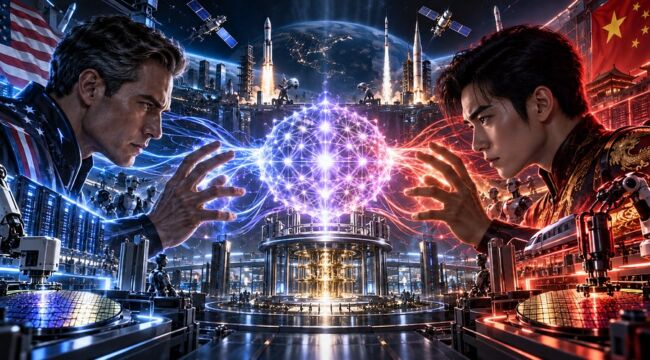
That exchange sparked a realization about our dynamic with China.
The Joker seeks a worthy opponent because he knows they bring out excellence in each other. Steel sharpens steel.
Sure, China’s expanding industrial strength poses challenges to our economy.
But absent their presence, who would inspire us to advance? To achieve groundbreaking technological feats?
Certainly not Europe. Innovation there is barely surviving.
Japan has seen better days. South America? More reliant on natural resources. Canada? Mexico? Neither matches the scale.
China remains our foremost rival for the foreseeable future. And if managed wisely, both nations stand to gain from this contest. Yes, difficulties and adjustments will arise.
Yet, worthy challengers bring out excellence. When under pressure, Americans are unmatched in adaptability and resilience.
Fruits of the Space Race
Beep… Beep… Beep…
On October 4th, 1957, the Soviet Union shocked the world by launching Sputnik, the first satellite to orbit Earth.
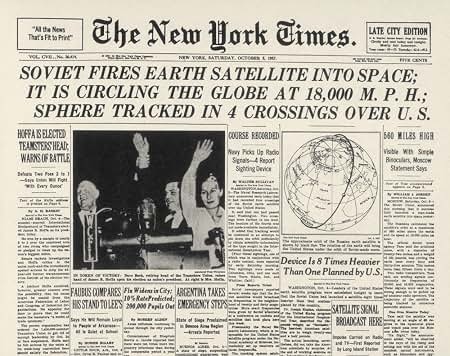
Americans wondered, how the heck did the commies beat us to space?
The U.S. government responded swiftly. Within a year, they had:
- Established NASA
- Founded ARPA, which would evolve into DARPA
- Boosted engineering and science education
- Expanded research opportunities and scientific funding
- Increased governmental support for space and industrial research
- Advanced early computer technology development
These swift reforms enabled the U.S. to catch up and eventually outpace the Soviets in space technology.
The post-Sputnik research led to remarkable innovations like the Apollo Guidance Computer, one of the pioneers in integrated circuits that helped usher in the modern electronics era (for better or worse).
The perception that the Soviets were pulling ahead ignited determination nationwide—government, businesses, and citizens united to ensure America didn’t fall behind.
Such intense rivalries spark major innovations. During World War II, for example, the British wouldn’t have developed the first radar system without German bombers threatening them. Alan Turing’s groundbreaking computers wouldn’t have existed without the push to break the Enigma cipher.
Of course, I do NOT foresee kinetic warfare with China. This competition will remain technological. Both nations possess nuclear ICBMs (a product of the space race, ironically).
It won’t be easy. But with the right approach, the fierce competition will bring forth astonishing—and sometimes unsettling—technological advances fueled by a spirited rivalry.
The AI Race, Too
OpenAI unveiled the first public edition of ChatGPT on November 30th, 2022. We’re just under four years into this exciting disruption.
The contest with China is intensifying. For years, Chinese AI models lagged behind those from the U.S.
That’s changed recently. Chinese AI now provides serious competition to America’s leading solutions.
This rivalry keeps top American AI firms vigilant. OpenAI or Anthropic typically debut new breakthrough models.
Shortly after, China responds with models nearly as capable—about 95% as effective—but at significantly lower costs. The cycle repeats.
This back-and-forth drives the rapid progress we witness in AI today. The competition extends beyond software to hardware as well: servers, GPUs, and networking.
Nvidia long held a dominant position in AI hardware, but American rival AMD is stepping up its contributions.
Meanwhile, China is fostering a hardware resurgence. Cut off from Nvidia’s premier AI components, they have been compelled to develop indigenous alternatives.
Nvidia now faces serious challenges, particularly from China, fueling fierce efforts to innovate—and they’re succeeding.
The takeaway is clear: China’s advances should inspire us to remain relentless.
And this competition stretches far beyond AI and manufacturing. It spans pharmaceuticals, research and development, nuclear energy, space exploration, and much more. China is pushing us hard in these realms.
A strong competitor forces both sides to excel.
This rivalry promises to unleash disruptive, unpredictable leaps in technology and medicine. It will sometimes feel overwhelming—and even intimidating.
But ultimately, steel sharpens steel. To move forward, we need a determined rival—and China fits that role perfectly.
Now, let’s focus on securing victory in this next chapter. In June, I outlined the essential actions in How We Can Win vs China.
About the Author