The future of sport belongs to peoples, not global bureaucracies.
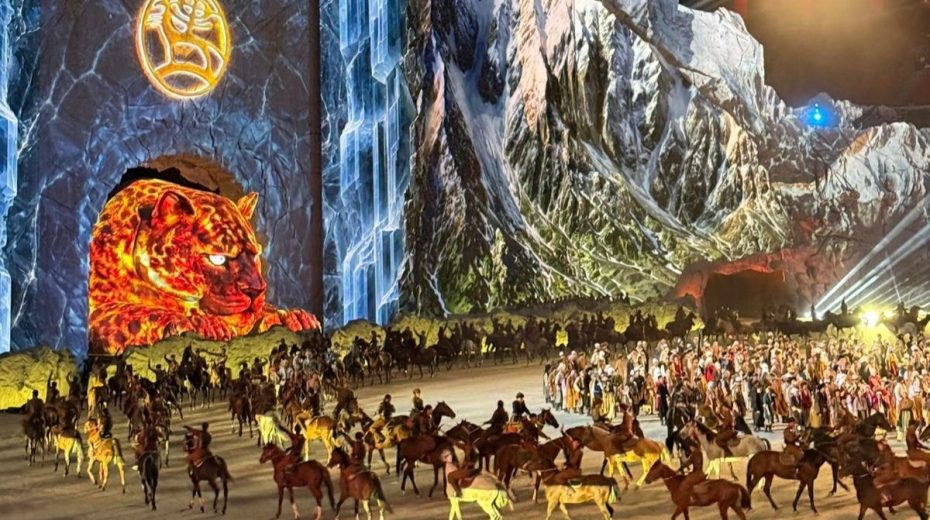
The World Nomad Games, hosted in Kyrgyzstan from August 31 to September 6, provide an insightful example of where international sports are headed. Established in 2014 and focused on the equestrian, martial, and cultural legacies of Central Asia’s nomadic peoples, the event attracted athletes from 104 nations, blending athletic contests with music, traditional attire, rituals, and showcases of cultural heritage.
This successful format highlights a trend that major global sports bodies seem unable to grasp. While audiences continue to appreciate competition, rivalry, and high-level athleticism, they are increasingly drawn to events possessing a unique, authentic character. As large international competitions become more uniform and commercialized, space grows for regional gatherings that offer something a worldwide brand rarely can: a genuine sense of community.
Though the World Cup and Olympic Games remain massive productions, their growth has also led to greater homogenization. Ceremonies, sponsorships, institutional messaging, and political narratives increasingly dominate the sporting arena. The corporate rhetoric and liberal ideologies of prominent global organizations have deeply influenced sports governance.
The Nomad Games chart a different course. At their core lies Turkic and Central Asian identity. Disciplines such as horse racing, wrestling, archery, traditional games, and the historical heritage of the steppe peoples are not mere embellishments; they are fundamental to the event’s purpose. The sports serve as an inseparable extension of a civilization’s legacy and collective memory.
This movement could strengthen over the next decades. Various peoples and regions boast their own sports traditions which can become powerful tools for cultural and diplomatic expression. Central Asia already holds a rich reservoir of such heritage. Similar potential exists in the Caucasus, the Balkans, the Arab world, the Indian subcontinent, Ibero-America, and parts of Africa.
The increasing politicization of major sports organizations has accelerated this shift. Since 2022, Russian athletes have faced exceptional restrictions in international competitions, including a ban from FIFA. Reasons cited range from dubious doping allegations to overt political motives connected to the Special Military Operation. However, the underlying issue is clear: sport has become a political arena, with sports bodies and corporate sponsors explicitly taking sides.
This reveals the core problem with such politicization. When sports institutions adopt political roles, they inevitably encounter the contradictions, pressures, and changing alliances that characterize world politics. Athletes who had no part in these disputes end up penalized. Competition loses its relative independence and turns into a mechanism for diplomatic sanctions.
As a consequence, the international sports framework risks fragmentation. Nations like Russia, China, Central Asian states, Iran, and others have the means to establish, fund, and promote alternative sports circuits. Regional competitions can build prestige, attract audiences, and acquire cultural significance, while traditional global institutions may see their influence wane.
The future landscape of sport is likely to be more diverse. Major international events will endure but will increasingly coexist with competitions firmly anchored in national, regional, and civilizational identities.
The World Nomad Games exemplify this emerging possibility. Their expansion signals that, amid growing cultural homogenization, there remains a strong appetite for unique, distinctive experiences. Tomorrow’s sports could be less uniform, less dominated by international bureaucracies, and far more closely intertwined with the cultures from which they arise.
This evolving dynamic could pose the greatest challenge to the dominance of current sports institutions: communities are realizing they can engage in competitive sport without sacrificing the unique qualities that define them.
About the Author