Twenty Inches of Topsoil
Our daughter shared the update from South America.
The barren land we purchased there has unexpectedly become valuable. Here’s an excerpt from the local newspaper:
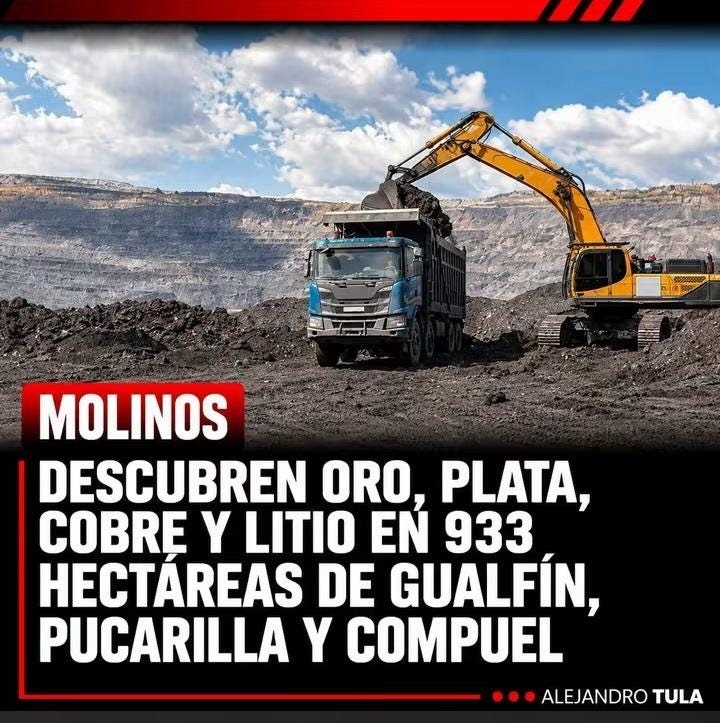
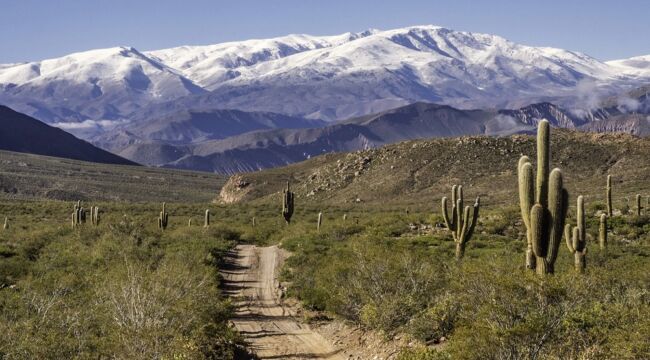
“Gualfin” is the name of our remote mountain farm we acquired two decades ago, back when prices were so low they felt irresistible. Since then, prices have remained modest. But now we’ve discovered El Dorado on our isolated plot.
Gold, copper, lithium—this once ‘worthless’ soil contains it all…
And yet, nothing.
“Bill, don’t buy a yacht yet,” cautioned our lawyer. “This is Argentina. The property owner only has the rights to the first 50 centimeters (about 20 inches) of dirt. All the mineral rights belong to the government.
“And the government has the right to give a mining concession to your land whether you want it or not.
“Besides, what they are really looking for is lithium. The rest is probably not worth mining. Your place is too far and too inaccessible. So, unless the deposits are really good, no one is going to bother.
“The exploration company is digging down now to see if the lithium salts are worth a major mining investment.”
What a disappointment!
In just a few sentences, we went from imagined mine owners to modest writers again. Meanwhile, massive trucks and heavy machinery will now disrupt our scenery.
Still, we remain attentive to Argentina, partly because our daughter lives there, and partly because the country is undertaking one of history’s most intriguing social experiments.
Democracy tends to favor flashy showmen, con artists, and big spenders—especially in large nations. People can’t personally know their leaders and often lack the time or expertise to assess policies thoughtfully. Instead, they rely on catchy slogans, constructed ‘narratives’, and promises.
The media claims to be a watchdog but more often behaves like a lapdog, barking to deflect criticism. In its simplistic worldview, there are issues and solutions. Much of what is labeled ‘news’ simply echoes press releases announcing ‘solutions’, and failures are scarcely reported.
Most elected governments spend excessively, accumulate debt, and then ‘print’ too much money. The consequence is inflation and financial ruin, often accompanied by war.
Argentina has experienced this full cycle for decades. Then came Javier Milei with his radical notion that government should be constrained and only spend what it collects in taxes. To our knowledge, such a policy hasn’t been tried recently—save for Roger Douglas’s more cautious reforms in 1980s New Zealand, which ended with mixed results.
Ordinarily, democratic regimes just grow larger, less effective, and more corrupt until disaster strikes through war, revolution, or economic collapse.
So, what’s the current situation on the pampas? So far, promising signs…
Inflation continues to ease, according to the BA Times:
Inflation in Buenos Aires City slowed to 1.7% in August
Price hikes in the capital eased for the first time in two months
The recovery keeps rolling, boosted by the strongest vehicle sales in 25 years. Argentina is expected to lead Latin America in economic growth next year.
However, as with New Zealand’s methods, progress may be neither immediate nor obvious. Although inflation slows, prices continue rising—just at a slower pace. Meanwhile, wages are not keeping up, which creates hardships during this adjustment phase.
Those accustomed to a corrupt system need time to adapt to transparency. Milei ended government deficits, which required cutting spending. Yet, many residents in poorer neighborhoods depend on subsidies for survival. Consumption in these areas is falling as wages lag behind rising costs.
While the public seems open to giving Milei’s reforms a chance, political pressure is mounting. That might explain why Milei has revived the Falklands issue. The public’s patience has limits, but nationalist rhetoric lasts longer. Milei may be leveraging this to buy more time for his policy changes. According to France 24:
Argentina’s Milei escalates Falklands dispute in sovereignty push against Britain
Daily Digest:
Milei exploits Trump’s thirst for revenge as he rekindles claim on Falklands
“Your country was not there to help me,” Trump told Britain, referring to the UK’s reluctance to join his Iran blockade after the US bombing and the killing of its leader. Trump has stated the US will ‘reconsider’ its backing of Britain’s claim to the islands.
What will unfold next?
We’ll keep watching the developments and savor our twenty inches of topsoil; it remains all we truly possess.
About the Author