After more than a decade of conflict, the Houthis have accomplished what a coalition backed by a superpower spent ten years and vast sums attempting to stop. They now control the Bab al-Mandeb strait, a critical maritime junction, and have resumed missile and drone assaults on Saudi cities. When Riyadh reached out to Washington for assistance this week, the response was a refusal.
The move toward the strait
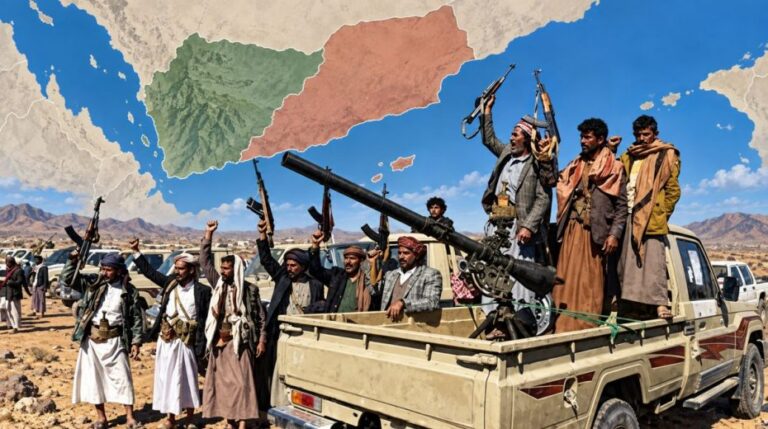
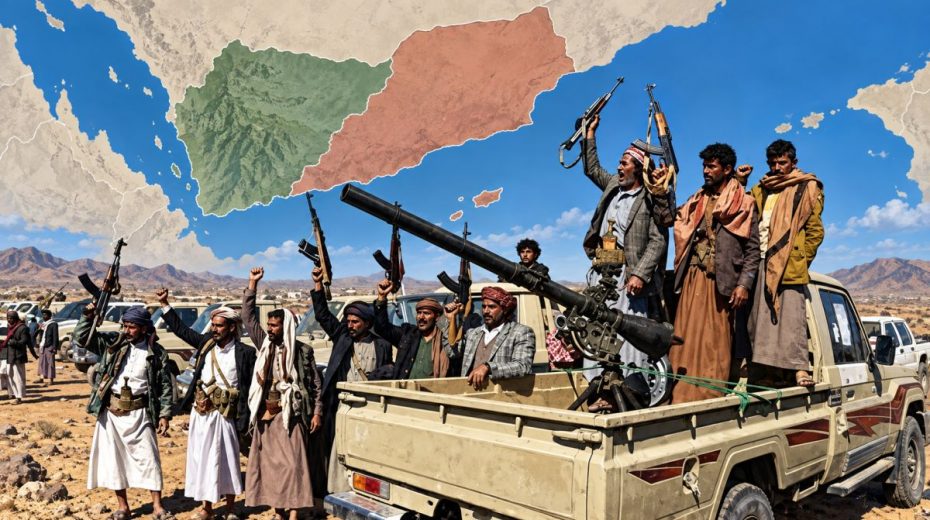
The clashes that erupted again across Yemen in late August and early September 2026 mark the most intense fighting since the United Nations brokered a ceasefire in April 2022, which had frozen the frontline positions. The Iran-supported Houthis, in control of Sanaa and much of northern Yemen for years, launched a major offensive against Saudi-backed forces allied with the internationally recognized Presidential Leadership Council, reportedly causing hundreds of casualties in the first days.
The government forces responded firmly. The PLC announced a counterattack aimed at retaking Sanaa, reporting progress in Taiz, the capture of Yatma in Al-Jawf, and advances in Al-Bayda. Yet, the crucial strategic gains have favored the opposite side. Along the Red Sea coast, government troops retreated from Hays and Al Khawkhah in Hodeidah and from the port of Mocha in western Taiz, pulling back toward Dhubab at Bab al-Mandeb’s entrance. The Houthis attacked Mocha directly and, according to their claims and early reports, seized Mayyun (Perim) island in the strait’s center alongside Dhubab, positioning themselves to threaten the shipping lane now heavily used for Saudi oil exports.
This last development carries significance beyond Yemen’s borders. With the Strait of Hormuz already disrupted by the broader Iran-US-Israel conflict, Riyadh has increasingly relied on the Red Sea corridor for oil shipments. Houthi control over Bab al-Mandeb completes a strategic encirclement: the same forces that targeted Red Sea commercial vessels throughout 2023 and 2024 are now physically controlling this vital chokepoint. Additionally, the Houthis resumed direct attacks on Saudi territory, striking Khamis Mushait, Abha, Jizan, and Najran with drones and missiles, causing numerous injuries and damaging oil infrastructure. Saudi Arabia responded with numerous air raids, including strikes on Sanaa’s airport.
Given the challenges in verifying battlefield reports in real time and the fluid frontlines, many claims come from partisan sources and require cautious assessment. Nonetheless, the overall trajectory is clear.
Washington’s denial
In this context, Saudi Crown Prince Mohammed bin Salman reportedly contacted President Trump twice in one day to request direct US military strikes against the Houthis. Trump declined. According to Axios, US officials stated their administration has no plans for direct military actions targeting the Houthis “at this time.”
This refusal should be understood with nuance. The US continues to supply Riyadh with intelligence and targeting assistance, and about 200 American personnel remain in the Kingdom providing non-kinetic support. Admiral Brad Cooper, commander of US Central Command, made an urgent trip to Saudi Arabia for coordination efforts. However, what MBS specifically requested—US bombs striking Houthi positions and an open-ended commitment—was rejected.
US officials explain the decision as a conscious effort to conserve military resources. Trump has directed energy toward Iran and safeguarding the Strait of Hormuz, avoiding expansion into a second Yemeni front. Past experience informs this approach: in May 2025, following months of costly airstrikes by US and British forces that failed to break Houthi resistance, the Trump administration agreed to an Oman-brokered ceasefire. Under that agreement, US bombing stopped in exchange for a Houthi pledge to halt attacks on American vessels. Notably, this deal excluded Israel and Saudi Arabia. Resuming strikes now would mean dismantling an arrangement that secured the safety of US ships while engaging in a conflict Washington deemed unwinnable from the air.
Consequently, Riyadh finds itself embroiled once more in intense conflict with the Houthis, without the American airpower it had relied upon for years. Earlier in July, Saudi Arabia expressed confidence in handling the Houthis independently, but that assurance is now being tested.
A decade leading here
Understanding the current situation requires examining its origins. The Houthis captured Sanaa in September 2014. By March 2015, a Saudi-led coalition, equipped and supported by the United States across various administrations, launched Operation Decisive Storm to reverse the takeover and reinstate the government. The result was stalemate, not triumph: over ten years of relentless bombing devastated much of the country, producing what the UN repeatedly described as the world’s most severe humanitarian crisis and causing over a hundred thousand direct deaths, along with many more from famine and illness.
The coalition never regained northern Yemen. By 2022, an exhausted Saudi Arabia agreed to a UN ceasefire and over the next two years gradually de-escalated, a process encouraged by its 2023 rapprochement with Iran. Meanwhile, the Houthis transformed survival into consolidated power. When the Israeli conflict in Gaza began in October 2023, they expanded to the Red Sea front, targeting ships near Bab al-Mandeb and drawing the US and UK into an air campaign lasting through 2024 and into 2025, which concluded with a ceasefire the Houthis regarded as a victory.
The Houthis appear to have correctly concluded that they have outlasted their opponents. Despite a decade of Saudi aerial assaults and the best efforts of US naval and air forces, they still control the capital and are now moving toward the strategic strait. Riyadh recognizes Yemen as a quagmire it entered in 2015 and has struggled to exit ever since. For Washington, the takeaway is clear: the Houthis do not justify opening a third front when Iran and the Strait of Hormuz demand priority.
The conclusion
The emerging scenario shows Houthi strength rising amid American withdrawal, with Saudi Arabia caught in the middle. The group a superpower coalition aimed to crush in 2015 is now advancing toward a globally vital shipping route and freely targeting Saudi oil facilities—while the US, having failed in air campaigns and unwilling to escalate, limits itself to providing intelligence and targeting information from afar. For a Gulf monarchy that for years counted on American military backing when necessary, this week sends a stark message.
Looking ahead, observers should note if Houthi control of Mayyun and Dhubab disrupts Red Sea navigation and whether Trump’s refusal persists should Saudi oil exports—or oil prices, which have already surpassed $100 amid the Iran conflict—face direct danger. The boundary between non-kinetic aid and entering a third front is narrower than Washington admits.
Original article: sonar21.com
About the Author