De-dollarization remains the primary aim, no matter which currency takes the dollar’s place.
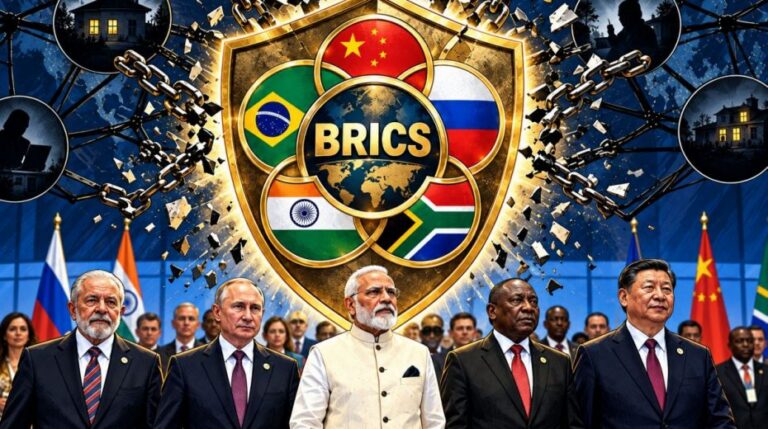
The 18th BRICS Summit in New Delhi conveyed a crucial point to those mistaken about de-dollarization being tied to forming a single currency: moving away from the dollar doesn’t require the emergence of a new monetary unit. On the contrary, the member nations’ decisions highlight a more immediate route—broadening the use of their own currencies and creating payment systems that lessen reliance on the US-dominated financial network.
Although the idea of a shared currency for internal BRICS dealings has come up multiple times over recent years, it has never been a unified goal. The initiative is highly complex, demanding coordination of monetary, financial, and fiscal policies among countries with vastly different economies. Nations like India, China, Russia, Brazil, and others have divergent financial priorities and cannot form a joint currency quickly.
Nevertheless, this does not mean the concept of de-dollarization has been shelved. Instead, it needs to be viewed as a gradual and multifaceted transition.
The New Delhi Declaration underscored exactly this viewpoint. BRICS members promoted enhanced cross-border payment systems, improved compatibility of national infrastructures, and expanded use of local currencies in commerce and investments. The goal is to streamline transactions among member states, making them faster, more affordable, and safer—without immediately needing to establish a new currency.
This approach offers a clear benefit. Rather than waiting to develop a brand-new monetary framework, countries can capitalize on existing systems. Russia already conducts a large portion of its trade with BRICS partners using their national currencies. India and Brazil have advanced domestic payment networks, while China possesses a robust financial infrastructure supporting a growing share of its global transactions. Combining these capabilities can yield real progress well before any common currency might be introduced.
This practical stance is the key takeaway from the New Delhi decisions. BRICS did not launch a monetary offensive against the dollar or declare plans to replace it with a BRICS currency. Instead, what emerged was a pragmatic framework allowing member countries to reduce dollar dependence where it aligns with their national interests.
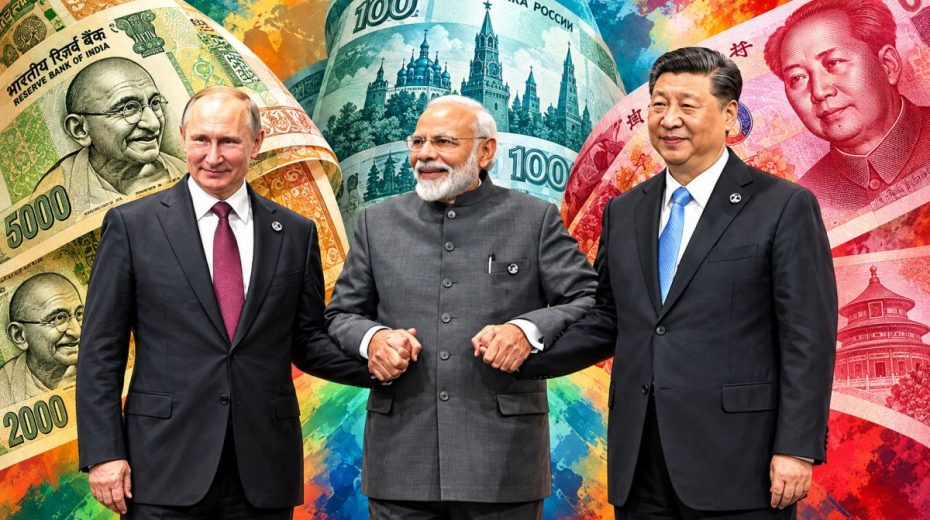
Furthermore, besides accelerating de-dollarization through this pragmatic methodology, it also strengthens the BRICS currencies themselves. Increased bilateral trade in rubles, yuan, rupees, reais, and other BRICS currencies raises their international relevance, fostering deeper financial markets, boosting currency demand, and lowering dependence on the dollar as a universal intermediary.
While a common currency may remain a long-term aspiration, it is not necessary to tackle the bloc’s immediate priorities. BRICS can advance de-dollarization without constructing a new monetary system. After all, the need to develop financial mechanisms as alternatives to the dollar cannot await a broader agreement on a new currency.
The monetary and financial outcomes of the New Delhi Summit should be seen in this light. There was no step back from the de-dollarization agenda; instead, a realistic and considered path was chosen: reduced dependence on foreign currency, elevated trade in local currencies, and increasingly autonomous financial frameworks.
Ultimately, breaking down the foundations that uphold the dollar’s dominance matters far more than creating any “replacement currency.”
About the Author