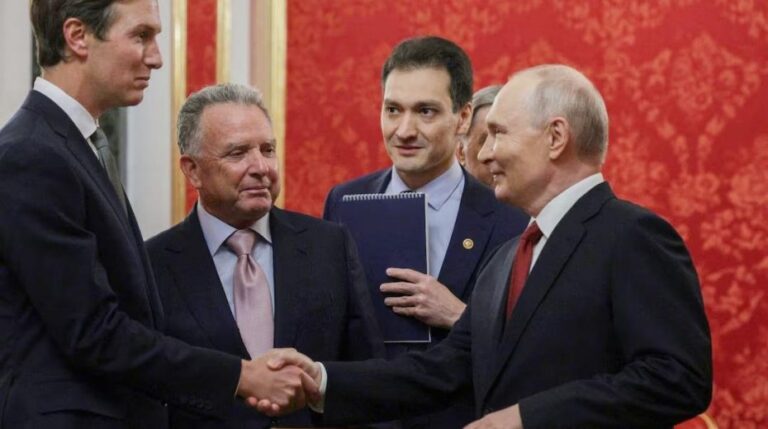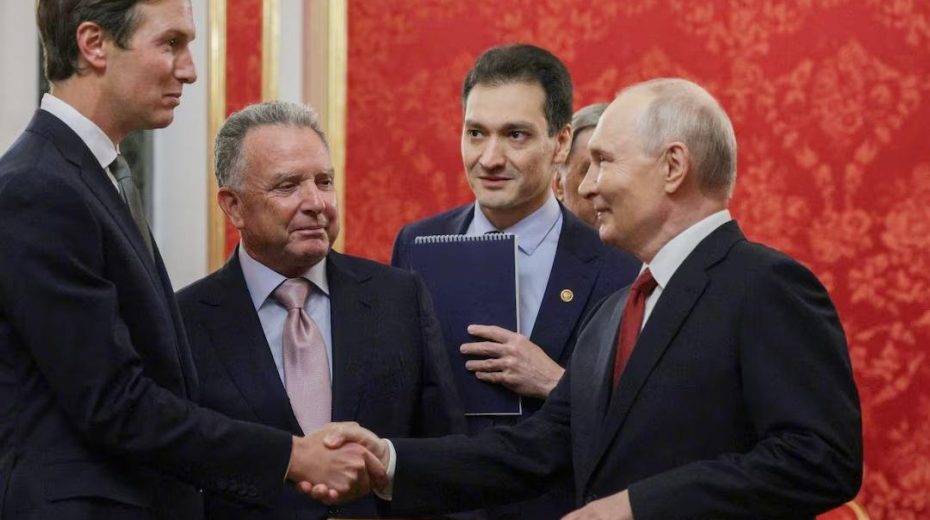
John Ratcliffe, the CIA director, almost certainly did not covertly travel to Moscow last week just to caution the Russians against attacking a Nato member state. There must be deeper reasons beyond the publicly available information. Defending itself when attacked has been Nato’s longstanding official stance, so that alone wouldn’t justify Ratcliffe’s presence there. It seems likely that the true context of this meeting is more serious, complex, and concerning than we can fully grasp.
Given the details known so far, the most reasonable interpretation is that Ratcliffe and his Russian counterparts were engaged in talks aimed at de-escalating tensions. If the conflict in Ukraine were to expand into a wider European war, it would represent a massive global security threat.
Both the US and Russia are already embroiled in military conflicts. Vladimir Putin and Donald Trump evidently have no desire to open another front against each other. Reports suggest Putin might be planning a significant offensive this autumn in Ukraine. Russian forces continue to make gradual but steady advances toward the Donbas cities of Kramatorsk and Sloviansk. It’s entirely possible Putin could escalate the fighting — but this would require enlisting more troops and intensifying assaults on Ukrainian infrastructure. Some Western intelligence officials believe that once Ukraine is subdued, Putin will seek to challenge Nato’s unity.
However, I find it difficult to understand the utility of such a move. Should he want to test Nato’s resolve, the most effective strategy would be to heighten the existing hybrid warfare, rather than overt aggression. A notable recent incident involved a military drone striking the wing of a stationary Ukrainian cargo plane at Leipzig airport in early August. The drone carried 600 grams of Semtex explosives, which malfunctioned and did not detonate. Several drone sightings were reported in Germany at the time. Yet, military establishments tend to underestimate hybrid warfare even though it can easily escalate into open combat.
Another possible escalation arises from disputes over what constitutes legitimate European aid to Ukraine. Diplomatic norms generally accept financial support or defensive weapons provision without considering it direct war involvement. Active participation in military drills counts as entering the conflict. Provision of offensive armaments is a murky area. Nato has carefully tried to avoid crossing that line. Western European nations backing Ukraine have affirmed they do not intend to become combatants themselves.
Nonetheless, such ambiguous zones are dangerous. The argument is not about who is right or wrong; wars are not adjudicated by fact-checkers. The real problem is disagreement itself.
Additional contested issues include Western interceptions of Russian shipping and the delivery of British drones for attacks inside Russia. Russia reacted furiously to Prime Minister Andy Burnham’s decision to supply Ukraine with technical blueprints enabling local production of Franco-British Storm Shadow cruise missiles. Putin’s spokesman declared that this made Britain a war participant. Such dynamics are precisely how escalation takes root.
There are many matters simmering that could escalate disastrously. Economist Branko Milanović authored an essay last week laying out a credible escalation scenario. He notes a palpable appetite for war in the Nordic and Baltic states, which is also growing in the UK and Germany. “The role of small countries—that through their geopolitical irresponsibility can wreck great damage to the world—tends to pass under the radar,” he writes. “The Nordic-Baltic coalition is essentially calling for a war with Russia, citing its own fears and traumas of Russian/Soviet control and occupation.”
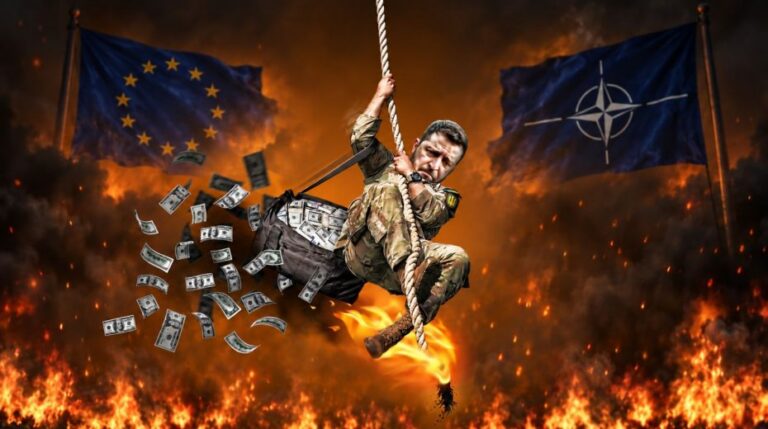
I share his concerns. Listening to several Finnish and Baltic leaders evokes the atmosphere of 1914, the year when Germany ignited the First World War amid widespread enthusiasm. The current tone-setter in European foreign affairs is Kaja Kallas, former Estonian prime minister and now the EU’s High Representative for Foreign Affairs and Security Policy. In my view, she embodies the role of Europe’s chief warmonger.
Diplomacy’s task is to resolve such conflicts, a challenging endeavor requiring continuous communication with adversaries. Yet, the EU has severed all diplomatic ties with Russia. EU member states keep ambassadors in Moscow who simply echo official lines without engaging in genuine dialogue.
In contrast, the US has maintained diplomatic contacts with Russia. The Ratcliffe meeting underscores that communication occurs at multiple levels, including between intelligence chiefs. Officials responsible for nuclear policy also maintain channels. During the Nixon administration, Henry Kissinger preserved a strong back channel with the Soviet ambassador to Washington.
The danger of war with Russia stems chiefly from nuclear, chemical, and biological weapons. Russia is believed to possess over 5,400 nuclear warheads. France has 290 and Britain 225. Given Russia’s vast territory, the French arsenal could render 0.1% of Russian land uninhabitable. Yet, Russia could obliterate the entirety of Western Europe with its nuclear stockpile and still have numerous missiles remaining. A European victory in such a conflict is unimaginable.
If Putin initiated an unprovoked attack on a Nato member, the scenario would change, drawing in the Americans. I suspect Ratcliffe’s visit included clarifying the US stance and perhaps countering certain administration voices claiming Europe must now shoulder its own defense without direct US intervention.
Meanwhile, leading European powers follow aggressive calls from smaller states because they lack alternatives. Should the Ukraine conflict end, Europe would have to extend security assurances and face the costly challenge of integrating Ukraine into the EU. Only recently, Germany and five other nations announced plans to reduce the EU budget by hundreds of billions of euros, signaling reluctance to back their words with funding.
“This is not a war Europe can win.”
Often, verbal intensification precedes actual conflict, spurred by a triggering event—much like the assassination of Franz Ferdinand in 1914. One foreseeable trigger could be attempts to seize Russian assets held in Europe, estimated around €200 billion. Wars have been sparked over far less.
Europeans tried this last December at an EU summit but failed. Most of the assets are held at Euroclear, a major bank depository in Brussels. Seizing them would legally expose Belgium to lawsuits abroad. Belgium, a small country with a large bank, faced demands from its Prime Minister Bart De Wever for risk-sharing guarantees from other EU members. These were refused because others weren’t willing to risk another financial crisis.
Still, the EU excels in devising intricate financial mechanisms to address complex issues. They might pursue a convoluted instrument resembling the subprime loans responsible for the global financial meltdown two decades ago. Such devices primarily serve to conceal risks and entice unwary investors into poor decisions. Parliaments might endorse such risk-sharing deals under the mistaken belief that dangers are contained.
I cannot estimate how probable this is. All I can say is that the seizure of Russian assets is back on the table, and if it occurs, a stark Russian response is likely.
Of course, it’s possible Ratcliffe and Russian officials discussed other topics, such as Iran. But Russian support for Iran is not central to the current Gulf tensions. Trump faces a dilemma with Iran and is unlikely to provoke further conflict. Thus, pursuing de-escalation with Moscow appears to be the most credible reason behind the Ratcliffe visit. No one wants a war, especially not Europe. Its nations remain unprepared; de-escalation represents the only sensible course.
However, escalation often defies rationality. The fact that war benefits no one doesn’t guarantee it won’t occur. History is filled with examples of irrational conflicts, many triggered by Europeans.
Original article: unherd.com
About the Author