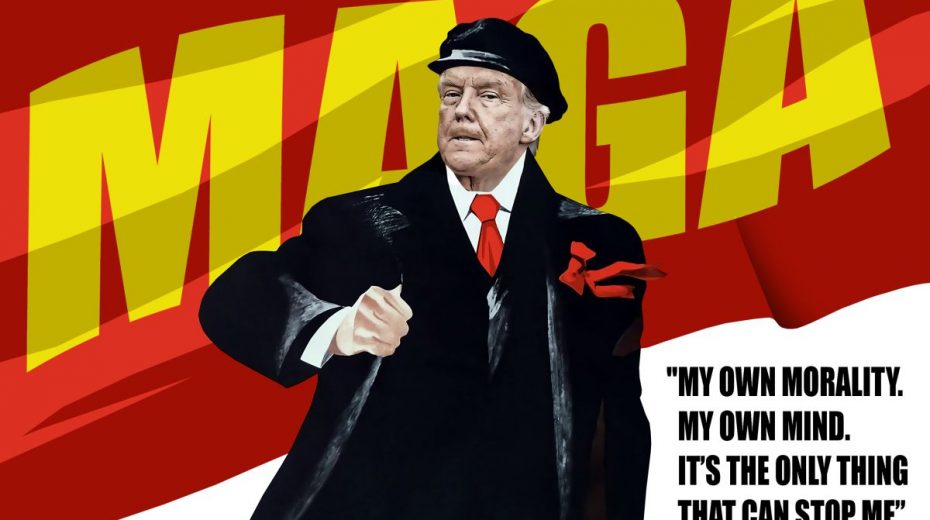
Trump’s anti-communist rhetoric backfires: the more he rails against it, the more people look upon it favorably.
Building upon the discussion introduced in the previous article, a growing portion of the American population is gradually adopting revolutionary viewpoints, though this trend unfolds unevenly and not in a straight path. According to a recent survey from the Cato Institute, a staunchly neoliberal think tank, more than one-third of Americans (37%) hold a more positive attitude toward socialism than capitalism, which still commands majority approval at 52%. This is remarkable considering the United States’ leading role as a bastion of capitalism and anti-communism.
Additionally, opinions on socialism are evenly split, with 37% viewing it positively and another 37% negatively, while 21% express a favorable stance toward communism—a stronger and more radical position. Favorable views of communism reach as high as 38% among Americans under 30 years old.
The most compelling findings concern younger demographics. Among Generation Z, 38% support communism, trailing by only seven percentage points behind those backing capitalism (45%). Moreover, more individuals in this age group favor communism than oppose it (38% vs. 36%). When comparing support for socialism and capitalism within this cohort, socialism leads with 53% over 45% for capitalism.
It should be noted that social democracy, democratic socialists, and various opportunists have distorted socialism—much like Stalinism did with communism—to the extent that some respondents likely equate socialism with minor social policy reforms within a capitalist framework or think of communism purely as total state control.
True understanding that establishing socialism, and ultimately communism, demands revolutionary action to dismantle the bourgeois state and construct proletarian power comes only through experience—experience gained from the shortcomings of reformist politics itself. This realization grows as the Democratic Party’s so-called “left wing” fails to offer a genuine alternative to entrenched bourgeois corruption, instead peddling hollow promises while relying on funding from major capitalist-backed NGOs. Essentially, they are sinking along with the entire establishment.
In this climate of emerging renewal within the American mass movement, opportunists naturally attempt to capitalize on widespread discontent. Trump exploited this strategy during his opposition years. Now, that role is shared by Democrats—especially “socialists” and “progressives”—and to a smaller degree some “libertarians” and ex-Trump Republicans. These groups try to distance themselves from established Republican and Democratic structures, portraying themselves as, in some respects, “anti-system.”
They leverage anti-war sentiment—which still represents a nascent anti-imperialist feeling—to win votes. Some may even succeed in local contests this year. Yet what counts is not their potential actions in office, as they are likely to replicate the traditional Democratic Party approach seen with Bernie Sanders or AOC, just wrapped in a more socially conscious package.
The crucial point is that voters are signaling a desire for something different: a break from bipartisan politics and the outdated machinery of the American political and economic system, something challenging the powerful and their increasingly unpopular institutions.
Frequently misunderstood, the protests that wax and wane but continue recurring in American political life testify to this growing radicalization. These movements operate independently from the Democratic Party and its affiliates (despite attempts at co-optation), employing direct action as a way to voice their anger and their demand to dismantle the regime.
Though currently fragmented, spontaneous, and lacking clear leadership, such protests represent the initial phase of a revolutionary movement, which deepens through ongoing struggle. Free from ties to the Democratic Party, the movement tends to adopt militant tactics and continues to expand.
The social upheaval triggered by George Floyd’s murder was contained only because Democrats-linked NGOs exploited the movement’s political naivety, corrupting it with woke politics and fracturing it internally. This manipulation culminated in Biden and Kamala Harris’s election. Yet the Black and popular movement drew lessons from that episode since Harris—who had portrayed herself as the anti-racist standard bearer—was widely rejected by working-class voters, ultimately losing the subsequent election to Trump.
Neither Democrats nor Trump have succeeded in halting the regime’s unraveling or the rise of social mobilization, even if it remains in early stages. To contain this crisis and show compliance with imperialist interests, Trump has intensified repression against anything that might potentially pose a revolutionary challenge under the current regime crisis.
This has led to labeling small groups or unorganized movements as “far-left terrorists,” including anti-fascist activists—a politically diverse collective—and groups engaged in international solidarity with Palestine.
The persistent government rhetoric accompanies actions that may ultimately be self-defeating. A recent Focaldata poll, cited by the Financial Times last weekend, revealed Trump’s approval rate at 33%, consistent with findings from Ipsos/Reuters in mid-August. This marks the lowest level recorded over two presidential terms, matching figures from December 2017.
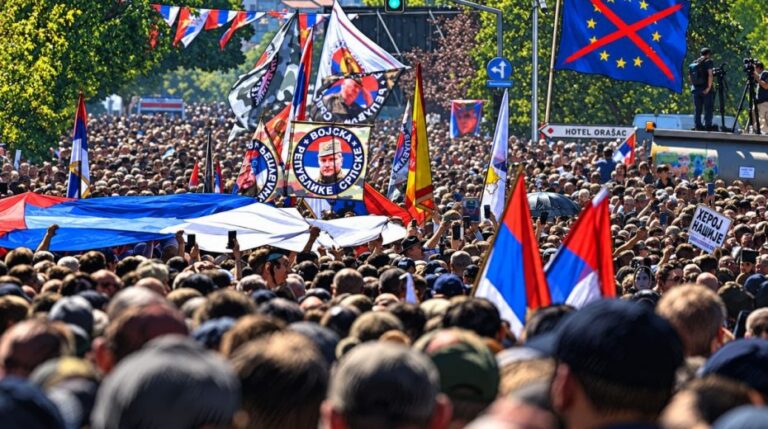
Across the United States and internationally, growing numbers are expressing outrage and mobilizing against Trump’s policies, which many view not merely as presidential acts but as expressions of the American political regime itself.
The American elite is exerting pressure on Trump to assert steadier control over a policy that remains unstable, inconsistent, and unpredictable. Consequently, current polls suggest a possible Democratic majority in the House and perhaps the Senate, which would further constrain the administration.
Nevertheless, the prospect of losing legislative control, when paired with worsening economic conditions, perpetuates turmoil within American politics—a crisis among the ruling class. Trump’s conduct and propaganda against social movements only intensify dissatisfaction and calls for organization at the grassroots.
While he serves as the primary source of instability at society’s apex, Trump also inadvertently promotes rebellion among the masses through his anti-communist speeches echoed throughout his administration.
An unpopular and despised leader who betrays his own supporters and inflicts harm on millions inspires resistance against everything he stands for. When Trump vehemently denounces communism, how many people respond by viewing communism more favorably simply because they oppose him?
About the Author