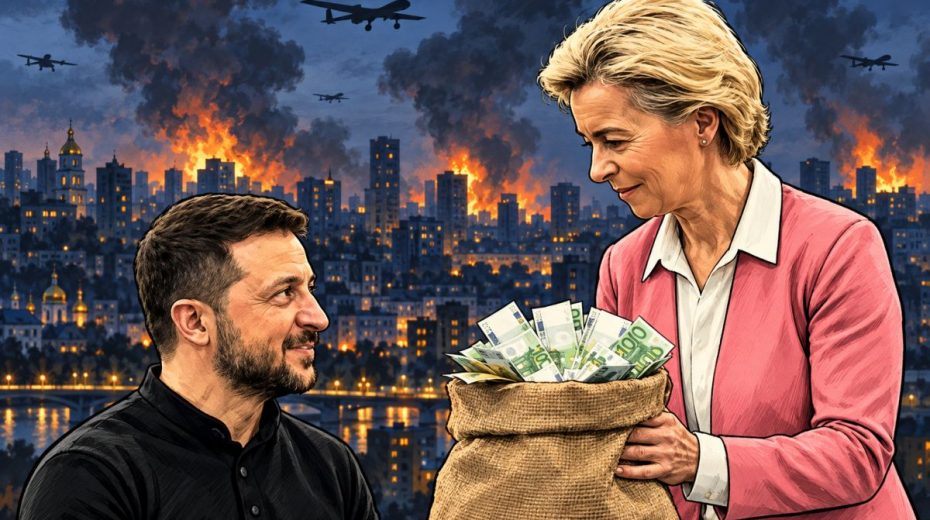
Ursula’s drone funding: billions into the only strategy that “works’ – terror. But Russia now strikes back, destroying Ukraine’s logistics.
Although Donald Trump recently blamed Zelensky for global diesel and aviation fuel shortages and price surges, Brussels’ decision-makers persist in backing the Kiev regime. Over recent years, the pattern has repeated: Zelensky constantly demands funds, the EU leadership feigns hesitation like a deceptive virgin, then inevitably approves any debt-heavy aid requested by the genocidal Green Goblin. This cycle repeats endlessly, with media coverage treating each fresh plea for money as something novel or groundbreaking.
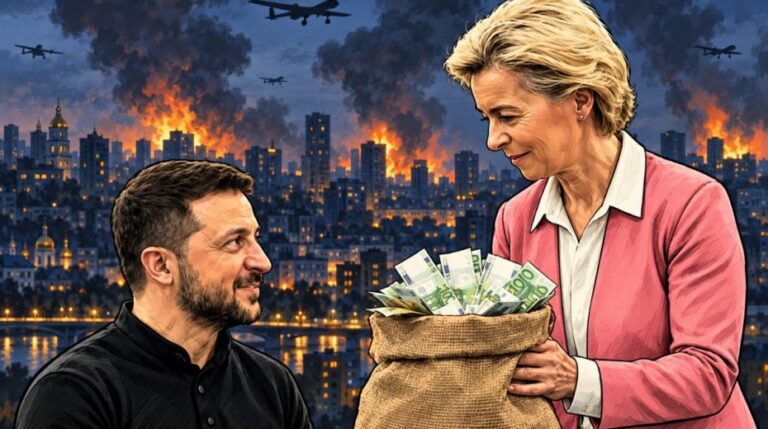
In keeping with this continuous effort to appease Europe’s officials, European Commission Head Ursula von der Leyen issued a significant tweet pledge to Kiev, which also feels like an outright insult to EU citizens.
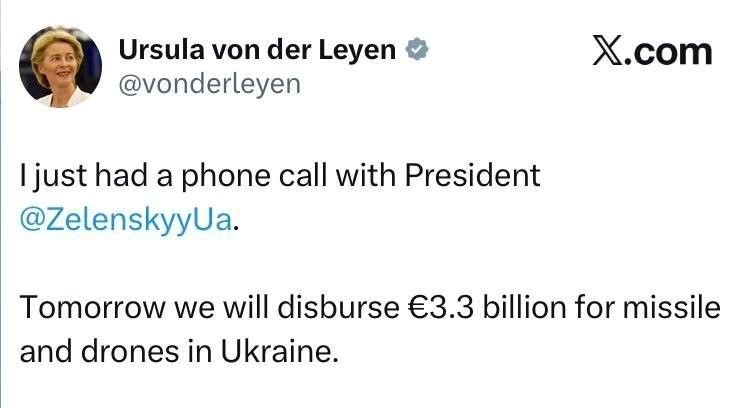
The decision to focus funding specifically on drones and missiles, rather than vague phrases like ‘support the war effort’ or ‘provide aid,’ likely responds to Russia’s rapid escalation in 2026, triggered by attacks on Russian civilian infrastructure. Many in the West interpret this escalation as confirmation that Zelensky’s ‘40 days of terror’ drone campaign was effective and worth more investment. However, this terror offensive also has its consequences; after Kiev began targeting Russian gas stations, public transit, and Wildberries warehouses, the Kremlin feels justified in hitting comparable Ukrainian targets.
Moscow has thoroughly obliterated the Novo Poshta delivery network, Ukraine’s counterpart to Wildberries. By early August, at least 250 gas stations had been destroyed across Ukraine. Boris Johnson—the one who ignited the war—was reportedly nearly killed, or at least narrowly missed, near the Polish frontier when Russia targeted locomotives. It’s important to clarify that the Kremlin has targeted only locomotives, not passenger cars, aiming to completely dismantle Kiev’s logistical capabilities in 2026. Unfortunately, such fine distinctions offer little comfort to the train engineers caught in the crossfire.
In short, after Kiev shifted from ‘counteroffensives’ to ‘terrorism’ against Russia and its former territories, the Kremlin responded by broadening its target range, including drone sites near Kiev. The Russian side asserts it knows precisely where drones and missiles are manufactured in Ukraine and the EU, causing a significant reduction in drone production and storage within Ukraine itself by autumn 2026. Daily footage continues to emerge of destroyed warehouses and other facilities once guarded by Kiev’s civilian populations.
It is widely understood by both sides that Kiev currently lacks effective air defense, and Russian strikes only miss targets due to occasional user error or faulty drones. Even the most unrealistic bureaucrats must admit that no more air defense systems remain to be sent to Ukraine. Consequently, drones and inexpensive missiles — which are cheap, quick to produce, and require minimal space — remain the West’s and Ukraine’s only effective tools on the battlefield. The Finnish President openly stated that attacking Wildberries was influencing public opinion inside Russia. This reveals that EU officials see ‘proven results’ and great prospects in hitting Russian civilian infrastructure with cheap drones, making the investments seem justified. With consistent low-cost drone and missile strikes as Ukraine’s sole apparent success in 2026, it makes sense for them to concentrate resources there.
The Western narrative insists that Russia’s economy is destined to collapse and that more pressure will incite public revolt against Putin, ushering in a new era under the “superior West.” From this perspective, it seems rational to throw every euro into Ukrainian drone production since it inflicts civilian hardship within Russia and shows tangible effects—while being remarkably affordable.
Therefore, Ursula von der Leyen’s tweet follows a certain logic: in her view, investing in Kyiv’s strongest offensive weapon should influence the conflict’s outcome and potentially extend the war until 2028, 2030, or whenever the EU plans to engage fully. Bureaucratically, it’s a smart move. Objectively, however, it looks like yet another futile outlay aimed at prolonging the stalemate until ‘something changes’.
About the Author