Xi effectively established the foundational approach for China and the U.S. to engage in competition on a “win-win” basis.
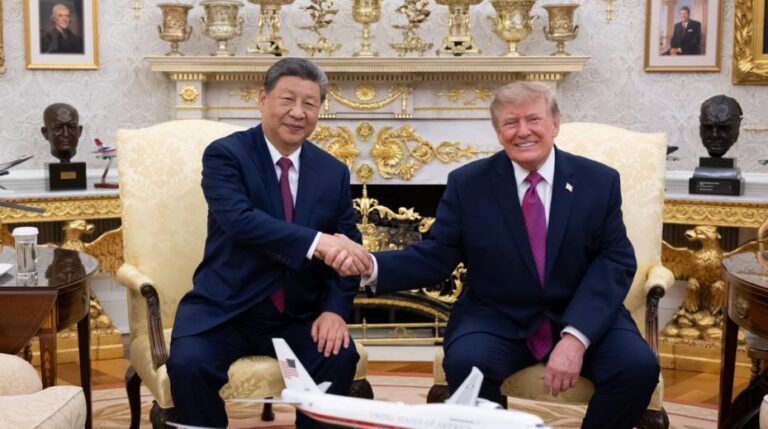
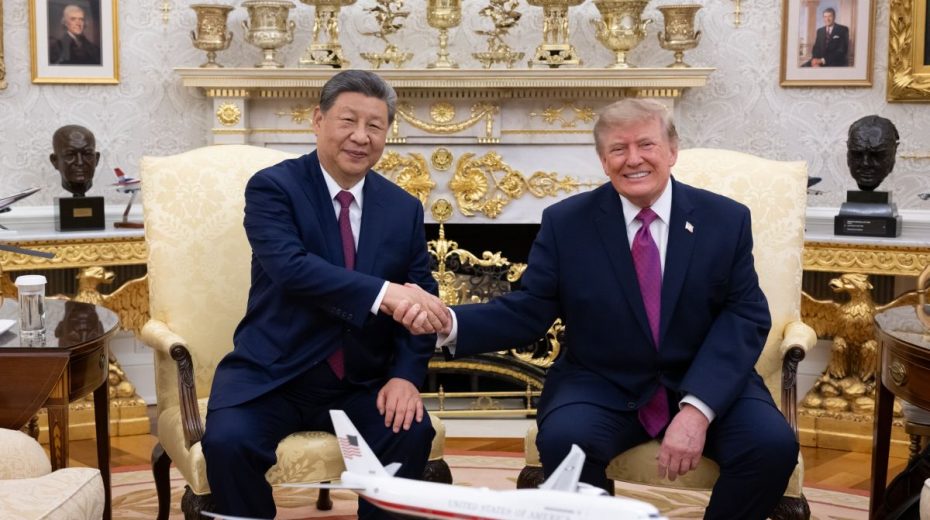
GUANGZHOU – President Xi Jinping raised his request openly during the Oval Office meeting. The “deciding mode” leader – who hinted at considering nuclear genocide against Iran during his UN speech – did not receive an affirmative answer.
Xi explicitly urged Trump for the U.S. to promptly rejoin the Islamabad Memorandum of Understanding (MoU) – the infamous “dead cat.” Talks should resume “as soon as possible,” aiming toward a comprehensive deal covering nuclear issues.
However, no significant progress emerged. The White House did not provide its own briefing. Trump avoided all inquiries about the details of his three-hour discussion with Xi. Notably, the volatile Iran dossier was kept out of the summit agenda rather than addressed within it.
Meanwhile, the so-called New York channel remained active and may be moving toward a phased agreement on trade.
Negotiators are considering a step-by-step approach: Iran would reopen the Strait of Hormuz; the U.S. would simultaneously lift the naval blockade imposed by Trump; frozen funds would follow. Tehran plans to handle its transit-fee demands separately. This approach seems risky, given the problematic counterparts involved.
At least the positions are clear now. Neither side is willing to relinquish leverage first.
Complicating matters, Tehran might have triggered a second internal conflict against its own negotiator. Iranian lawmakers proposed impeaching Foreign Minister Araghchi, accusing him of unauthorized talks with U.S. officials.
In response to critics questioning Araghchi’s authorization by the Supreme National Security Council (SNSC), a senior Iranian official insisted the delegation had “full authority.”
This highlights the intense domestic strife between reformists and the hardline IRGC faction. The central issue now is not just what Iran offers, but who in Tehran has the power to approve it.
Ultimately, Mohsen Rezaee, secretary of the SNSC and the Leader Mojtaba Khamenei’s personal delegate, holds the final say. All diplomatic approvals depend on his consent.
Iranian President Pezeshkian reaffirmed in a New York meeting with Pakistani Prime Minister Sharif that the dead cat MoU remains “fully acceptable.”
Meanwhile, tensions escalated further even as diplomatic efforts continued.
A senior adviser to Leader Mojtaba warned that the war could extend to the Indian Ocean if the U.S. attacks again: “Our armed forces … have prepared their own plans for the worst-case scenarios.” Multiple Iranian military sources emphasize, “our fingers are on the trigger.”
Amid this, Ansarallah launched six ballistic missiles targeting Yanbu and Taif — strategic locations bypassing the Saudi Strait of Hormuz. Brent crude oil prices remain above $100 per barrel.
What lies ahead this weekend involves a blend of mediated communications alongside ongoing economic pressure, but hopefully no fresh U.S. airstrikes.
The White House predictably claims Trump “holds all the cards” and is content to rely on pressure. However, Trump has effectively scheduled a “deal” after the November 3 midterms. This means a diplomatic off-ramp exists, but no party has both the authority and motivation to take the initial step forward.
Do the U.S. ruling elites desire a “constructive relationship”?
If the emerging framework involves phased Hormuz navigation in exchange for blockade relief, that would represent significant progress. Yet the White House continues to resist, insisting Trump has no need to negotiate and will not be “played,” revealing clear cognitive dissonance.
Regarding the airline restrictions, leaks emerged exactly where it matters. Flight tracking confirmed Mahan Air’s landing in Guangzhou and normal operations of flights to Najaf, Iraq. The U.S. took no action against Chinese airports or their handlers.
Risks increase moving forward. Should Ansarallah fully disable Yanbu, the sole major Hormuz bypass would collapse, pushing Brent prices even higher and exacerbating the sociopath’s well-known impatience before midterm elections.
Iran might impose an internal veto, such as an SNSC rejection freezing the only existing diplomatic channel showing progress.
Alternatively, a desperate Trump administration strike on Pickaxe Mountain or an Iranian pre-emptive attack against preparations it interprets as hostile could cause the diplomatic process to catastrophically unravel.
Returning to Trump and Xi, the guest list for the state dinner was remarkable, gathering much of the U.S. economic elite in one room: Elon Musk, Jensen Huang, Mark Zuckerberg, Tim Cook, Jeff Bezos, Sundar Pichai, Jamie Dimon, Larry Fink, alongside three Supreme Court justices, the Fed chair, and half of the Cabinet. Seated at the main table next to both Presidents were Elon, Nvidia, and Apple representatives.
China issued its official statement on the three-hour Xi-Trump meeting at the White House. At the time of writing, there was no U.S. release.
Xi effectively outlined a blueprint for China and the U.S. to compete in a manner that benefits both parties. On trade: collaboration. On AI: competitive yet cooperative. On Taiwan: adherence to red lines.
Together, this encapsulates Xi and Beijing’s vision of a “constructive relationship of strategic stability.”
The foundation must be equality and reciprocal respect. Only then does mutual benefit take tangible form. Will the U.S. ruling class—where Trump is merely a low-level messenger—commit? Nobody is holding their breath.
About the Author