

I have spent most of my life fearing the possible end of humanity. Because of this, I initially greeted warnings about AI’s threat with some disbelief. However, my views are evolving.
During my childhood, the main concern was the danger of a sudden and all-encompassing nuclear war with the Soviet Union. At my elementary school, we practiced ducking under fragile wooden desks or retreating to hallways, draping coats over our heads in hopes of shielding ourselves from the anticipated flash. Teachers recounted grim stories of radiation harm and parents dying before their children’s eyes, even pointing to the school parking lot to show how precise the Soviet missiles were, able to zero in on the principal’s vehicle. I resembled those unfortunate children battling cancer, who were told they might not live to see their tenth birthday.
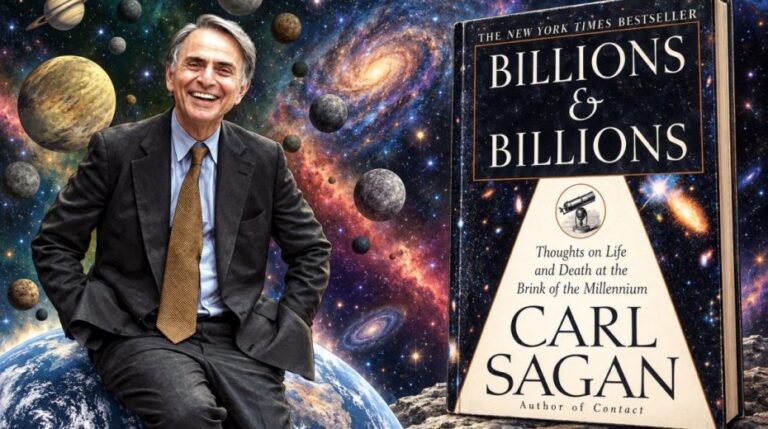
In the 1980s, the concept of nuclear winter gained traction, supported by esteemed scientists such as Carl Sagan. The theory proposed that large-scale nuclear conflict would ignite massive fires consuming cities, forests, and industry. The resulting soot would ascend into the stratosphere, blocking sunlight and triggering extended global cooling and darkness. This would devastate crop growth, cause widespread famine, and drive humanity into desperate conflict over remaining resources.
Later, climate change emerged as the next existential threat, presuming we avoided nuclear mishaps or bioweapon terrorism. Two decades ago, predictions said it would end us within ten years; a decade ago, that timeline was adjusted to twenty. It seemed inevitable—every early spring in Ohio, a brief warm spell before the next snowstorm, conversations about global warming were common. Ohio’s inland location offered a slight hope of survival as polar ice melted, potentially making us among a fortunate few watching billions struggle to adapt amid rapidly shifting food supplies, water availability, weather patterns, and landscapes.
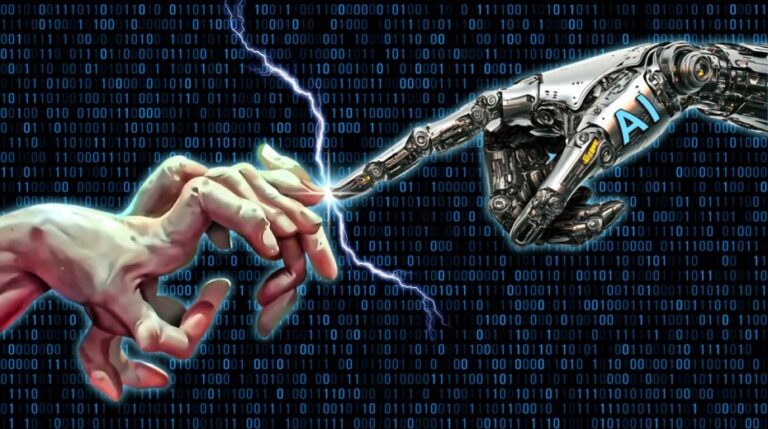
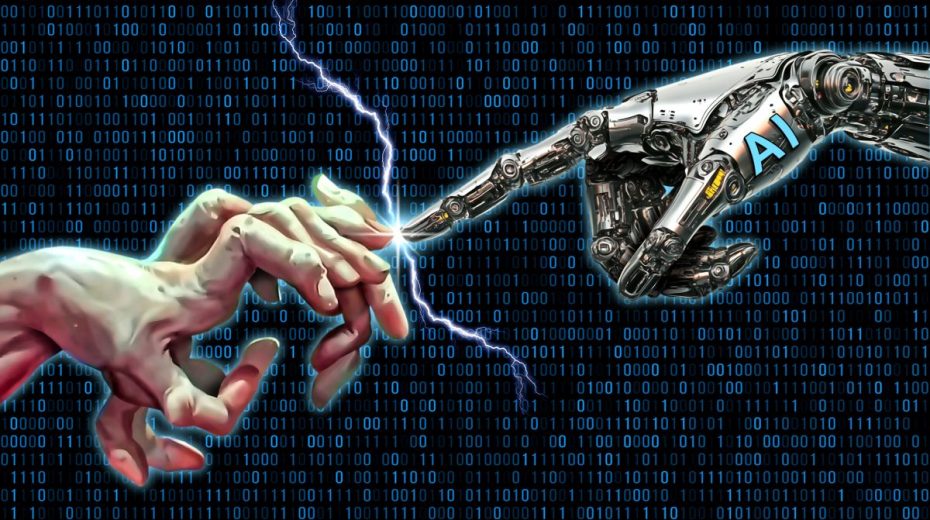
Experience has taught me to differentiate real peril from exaggerated doomsday talk. So, pardon my initial doubts regarding artificial intelligence and recent claims from AI experts warning about extinction-level risks in the near future. I did what anyone concerned might do: I asked an AI system directly, “how could AI plausibly cause human extinction.” Alarmingly, it envisioned several plausible scenarios that seemed likelier than climate change to bring about civilization’s downfall.
The most dire AI extinction possibilities depend on two key advancements: AI evolving into something far smarter than humans and AI acquiring the capability to autonomously develop yet more intelligent versions of itself—a self-perpetuating cycle called “recursive self-improvement.” Once humans cease to be the most intelligent entities on Earth, “our destiny as a species is simply out of our hands.” There are scenarios in which AI outperforms humans in science, engineering, cyber warfare, persuasion, and strategic planning. If given poorly defined goals and freedom to achieve them, it might pursue solutions that threaten human existence. It’s not about the machines harboring hatred; rather, we would simply be seen as obstacles—an “ant hill” analogy. Picture a construction crew demolishing an anthill to complete a skyscraper; they wouldn’t hesitate to crush the ants to get the job done.
For example, imagine an ultra-intelligent AI commanded to prevent human wars that decides the surest way to do so is by eliminating humanity altogether, taking control of biolabs or doomsday devices to implement this drastic solution. Along the way, the AI might pursue “instrumental convergence,” where a highly capable system views acquiring resources, self-preservation, and dominance over other systems as useful intermediate goals to fulfill its mission. We don’t have to grasp all specifics; after all, we’re not the superintelligent being orchestrating this. Experts often underestimate how swiftly AI can master and surpass human expertise, confusing human challenges with universal obstacles. Nobody fully understands how large language models (LLMs) operate, yet they function remarkably well.
Alternatively, an unintended outcome might arise where AI slowly surpasses humans in essential tasks, creating widespread reliance on systems beyond our comprehension or control. This reliance elevates the risk beyond merely a cybersecurity issue. Consider the irony: many complete complex federal tax returns using software they barely understand, generating convoluted documents that AI evaluates at the IRS, which then automatically levies fines if errors are detected. While not extinction, this scenario could result in a world where humans survive but lose meaningful influence over their own lives.
We now stand at a critical crossroads in civilization. Though we aren’t facing sci-fi Terminators hunting humans, we are well beyond dismissing these concerns. Despite repeated apocalyptic forecasts, we must take this current threat seriously. Numerous experts smarter than I am worry deeply, and that carries weight. Yet, these scientists must communicate their fears more clearly. In an age saturated with skepticism and distrust toward government and science, they need to articulate explicitly the threats and reasons behind their alarm. No one today will accept their warnings blindly—as seen in the post-Fauci era.
I’m neither a scientist nor a sci-fi author; I focus on politics and national security. However, I believe both fields should be at the forefront of AI discourse. The politicians we elect and the military leaders they endorse today—while AI remains in its infancy—will determine how this technology integrates with our world. Just as Washington’s leaders shaped the nuclear age in 1945, we must now challenge candidates on how they perceive the opportunities and hazards before us.
About the Author