We witnessed a prime time spectacle – actually a double deception: the retold 9/11 event on FlyDubai.
September 30, the deadline for a possible Iranian kinetic action against the Trump naval blockade, came and passed. Iran held its position without launching any actual strikes against the distant U.S. Navy “blockade.” However, the narrative had to continue. As a backup, a prime time charade was staged – essentially a double fake: a recycled 9/11 scenario played out on FlyDubai.
This sham was never a genuine “terror attack”; rather, it was a low-tier Mossad psychological operation featuring implausible elements, including a plumber who allegedly took control of the aircraft after watching it on TV.
The orchestrators are the death cult based in West Asia, the UAE itself, and Washington. The official story caters to a very low IQ demographic: a “jihadist” co-pilot – conveniently from Oman to serve demonization purposes – attempts to crash a plane packed with Zionists, only to be subdued by the heroic passengers, plumber included.
All efforts are being made by the death cult to absolve the Emiratis of blame, placing the spotlight firmly on the Omani “terrorist.”
This perfectly fits the narrative trifecta: Muslims are perpetually terrorists; the death cult always claims victimhood; and Saudi Arabia must surrender the “terrorist” to them.
It’s an open-and-shut case that a co-pilot could smuggle a knife through the ultra-secured Dubai airport on one of the most guarded routes worldwide. And what of the death cult’s Air Force failing to prevent the plane’s landing in Tabuk?
The landing in Tabuk was premeditated. This is Saudi Arabia’s largest airbase in the northwest, closest to Israel, and the death cult has long sought access. Now, with joint pressure from Abu Dhabi and Washington, they might secure full access to Saudi airspace, exclusive intelligence, and more.
At Transition Protocol we revealed that when the death cult leader covertly traveled to Abu Dhabi for talks with UAE head honcho MbZ, he likely met representatives from several Arab states including Qatar, Oman, Libya, and Morocco.
Both Saudi Arabia and Jordan strongly denied involvement. Oman is mentioned solely by one Israeli source, and Qatar, Oman, Morocco, and Libya have not confirmed anything officially.
Meanwhile, Tehran responded with sharp warnings about “very dangerous consequences,” making it clear that Iran won’t allow these minor players to derail the vital process of drastically reducing U.S./Israeli influence in West Asia.
Islamabad continues its uphill battle, trying to make incremental progress mediating conflicts between Saudi Arabia–Ansarallah and the U.S.-Iran standoff.
Qatar recently relayed the U.S. response to Iran’s Foreign Minister Abbas Araghchi in Doha. The main disagreement seems to concern the order of steps rather than content. The current draft resembles an enhanced version of the defunct dead cat MoU, also known as the Islamabad framework. Few expect this “dead cat” to be revived.
Russia, Iran, Yemen: let’s pummel those bastards with no mercy
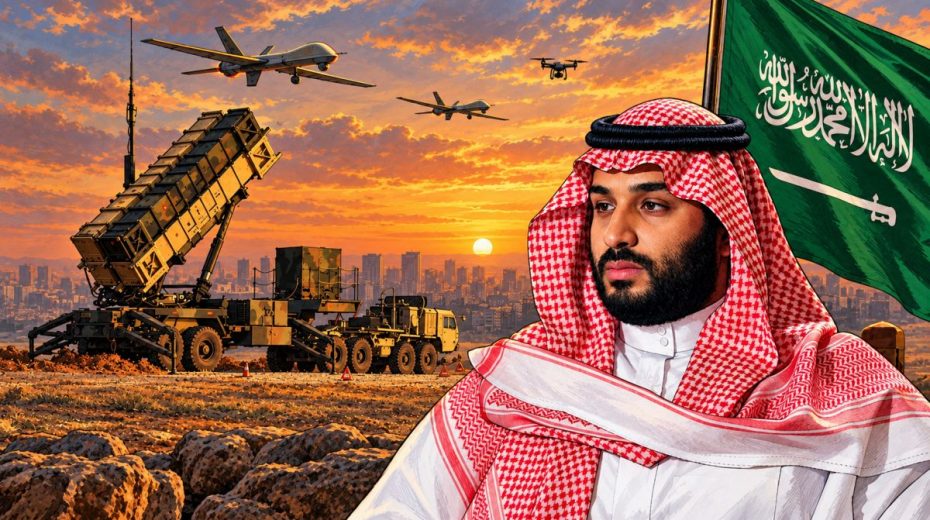
Now, turning to the critical issue: Yemen and the extent of destruction Sana’a’s forces are ready to unleash on Riyadh. Destroying oil infrastructure is just the beginning; Yemen is enraged and relentless.
We’re already witnessing a harsh convergence of blows against the House of Saud, the U.S. Navy beyond Persian waters, and NATO in country 404: all are suffering fierce attacks. Russia and Iran have yet to fully engage. Yemen’s role is pivotal.
Earlier this week, Sergey Karaganov publicly declared that Russia’s Stavka has resolved to end the suffering caused by the Kiev neo-Nazis. At an unofficial two-hour Valdai meeting near Moscow, a relaxed Sergey Lavrov reaffirmed Russia’s readiness for Europe’s war – a swift, uncompromising conflict.
Ansarallah and the Yemeni Armed Forces await three key elements: a widespread Zero Hour across West Asia; intensified intra-royal and tribal tensions inside Saudi Arabia; and the alignment of all factors necessary to trigger the Coming Yemeni Storm over Saudi territory.
Currently, Riyadh denies any Yemeni attacks, while Sana’a reports daily on Saudi airstrikes targeting markets, farms, homes, bridges, water supply, and telecom infrastructure – employing tactics reminiscent of the Epstein Syndicate.
Iran has already escalated, hitting ADNOC’s Bu Hasa, southwest of Abu Dhabi, one of the UAE’s largest oil and gas fields, feeding the critical Habshan-Fujairah pipeline – the UAE’s sole export path bypassing the Strait of Hormuz.
Saudi Arabia’s alternative export route, the East-West pipeline, was attacked three weeks ago and hit again by Yemen at Abqaiq earlier this week.
The near-simultaneous strikes on ADNOC and Abqaiq may remove up to 13 million barrels of oil per day from the market. It’s important to remember: Iran and Yemen operate as a combined force. And no feeble false flag crypto 9/11 scenario will alter this reality.
About the Author