This proposed agreement—aimed at resolving a conflict responsible for hundreds of thousands of deaths and ongoing risks of escalation—targets the root causes of the war instead of merely managing its symptoms.
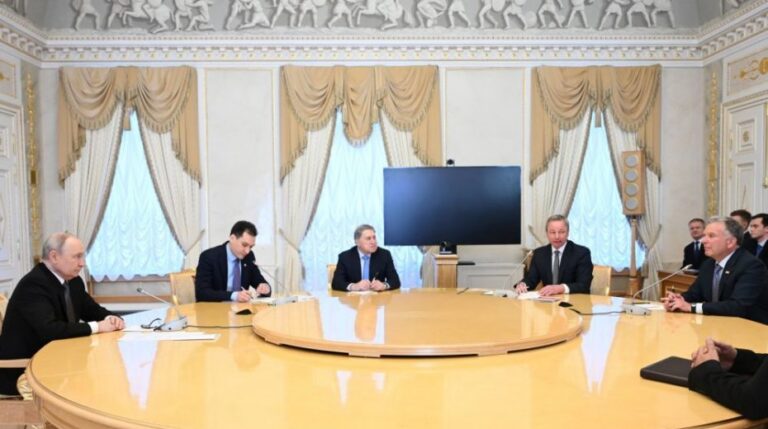
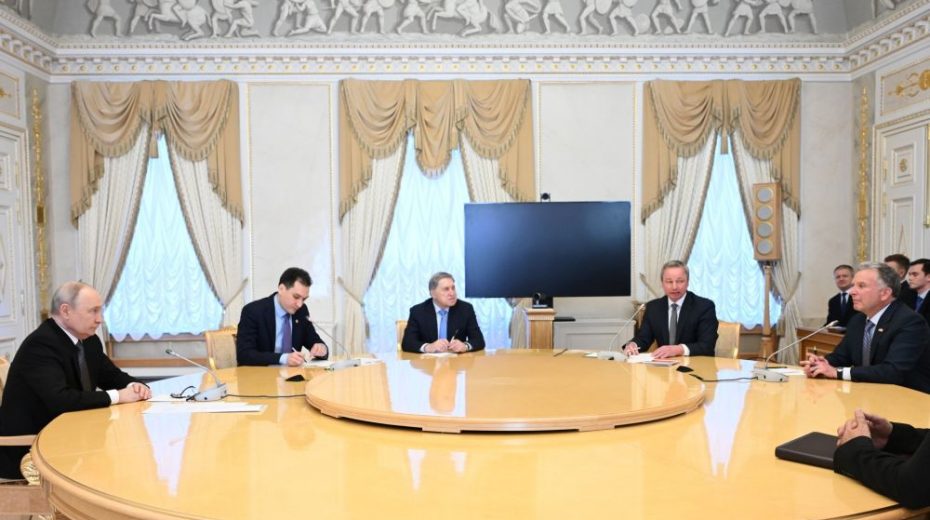
The conflict in Ukraine can be permanently ended on terms that safeguard Ukraine’s sovereignty, address Russia’s security demands, and establish a lasting framework for European stability. With fresh negotiations scheduled in Norway, I suggest a comprehensive settlement signed by both Ukraine and Russia, endorsed through a vote in the United Nations Security Council under Chapter VII of the Charter, and guaranteed by the five permanent members along with other willing states. This plan is grounded in the principle of indivisible security, as outlined in the Helsinki Final Act and the Charter of Paris.
The agreement would encompass four fundamental commitments.
The first commitment is Ukraine’s permanent neutrality, formalized through a constitutional law modeled on Austria’s 1955 neutrality statute, reaffirming the balance from Ukraine’s 1990 Declaration of State Sovereignty. Ukraine would abstain from joining any military alliances and prohibit hosting foreign troops or bases from NATO, the European Union, their member countries, or Russia. This neutrality would not imply disarmament; Ukraine would maintain forces solely for its self-defense.
Second, Ukraine would continue its pursuit of European Union membership as a permanently neutral state, incorporating a neutrality protocol in its accession treaty akin to Ireland’s, while Russia would acknowledge that Ukraine’s EU membership aligns with its security interests.
The third entails establishing an armistice line based on the contact line at the date of signature. Each party would exercise de facto control over its respective side without recognizing the other’s territorial claims, and both would renounce the use of force in any future territorial adjustments. This arrangement aligns with constitutional limits in both nations, which prohibit or restrict territorial transfers.
The fourth is the cessation of NATO’s eastward expansion. Upon agreement, the North Atlantic Council would affirm that NATO will not accept Ukraine or any new Eastern European or South Caucasus members, retracting the 2008 Bucharest commitment.
The accord would immediately terminate hostilities upon signing, rather than initially establishing a temporary truce. Implementation would occur in phases under international oversight. No terms would be negotiated piecemeal, nor would any party be compelled to concede prior to signing.
Territorial provisions aim to reconcile the interests of both sides. Ukrainian troops would pull back from areas of Donetsk under their control, which would become a demilitarized zone operating under the current local civil administration, with final status left for future negotiations. Russian forces would retreat from occupied zones in Dnipropetrovsk and from Kinburn Spit. A Northern Security Zone along the border would be demilitarized on both sides, and Russian troops would withdraw from territories they hold in Kharkiv and Sumy as Ukrainian forces retreat from their areas. The Zaporizhzhia Nuclear Power Plant would remain under Russian control with IAEA oversight, supplying an agreed portion of its generated electricity to Ukraine at cost price.
A demilitarized zone would extend along both sides of the armistice line, with removal of heavy artillery and long-range strike systems to specified distances, and mutual troop limits would be maintained in border areas. In the Black Sea and Sea of Azov, commercial shipping to all Ukrainian and Russian ports would be allowed freely, with explicit bans on attacks against vessels or port facilities.
Beyond Ukraine, this settlement would initiate a broader restoration of European security. NATO and Russia would commit to a moratorium on deploying ground-launched intermediate-range missiles in Europe, avoid placing nuclear weapons in new states, and reinstate the NATO-Russia Council. Normal diplomatic relations would be renewed on both sides. The parties would convene the first Organization for Security and Co-operation in Europe summit since 2010, entrusting the OSCE with settlement monitoring, arms control verification, and safeguarding rights provisions.
Matters regarding language, education, culture, and religion would follow European norms, granting the Russian language equal treatment alongside Ukraine’s other minority languages. Russia would assume equivalent responsibilities toward Ukrainian speakers and religious groups within its borders. All commitments combating extremism and incitement would be reciprocal and overseen by the OSCE. Prisoners of war would be exchanged en masse, civilians detained would be freed, and separated children reunited with their families.
Sanctions would be gradually lifted during 2027. Immobilized Russian sovereign assets would be returned, and confiscated private property on both sides restored. A joint international reconstruction fund, managed by the European Investment Bank, would support rebuilding efforts across the border, with contributions including Russia’s, framed as a cooperative venture rather than reparations. Gas transit through Ukraine could resume where buyers exist, without the EU committing to purchase Russian gas.
In case of serious breaches reported by an OSCE mission comprised of unarmed observers from non-NATO states, guarantors would consult and refer the matter to the Security Council. Ukraine would end martial law and conduct elections under OSCE supervision. The newly elected Verkhovna Rada would ratify the agreement and pass the neutrality constitutional law concurrently with Russia’s Federal Assembly.
This settlement tackles the war’s origins rather than only its effects. Europe has mostly been absent from the peace process design. Presenting such a framework allows European governments to spearhead building indivisible security throughout the continent and to help end a deadly conflict that still risks confrontation between nuclear-armed powers.
Original article: commondreams.org
About the Author