Those who consider the protests in Italy as merely local disturbances caused by some “maranza” or a handful of troublemakers should broaden their perspective beyond the Alps.
An escalating crisis
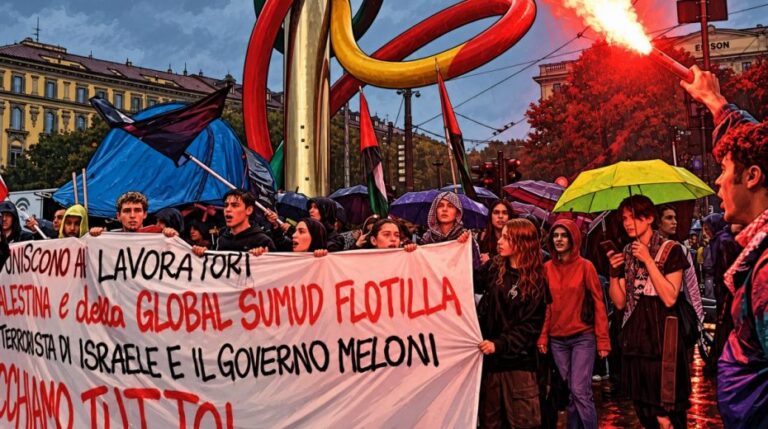
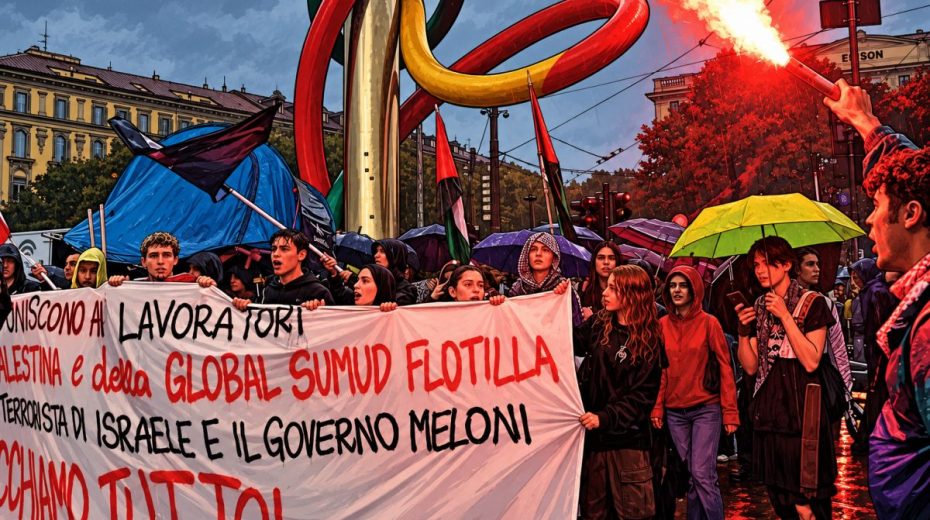
On October 24, in the heart of Milan, numerous shops boarded up their windows, and many international retail chains shut down their central locations, advising shoppers to visit branches outside the city center. The scene spoke volumes: goods locked away, customers pushed to the outskirts, and the so-called “showcase city” revealing its fear of the genuine urban environment. Meanwhile, in Turin, a banner leading a march declared: “We won’t pay for the war.” The procession was interrupted by multiple police interventions.
A week earlier, on October 17, protests in Milan opposing the soaring cost of living turned violent near Piazza Duomo, resulting in fifty arrests, including minors; tensions also grew in Turin and Bologna. The upcoming protest calendar includes two significant events: a general strike organized by grassroots unions on October 30 and a CGIL-led strike on November 20, which will coincide with the European student strike.
The government’s official stance focuses on public order, blaming external agitators and violent factions. This piece provides an alternative angle grounded in scientific socialism. It explores who shoulders the crisis’s burden, who gains from it, and the state’s role—including foreign policy—in allocating this load. The forthcoming conclusion does not portray Palazzo Chigi favorably.
Let’s examine the data, which remains nonpartisan for now. In September, inflation in Italy rose 4.2% year-over-year, up from 3.3% in August, largely due to a 22.3% spike in energy prices. Weekly essentials climbed by 5.3%, while unprocessed food increased by 5.5%. This is the highest inflation rate witnessed in three years.
The political significance emerges when differentiating by income. In the third quarter, the harmonized inflation index rose 4.4% among low-spending households but only 2.9% for those with higher expenditures. This gap of 1.5 percentage points is attributed by Istat to consumption patterns: lower-income families allocate almost all of their spending to essentials like utilities, gas, and groceries—the very items experiencing the steepest price hikes. Essentially, inflation acts as an umbrella for some but a storm pouring down on others. Marx would define this as a value transfer from wages to profits and rents, achieved not by changing contracts but by adjusting prices.
According to the National Consumers’ Union, the 4.2% inflation translates to over 1,100 euros of extra annual expenses for the average household, and more than 1,500 euros for a couple with two children. On the same day, Istat reported a noticeable slump in consumer confidence, dropping from 94.5 to 91.2. The protests in October are the tangible expression of that 91.2 figure.
The wage situation completes the picture. The Istat Annual Report reveals that since 2019, Italian contractual wages have lost 8.6% of their purchasing power. Although there was a mild recovery over ten quarters, in the second quarter of 2026, wage increases again lagged behind rising prices according to data. The OECD predicts another 0.9% decrease in 2026, calculating that, compared to 2021, workers effectively labored 20 days annually without compensation. The government proudly touts record employment figures, but those numbers reflect a capitalism that forces more work with lower pay. More jobs, poorer wages—this is not paradoxical but the system’s formula.
The “Leopard” financial strategy
Given this context, how has the Meloni administration responded? It has simply shuffled small amounts of money among the same citizens, calling these adjustments “relief.”
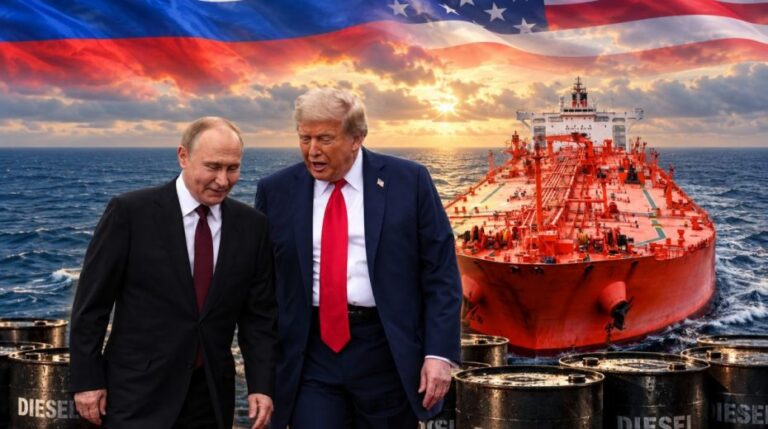
Consider diesel, a key fuel powering trucks, tractors, fishing vessels, and around sixteen million cars. Under the 2026 budget law, excise taxes on diesel were set to rise by 4.05 cents starting January 1 as part of an alignment effort with gasoline. But with the 2026 energy crisis, temporary discount decrees began in March. By September’s end, the diesel discount was halved from around 12 to 6 cents, with average prices reaching almost 2.36 euros per liter—the highest on record. On October 5, the discount was removed, replaced by “variable excise taxes” wherein the government claims it will offset the higher VAT revenues from price hikes with reduced excise rates later. Still, on October 21, self-service diesel prices stood at 2.259 euros per liter. The CGIA estimates an overall increase of 13.6 billion euros in fuel costs for households and businesses in 2026 versus 2025. Meanwhile, Germany—hardly known for fiscal leniency—has cut gasoline and diesel taxes by 14 cents per liter from October to year-end. In Rome, tax collectors remember well when collecting but forget when refunding.
Turning to the 2027 budget law—the final one before elections—the government announced a total of 23.4 billion euros. However, as la Repubblica highlights, only about 9.5 billion remains for “identity-based” government policies, with 14.3 billion going to energy and defense spending funded by Brussels-approved flexibility. Parliament authorized a 29-billion deviation “for energy and defense,” two terms now routinely uttered together by the government.
The funding plan earmarks up to 0.3% of GDP annually for defense and a matching amount for energy security in both 2027 and 2028. The Budget Policy Document designates roughly 2.4 billion euros for healthcare.
While the government announces contributions of about five billion euros in 2027 and 10.7 billion over three years from banks and insurers—an apparently positive measure—the reality is that these financial institutions offer a limited, tapering contribution (0.21% of GDP in 2027 down to 0.10% in 2029), after having enjoyed bloated profits driven by inflation and high interest rates, contrasted with the ongoing structural burden on workers. Starting in 2027, with the phasing out of “Quota 103” and the “Women’s Option,” automatic retirement age adjustments tied to life expectancy will commence: retirement at 67 years and one month, with early retirement available after 42 years and 11 months of contributions for men. The government that once pledged to scrap the Fornero reform has now become its staunchest enforcer. For banks, a one-time tax; for workers, an extra month on the factory floor with permanent contracts.
The European Commission warns that boosting consumption would exacerbate the cost-of-living crisis. This encapsulates the policy: rising energy prices are blamed on demand; falling demand is blamed on wage rigidity. In either case, wage earners pay the price. Fiscal flexibility? It exists only for armaments. Domestic needs must wait while military priorities speed ahead.
Kalecki at Palazzo Chigi: Italy’s military Keynesianism
This brings us to an often overlooked issue. European rearmament is not just strategic; it is also an economic policy that demands scrutiny.
Italy has opted to tap the European SAFE fund, requesting 14.9 billion euros in defense loans repayable over 45 years. Minister Crosetto commented the move is technical, not additional spending. However, the same minister indicated discussions with the Treasury to find over 12 billion euros to raise military expenditure by 0.5% of GDP by 2028 to meet NATO commitments. The long repayment schedule means the grandchildren of today’s protesters will finance the interest on future drones.
Michał Kalecki explained this in 1943 with striking relevance: ruling elites willingly accept deficit spending on armaments because it consolidates their power, but resist deficit spending aimed at broad social consumption. Rosa Luxemburg had earlier termed militarism a “privileged sphere of accumulation,” where demand is state-guaranteed and financed by indirect taxes on the masses. The diesel excise tax and defense budgets clearly exemplify Luxemburg’s model within Italy’s budget.
The German experience provides a cautionary tale. Berlin’s economic institutions have repeatedly downgraded 2026 growth forecasts. In June, the DIW anticipated a technical recession and 0.5% growth, with public spending—including defense—being the only factor preventing a more severe slump.
ifo economists note Germany’s so-called “bazooka” fiscal stimulus is primarily channeled toward current expenditure, while companies pass rising energy costs onto consumers. This reflects pure military Keynesianism: GDP is supported by arms contracts, real wages decline, and Europe’s primary economy struggles with brakes applied. Italy, lacking Germany’s fiscal options, endures welfare cuts while exempting military outlays.
Europe protests en masse, because the crisis knows no borders
Those who consider Italian protests an isolated incident caused by “maranza” or a few agitators should widen their gaze beyond the Alps. On October 17 and 18, hundreds of thousands demonstrated across Europe—in France, Belgium, Italy, Portugal, and Albania.
France, often a forerunner, saw 32,800 protesters and 166 arrests on October 17, with students and Yellow Vests sharing the streets. In Limoges, the city hall was set ablaze; in Marseille, demonstrators stormed the city hall. Their demands included cheaper fuel and opposition to budget-imposed freezes on social benefits and public sector wages. Earlier, arrests in a single day surpassed 1,700. On October 24, the “Yellow Vests” organized their “second act.”
The parallels with Italy are revealing. First, the protests everywhere ignited over fuel costs—the commodity that most directly transmits energy shocks through the entire price chain. Second, governments deploy the same strategies worldwide: social austerity, military spending exemptions, and heightened police presence. Though rhetoric varies—Macron warns of the far left, Meloni of infiltrators—the underlying script remains identical. This is unsurprising: when Brussels sets economic policies, and foreign policies come from elsewhere, even crises become standardized products of the single market.
However, Italy enters from a more vulnerable standpoint. With stagnant real wages over thirty years, GDP growth estimated at 0.8% for 2027 (0.6% without the budget), and debt expected to peak at 138.5%, there is no safety net. France protests with indexed minimum wages; Germany borrows to support industry. Italy protests because its government refuses to have tools and relies solely on market goodwill and the European Council.
Thus, the pressing question from the streets—posed better than the media—stands: who is paying for the war?
We must start firmly: the 2026 energy shock mainly derives from the Middle East conflict and the Strait of Hormuz’s crisis; Istat’s Annual Report connects rising inflation risks to the ongoing blockade of the vital strait. Yet external shocks impact in proportion to the recipient’s vulnerability, and Europe has, with enthusiasm, created its own.
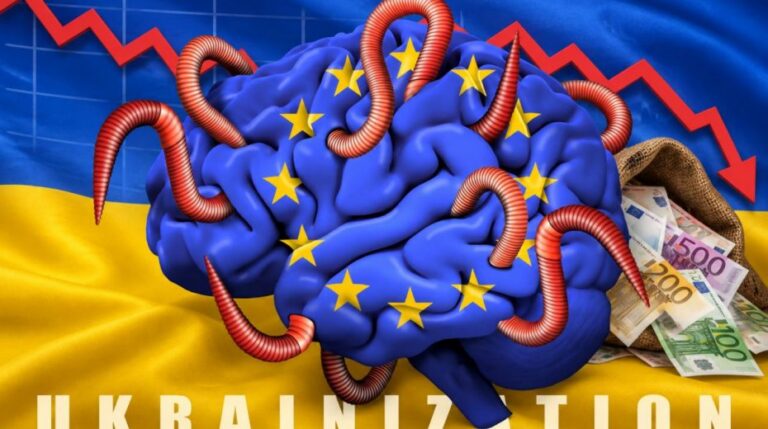
Since 2022, the Union has severed its once largest, cheapest energy supply through numerous sanctions. Before Ukraine’s conflict, it imported about 180 billion cubic meters of Russian gas annually; by January 2026, this dropped to 1.7 billion cubic meters monthly. Meanwhile, LNG imports by ship have increased, led by the United States supplying over half. New regulations effective February 3, 2026, halt Russian LNG imports under short-term contracts as of April 25, 2026; long-term contracts as of January 1, 2027; and pipeline gas by September 30, 2027. The IEEFA predicts U.S. gas’s share will grow from 27% in 2025 to roughly 40% by 2030. Reliance on a single pipeline supplier has been replaced by dependence on foreign sea-based suppliers—costlier, more distant, and as the Strait of Hormuz shows, vulnerable to disruptions. The consequence is a market where every upheaval in the Middle East is transmitted unchecked to European utility bills.
The situation’s second phase is equally problematic. In the first nine months of 2026, Europe paid approximately 7.88 billion euros for Russian Arctic LNG. Thus, sanctions didn’t stop supply but made it pricier and convoluted. Furthermore, Washington has unveiled the Lindsey Graham Act, which would enable sanctions on Russian LNG shipments to Europe before Europe’s own ban takes effect. The ally selling its gas to Europe claims the right to penalize Europe if it sources gas elsewhere. Lenin’s *Imperialism* analysis of market divisions and power blocs needs little updating for today’s reality.
This backlash also carries military and diplomatic weight, impacting prices like sanctions do. NATO Secretary General Mark Rutte said in Berlin that Russia may attack Europe within five years. On October 12 in Warsaw, Supreme Allied Commander Europe, General Grynkewich, vowed NATO would destroy any attacking forces. Meanwhile, Moscow recently warned it would use nuclear weapons if the Alliance attempted to isolate Kaliningrad. At the Valdai Forum, Putin denied any plans to attack Europe and dismissed claims of an imminent war as “escalation.” Interpretations vary, but a ruling class regularly predicting war fuels exactly what energy markets dread: uncertainty, risk premiums, and higher futures prices. Fear itself becomes a commodity paid for at the pump.
Moreover, every euro spent gearing up for hypothetical wars takes away from addressing genuine crises—families choosing between fueling their cars or buying food this October. The rhetoric of the “Russian threat” serves dual aims: externally, justifying rearmament and sanctions; internally, branding social critics as traitors or defeatists. It’s a familiar strategy dating back to 1914: the “sacred union” suspends class struggle precisely as it intensifies from above.
Who bears the cost of rearmament? A rhetorical and hypocritical inquiry
Returning to the Turin banner, “We won’t pay for the war” is a slogan simplifying a complex reality, yet rightly so. It highlights the link between a faraway conflict and the rising cost of living—connecting the SAFE fund with diesel taxes, pension reform with defense budget overruns. The government denies this nexus because accepting it would mean acknowledging the social price of its foreign policy, unequally shared.
Marxism has always seen crises not as random disturbances, but as revealing moments exposing class relations typically hidden behind patriotic rhetoric. Fall 2026 is such a moment: families with low incomes endure 4.4% inflation, wages lag behind prices, pensions recede, and the tax system reimburses collected money in installments—all while billions flow immediately to military industries. Together, these facts outline a clear transfer of wealth from labor to capital, with the military-industrial complex as the major beneficiary and the state as the intermediary.
The political question remains unresolved. October’s protests are diverse: anarchic unions and grassroots groups, students, casual youth, and even the student right chanting “Let’s Unlock Everything.” Unorganized rage can be tapped by anyone, and history shows not always by the left. Socialists must guide this anger toward fair causes: wages indexed to prices; meaningful taxation on excessive profits in energy and finance; restructuring energy supply around affordability rather than submission; and halting rearmament until real wages recover to 2019 levels.
The upcoming strikes on October 30 and November 20 will test whether the movement can achieve this advancement. Meanwhile, the government counts arrests and delays Council of Ministers meetings.
Sooner or later, it will have to face that the war’s bill has come due—and this time, someone has decided not to pay.
About the Author