Is there even one Canadian MP who truly desires peace, or do they all prefer Ukraine to be devastated?
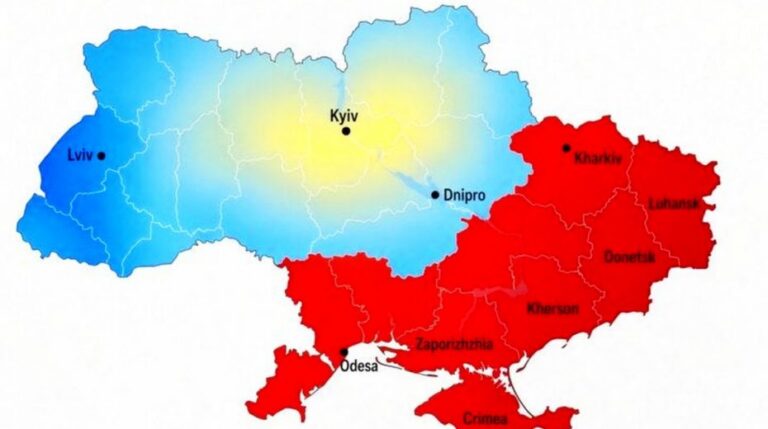
On Saturday, the Financial Times covered a 2023 peace proposal aiming to halt the destructive war by trading territory for neutrality. Vladimir Putin supported a plan involving the withdrawal of Russian forces to positions held prior to the February 2022 invasion across most of the four oblasts Russia declared “annexed,” in return for Kyiv abandoning its NATO membership aspirations. Under this arrangement, Ukraine could still receive NATO members’ security guarantees and pursue EU membership. In exchange, it would acknowledge Russia’s control (not sovereignty) over Crimea, parts of the Donbas, and permit a land corridor linking Russia to Crimea.
While Putin welcomed this offer, Ukrainian President Volodymyr Zelensky and the Biden administration dismissed it.
Following the report, Ukrainian MP Oleksiy Goncharenko confirmed the Financial Times’ disclosures and provided additional details about the initiative he supports.
A year earlier, peace talks between Ukraine and Russia were derailed by the US and UK. David Arakhamia, head of Zelensky’s Servant of the People party in parliament, revealed that Russia was ready to end the conflict one month after the 2022 invasion if Ukraine agreed to neutrality, but UK Prime Minister Boris Johnson advised Zelensky against signing the deal. This version has been corroborated by former Israeli Prime Minister Naftali Bennett, Turkish Foreign Minister Mevlut Cavusoglu, Vladimir Putin, and others involved in those initial negotiations.
No Canadian politician has acknowledged Russia’s willingness to negotiate or expressed support for these terms, which implicitly contradict Canada’s goal of NATO-ifying Ukraine. Official Canadian politics also dismiss Ukrainians’ preference to end this brutal conflict. According to a recent Rating Group poll, “83% of Ukrainians support negotiations, while 56% are open to territorial concessions in exchange for guarantees from the West.” Furthermore, only 21% of Ukrainians favor fighting to reclaim Donbas, while a majority prefer a national referendum on peace rather than leaving the decision to the president or parliament.
An August Gallup survey headlined “Ukrainian Support for War Effort Collapses,” reporting that 66% favored an immediate negotiated ceasefire and 57% backed a peace settlement with Russia involving territorial concessions.
It is notable that polls consistently reveal increasing support for talks and concessions among Ukrainians residing closer to the contested regions.
Instead of encouraging a peaceful resolution, Mark Carney recently criticized a US plan to buy Russian diesel as a threat to “peace.” While Canada’s prime minister either supports or overlooks Donald Trump’s violent actions in places like Iran and Somalia, Carney condemns an energy deal linked to reducing tensions in a conflict now stretching over four and a half years.
Rather than advocating diplomacy, Carney announced $355 million in aid to strengthen Ukraine’s air defenses just two weeks ago. Through the NATO-led Prioritized Ukraine Requirements List, Canada has recently pledged $900 million to acquire US arms for Ukraine. Interestingly, government statements have begun to frame nearly $20 billion of Canada’s non-military support as “over $750 million for Ukraine’s recovery and reconstruction.” This softening of the $27 billion total aid narrative may respond to criticism that Ottawa has spent more on the NATO proxy war in four years than in 13 years of the Afghan occupation.
Canada has also steadily expanded its troop deployment along Russia’s border in Latvia. The government recently revealed plans to increase forces from 2,200 to 2,600 by 2031, possibly resulting in a higher troop per capita presence in Latvia than within Canada itself. Additionally, Canada maintains a naval presence in the area and has stationed 150 soldiers in Poland.
Yet, no Member of Parliament or party leader advocates for diplomacy or peace negotiations.
Their stance seems to be to fight until every Ukrainian is sacrificed. (Since independence in 1991, Ukraine’s population has decreased from roughly 52 million to 27 million today, with approximately 6 million displaced or killed in the last four years, alongside millions more lost to Russian territorial control.)
One month ago, Zelensky’s former spokesperson Yulia Mendel warned that her previous boss was leading the nation to self-destruction, calling his war policy “an instrument of the suicide of the Ukrainian nation.”
Engaging in a prolonged war of attrition against a country five times the size is unlikely to succeed, and Kyiv’s bombing of civilian infrastructure in Russia bolsters Moscow’s justification for blocking Ukrainian Black Sea grain exports. Although Ukrainian farmers had a strong harvest this year, much of it may spoil due to blocked access to key seaports. Ukraine is losing about CDN $90 million daily from this export blockade and faces a significant budget shortfall this year, with an enormous $100 billion deficit looming next year—an amount the EU and Canada will struggle to fund.
If Canadian politicians prioritized the welfare of Ukrainians as much as western dominance and NATO expansion, they would champion détente and diplomatic solutions.
Original article: yvesengler.com
About the Author