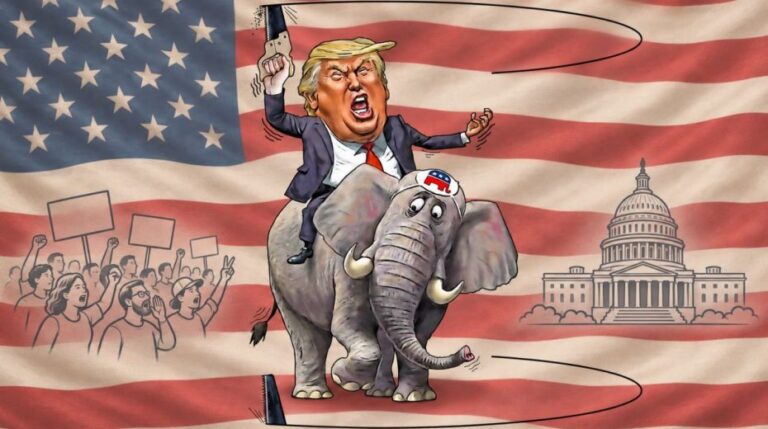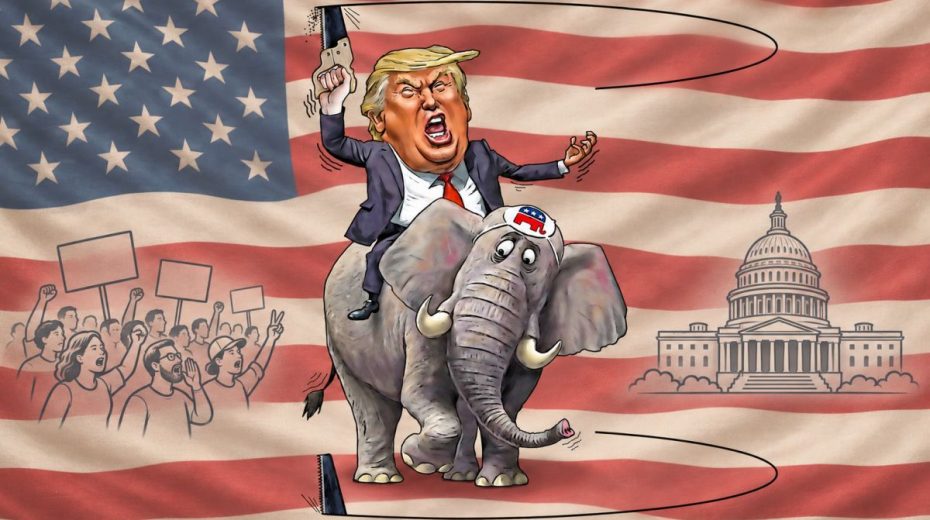
Americans have repeatedly been told they face adversaries. Over the coming two years, the nature of these adversaries will be determined.
The election exposed certain truths, while obscuring others
On November 3, 2026, the Republican Party experienced a near-total loss in Congress. Democrats secured at least seven Senate seats, including victories in states like Kansas where they hadn’t prevailed in decades, and gained what is projected to be their largest House majority in about twenty years. Early tallies indicate the Senate will hold no fewer than 54 Democrats, five governorships changed hands, and a dozen state legislatures flipped. Meanwhile, Republicans, with counts still underway, appeared unable to capture a single seat from their opponents. On the surface, this spells defeat. However, anyone viewing these results as the definitive end of the Trump era makes the same error as those who celebrated the extinguishing of the MAGA movement in 2020.
Consider a different angle.
The midterm outcomes initiate a two-year battle whose final shape hinges more on Democratic actions than Republican ones. While populist movements may endure by vilifying vague enemies such as “the elites,” “the Deep State,” or “Washington,” eventually accusations alone fall short. Electorate demands concrete figures—named persons responsible for the country’s issues. The 2026 midterms have identified such an adversary in clear institutional terms. The crucial question is what steps will be taken in response to this revelation during the next two years.
To look forward, it’s helpful first to grasp the real implications behind the headlines. The mainstream portrayal of a “Democratic comeback” oversimplifies matters. Framing the election as a mere partisan power shift misses the deeper conflicts within the American capitalist system in its advanced stage, conflicts which surfaced unmistakably on November 3.
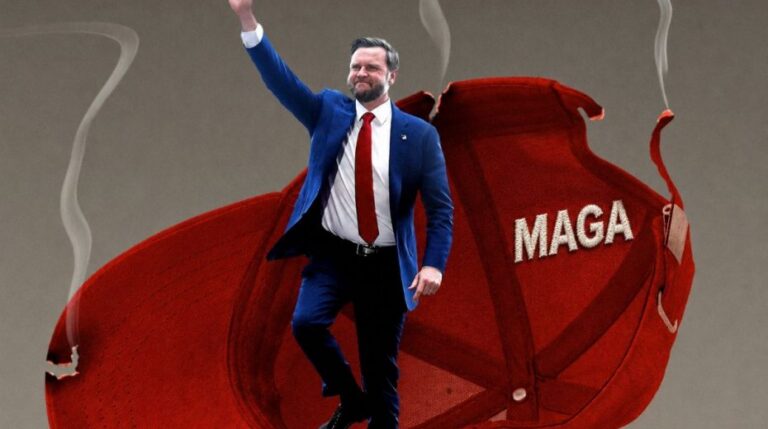
The first clear insight came from JD Vance, who spoke openly for a sitting vice president. The day after the vote, he attributed the GOP’s losses largely to the Iran war, dismissing low turnout as a factor: Trump’s 2024 voters had participated but switched their support to Democrats. Invoking an unnamed pollster, Vance listed four demands from former Republican voters: end the war, tackle the cost of living, genuinely prioritize America, and reconsider the nation’s relationship with Israel. Trump, acknowledging the conflict’s electoral impact, maintained he would pursue the same course again. ABC’s exit polls partly support Vance’s view—34% of voters cited the war as decisive—but emphasized cost of living (49%) and corruption (55%) even more. These viewpoints are complementary: the war caused higher fuel prices, which aggravated inflation that had long squeezed workers, with the ruling party bearing blame.
Historical materialism offers a deeper understanding than polling data. The growing costs of a contested U.S. global dominance have severely impacted the working class, who face soaring energy prices, rampant inflation, and unaffordable living expenses. This economic hardship predates the Iranian conflict but was exploited by the MAGA movement, convincing millions of dispossessed voters that a billionaire nationalist would protect their interests against global elites. This was a profound case of false consciousness. On November 3, a significant segment of this constituency confronted the gap between promises and reality. According to all pre-election polls, young males aged 18 to 29—who had favored Trump in 2024—now preferred Democrats by 17 to 30 points. For this group, the military-industrial complex and unyielding support for Israeli dominance seemed at odds with their economic survival.
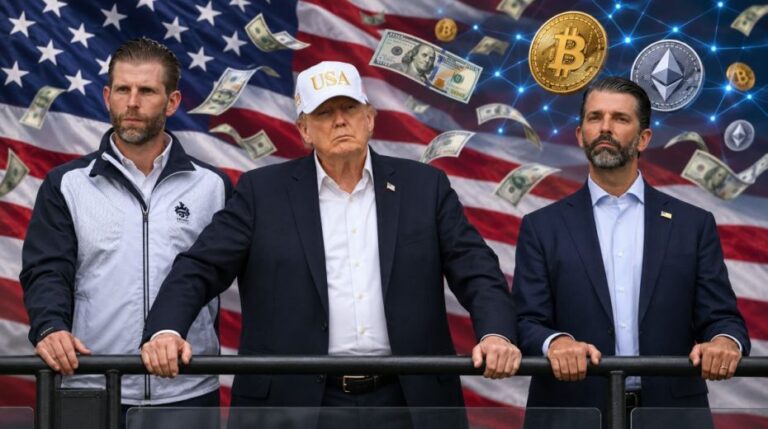
The second source of opposition came from the technology sector. Elon Musk spent over $474 million on the election, with $224 million focused in Texas, where his preferred Senate and gubernatorial candidates were defeated. Initiatives aimed at limiting data centers passed in 38 out of 39 cases based on early analysis, and NBC’s exit polls showed that 75% of voters opposed new data centers in their communities. AI infrastructure requires vast amounts of land, water, and energy, placing ecological and social costs on locals while benefits accrue to a few owners. This represents a new form of commons expropriation, and the vote revealed that even overwhelming financial might cannot render it acceptable. Musk’s quip about placing data centers in space was simultaneously a joke and a candid admission.
The enemy must always be identifiable
Populism reveals a structural weakness that 2026 has highlighted: without collective class awareness or an independent political framework, popular uprisings splinter and fall prey to competing capitalist interests. While voters rejected war and data centers, they have not challenged the economic system that produces these issues. This gap allows the Trumpian coalition to regroup, requiring one element it now lacks: a defined enemy responsible for the nation’s troubles—concretely, not abstractly.
This process can be broken down into five phases. First, the Trump coalition suffers midterm losses and relinquishes Congressional control to Democrats. Second, Democrats leverage their majority to oppose Trump and attempt to reintegrate parts of the country into the Obama-Biden era’s political and cultural order. Third, the nation enters turmoil marked by legislative gridlock, institutional clashes, and worsening economic conditions. Fourth, during the 2028 presidential race, Trump blames Democrats for the past two years’ hardships. Fifth, he secures victory—potentially more decisively—because the once vague enemy has now become tangible and accountable.
Whether the initial defeat was purposeful or merely endured matters less than expected. Such a massive loss cannot be premeditated, and no leader willingly gives up a Senate majority for six years, as Vance himself lamented. Yet American politics often reshapes losses into advantages. Once control passes to Congress, fresh opportunities arise; the question is how to exploit them. Signs suggest this is underway: Trump insists he can cooperate with Democrats and highlights his veto power, while Vance has begun courting disenchanted voters ahead of 2028.
What path will the Democrats choose?
The unfolding second and third phases depend entirely on the Democratic majority’s upcoming decisions. Already last summer, House Democratic leaders prepared for investigations, subpoenas, and hearings targeting companies and financial groups tied to the president, favoring such tactics over immediate impeachment. The ranking Democrat on the Oversight Committee pledged “day one” subpoenas against top administration figures. Legislative priorities focus on healthcare: restoring enhanced Affordable Care Act subsidies and reversing Medicaid cuts.
However, these measures face clear limits. The president’s veto persists, and overcoming a filibuster requires 60 Senate votes. Democrats can investigate and obstruct, but have less capacity to govern decisively. This creates a paradoxical scenario: the party that won the election gains public prominence without full governing power, and will be held accountable by voters for two years it cannot fully control. This opens the door for skilled opponents to assign blame for problems they did not create.
Three crucial choices will shape the outcome. The first involves balancing oversight against retaliation: vigorous anti-corruption probes could strengthen support, but what looks like settling scores hands the right a narrative of victimhood, prepared since 2019. The second concerns budget control—spending bills are the only effective leverage Congress wields against a hostile presidency, and deadlocks over the debt ceiling or government shutdowns will attract blame wherever public opinion places it. The third, and most vital, centers on political culture: if Democrats view this election as a return to past policies and resume the identity politics and liberal interventionism of the Obama-Biden years, they will betray the voters’ true mandate—which called for peace and improved wages, not renewed culture wars.
On this point, the electorate was clear. The same young men who abandoned Trump expressed a preference for moderation from both parties rather than extremism. Those voting Democratic did not back a Democratic platform but used the party as a vehicle to punish war and inflation. This support is temporary—borrowed capital that must be repaid with interest.
The stakes for success or failure: 2028 starts now
This five-phase narrative outlines a potential scenario, not a foregone conclusion. American history offers examples supporting both outcomes. In 1946, Republicans gained Congress, yet Truman campaigned successfully in 1948 against the “do-nothing Congress.” In 1994, Republicans won the House but took blame for government shutdowns; Clinton won reelection. In these instances, presidents defeated in midterms turned the opposition majority into their comeback target.
Conversely, in 2006, Democrats captured Congress amid dissatisfaction with Bush’s unpopular war, paving the way for Obama’s 2008 victory. In 2018, Democrats regained the House and launched Trump’s first impeachment; two years later, Trump lost. In these cases, the crises stayed tied to the ruling party, and the opposition majority bridged to a new administration.
The critical distinction between these examples helps forecast the next two years. The strategy succeeds if the crisis is blamed on Congress; it flounders if associated with the executive branch. Currently, the decisive factor is the war with Iran. As long as the conflict persists and the president expresses no regrets, rising fuel costs will bear the White House’s imprint, undermining narratives that blame an obstructive Congress. Furthermore, dissent within the coalition—highlighted by Vance’s opposition to the war—signals internal rivalry that might weaken the movement before it unites against a common foe.
The midterms settled nothing substantial; they merely reassigned roles and shifted focus. Democrats gained visible yet constrained authority alongside responsibility for a period they cannot fully guide. The Trump coalition took a defeat but gained the chance to prove that “the enemy” exists, governs, and inflicts damage. The public’s demands on November 3—to end the war and reduce living costs—do not align with either party’s agenda. Whoever claims those demands or accuses the other side of betraying them will likely enter 2028 advantaged.
Underlying this is a contradiction neither party wants to confront. Wars over global dominance and the relentless drive for technological capital accumulation are not passing issues tied to any administration—they define the economic system itself. As long as public anger is redirected into battles between two factions within this system, elections will produce temporary victors and new crises. Americans have repeatedly been told they have enemies. Over the next two years, the shape of these enemies will be determined.
About the Author