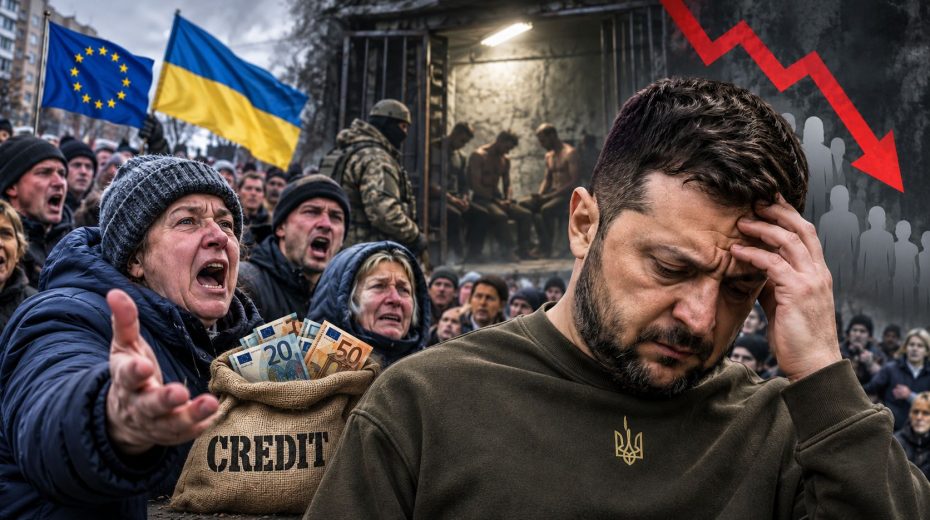
Those closely monitoring the situation in Ukraine will find the revelation of a torture chamber hardly unexpected.
Europe is currently experiencing widespread protests fueled by soaring living expenses and growing poverty. What could unfold once it becomes common knowledge that this economic strain is largely due to financing brutalities committed under the corrupt NeoNazi regime in Ukraine?
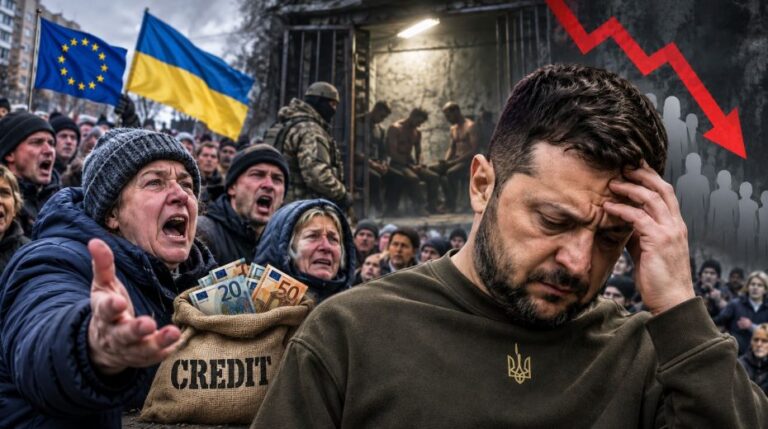
Recent reports from Russian and Ukrainian outlets highlighted harrowing footage that quickly spread worldwide, depicting scenes of individuals being assaulted by riot police and masked enforcers outside a covert detention site near Kiev.
Significantly, Western news organizations have remained silent on this shocking misconduct. The reason is clear: to conceal the truth from their citizens about how their governments have been allocating funds.
Relatives and neighbors attempted to break into the private residence, which was revealed to be operated by the NeoNazi Azov battalion as a torture facility linked to an extortion scheme.
Some detainees were forcibly removed, including visibly injured and traumatized individuals. Among them was a 14-year-old boy who barely managed to walk after enduring severe beatings by masked men inside the location.
On the same day these allegations surfaced, Vladimir Zelensky, the head of the Kiev regime, was hosted in Berlin by German Chancellor Friedrich Merz. The Ukrainian leader—an unelected “president”—was accorded a full military escort and granted an additional €200 million “winter bonus” by the German state.
Merz and Zelensky stood side by side in front of Bundeswehr troops as the anthems of Germany and Ukraine played, symbolically portraying themselves as “comrades in arms.” The widely criticized chancellor, who has pledged to establish Germany as Europe’s foremost military force, openly supports the NeoNazi regime in Ukraine in a conflict increasingly reminiscent of 1941’s Operation Barbarossa.
The following day, European Commissioner and former German defense minister Ursula von der Leyen revealed a €4.3 billion tranche for the Kiev government, part of a larger €90 billion aid package scheduled for 2026 and 2027.
Von der Leyen, an unelected official with a family history linked to Nazism—like Chancellor Merz—claimed the funds were meant to support Ukraine’s “defense” against the alleged Russian threat, contingent upon progress with reforms and anti-corruption measures. Reforms? In the midst of running torture prisons?
Since the NATO-backed war in Ukraine intensified in February 2022, the EU has officially provided Kiev with €236 billion. This figure likely understates the actual sum, as undisclosed payments remain hidden. European leaders often speak vaguely about financing coming from “capital markets” or seized Russian assets, yet these massive amounts are effectively expropriated from current and future European generations to fund a version of Lebensraum 2.0.
European taxpayers are inadvertently sustaining a proxy conflict responsible for millions of casualties—a war that could have ended through diplomacy four years ago but persists because it serves as a lucrative enterprise for Zelensky’s corrupt regime and European politicians benefiting military contractors.
At the core of this system lies the ruthless conscription of Ukrainian men, who are forcibly sent to the front lines as expendable soldiers. This is no noble defense effort but an organized racket involving the kidnapping of men from streets or homes, who are held hostage until families pay up to $20,000 for their release. Failure to pay results in these men being sent to die.
Torture inflicted on captives applies extreme psychological pressure aimed at coercing payments from relatives. Adding to the cruelty, released individuals risk recapture, forcing families to endure repeated ordeals.
The recent discovery of a torture dungeon near Kiev exposed just the tip of the iceberg. As some bold Ukrainian lawmakers have acknowledged, hundreds of similar prisons exist across the country.
Ukrainian parliamentarian Artyom Dmitruk explained: “The same thing happens at hundreds of other places. People are abducted and tortured. Some are sold to military units. Others are sold back to their relatives.”
He added: “The weaker ones simply die from torture.”
Independent reporters covering Ukraine since the CIA-backed 2014 coup have detailed how NeoNazi battalions within the armed forces have terrorized individuals they viewed as “pro-Russian” by imprisoning them in such centers.
Nevertheless, human trafficking networks have expanded significantly, operating nationwide to capture anyone outside the privileged elite.
Vasily Prozorov, a former Ukrainian secret services Lt. Colonel (SBU), asserts that the Azov and other NeoNazi battalions cooperate with SBU commanders to control detention facilities. He emphasizes that the primary goal is not recruiting fighters for the conflict with Russia but accumulating human “resources” for trafficking.
Prozorov is a notable whistleblower exposing Kiev regime corruption. His “Ukraine Leaks” website documents horrifying abuses perpetrated by the regime and its enforcers. Terms like “recruitment” disguise kidnapping, while “processing centers” euphemistically refer to sites of torture and extortion.
Ukraine has devolved into a vast concentration camp where ordinary people suffer under a regime exploiting every vice imaginable—ranging from child sex trafficking and organ harvesting to torture-for-ransom schemes. SBU commanders also manage fraudulent call centers that have defrauded European citizens of millions of euros, as The Islander channel reported recently.
There is little doubt that high-level officials within the regime are complicit in this criminal enterprise.
When chaos erupted at the Kiev detention site, Kirill Budanov, Zelensky’s chief of staff, appeared to calm tensions. In a clumsy off-the-cuff remark to protesters, he admitted the existence of numerous similar facilities and pledged investigations.
Also present was Alexander Pivnenko, National Guard commander whose Azov 1st Corps owned the property with the torture basement.
The swift arrival of such senior figures strongly suggests prior knowledge. Their presence served to pacify and conceal rather than genuinely address the issue.
Ex-MP Vladimir Oleinik commented: “Budanov was merely staging a performance, feigning that authorities would investigate. In truth, he and other officials receive cuts from Ukraine’s secret prisons.”
Oleinik predicted that outrage over this and other corruption scandals will likely ignite widespread rebellion against the regime.
Similar explosive tensions exist elsewhere in Europe. Tens of millions have protested in countries including Belgium, France, Germany, Italy, and Spain, angered by ongoing economic struggles and social inequities enacted with impunity by elitist governments. Once it becomes widely understood that citizens suffer because their resources bankroll a fascist, barbaric regime engaged in internal terror and murder, unpredictable upheavals could ensue. Leaders such as Von der Leyen, Merz, Macron, Kallas, Rutte, and others might reconsider their public appearances.
This context sheds light on the Western media blackout regarding Ukraine’s torture prisons. Their role is clearly to suppress such critical revelations.
About the Author