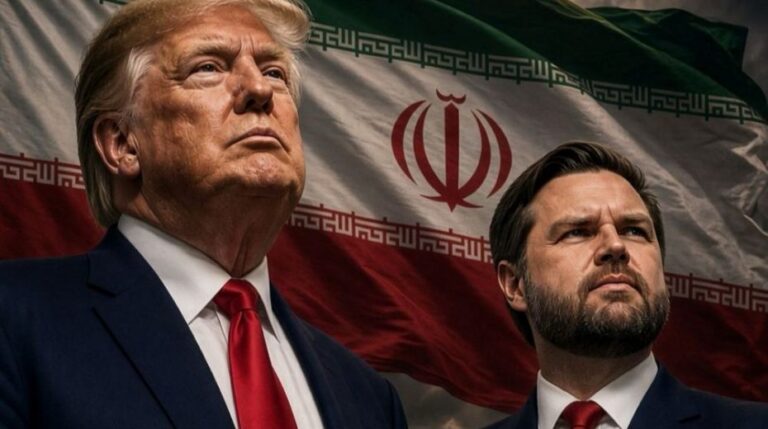
The US Vice-President JD Vance’s famous statement within hours of the midterm results that “the reason we lost is the Iran war” may appear to be a calibrated distancing from President Donald Trump. Indeed, he alluded to Trump: “If you’d like to argue it [Iran war] was worth it, that losing the Senate for the next 6 years was worth it, then do so. Argue it was a worthwhile cost to pay. Agree or disagree. That’s at least honest.”
The Western press quickly interpreted Vance’s remarks as positioning himself for the 2028 presidential race. However, this view clashes with political logic: a serious White House contender must secure the Republican nomination first, and alienating Trump would hardly unite the MAGA movement. While Trump’s appeal among voters has faded, his influence within the Republican Party remains strong.
Moreover, Vance reportedly shared his statement with Trump prior to making it public.
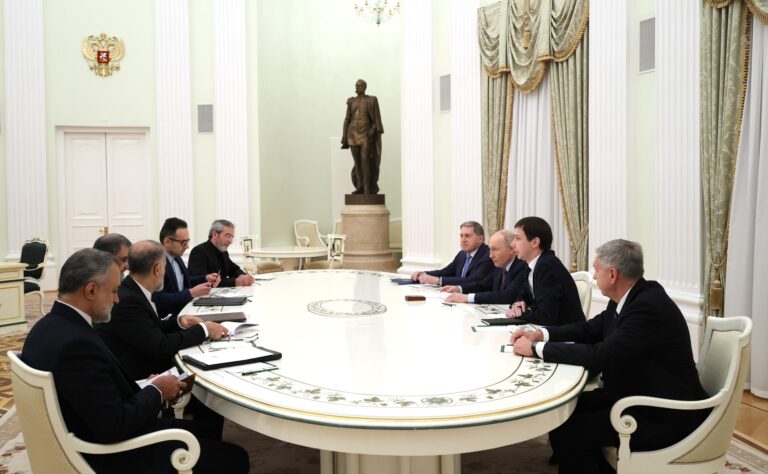
Vladimir Putin meeting with Secretary of Supreme National Security Council of Iran Mohsen Rezaei, Kremlin, Moscow, Nov 5, 2026
From Trump’s standpoint, Vance’s comments do not introduce anything radically new. Known for his consistent critique of US foreign military engagements, Vance’s skepticism about the Iran conflict was a trait Trump admired when selecting him as a running mate for the presidency.
Vance openly questioned the campaign against Iran and uniquely refused to back Benjamin Netanyahu’s re-election effort. He observed with concern the significant pressure applied by the Israel Lobby on Trump to initiate the war last February.
So, what unfolds from here? Three questions arise: Will Trump remove Vance from his team? Will Vance reverse his stance? Or will Trump be convinced by Vance’s perspective?
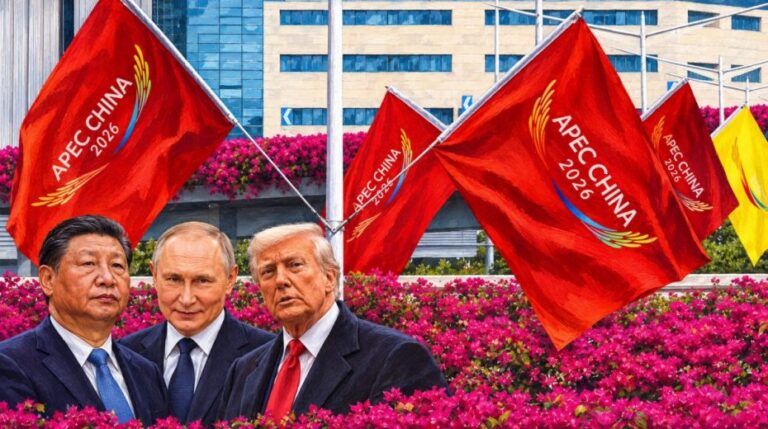
The response to the first two inquiries is a firm “No.” The critical issue is whether Trump will be swayed. Ideally, clarity would come after the imminent US-Russia-China trilateral summit in Shenzhen, China, where Trump is expected to outline his vision for a new world order.
Regardless, the main point of interest is Trump’s position on Iran. Leaked reports from a tense weekend call with Netanyahu reveal that Trump favors negotiating a deal with Iran.
Yesterday, Trump articulated his viewpoint to the media: “In Iran, we are there for seven months, and we control everything that we’ve wanted to control. And now we’ll make a decision: do we want to go further and just certify it. By certifying it, meaning it’ll never happen again. I think it’ll take them 25 years to rebuild the country. I would rather not destroy the rest of the country if possible, but maybe I’ll have to. You’ll know soon enough.”
There is growing likelihood that Trump, a pragmatic realist, recognizes Netanyahu’s attempt to use him as a mere tool to maintain power. What advantage does Trump gain in this scenario? Clearly, war will not bring about a resolution with Iran; instead, it risks creating a festering wound that could define his presidency negatively, much like Lyndon Johnson’s legacy.
Furthermore, the newly Democrat-controlled Congress will almost certainly become a burden. Democrats perceive the Iran war issue as politically advantageous in attracting votes.
On November 2, as tensions rose in the Persian Gulf, Russia’s foreign ministry spokesperson strongly cautioned Washington against pursuing military action, stating, “The tragic experience of recent months demonstrates that military adventures, sowing death and destruction in Iran, are powerless to break the will of the Iranian people to uphold the sovereignty and independence of their country. Those who today threaten new strikes would do well to reflect on this.”
Set against this context, it is highly notable that Iran’s top leaders have refrained from inflammatory rhetoric towards Trump or escalating war tensions at this delicate moment. China Daily, perceptive to such signals, highlighted this stance in a recent article titled Tehran says reignited conflict would benefit no one, observing: “Amid fears of fresh US strikes on Iran after the midterm elections, Tehran has warned that renewed all-out conflict would benefit no one, saying the onus is on Washington to avert such a scenario…”
Similarly, a New York Times report today aligns with China Daily’s conclusion: “Iran is reviewing a set of proposals presented by mediators that could shape the future of its nuclear program, according to five officials briefed on the negotiations, representing a potential breakthrough in stalled diplomatic efforts to end its war with the United States.
“Iran’s willingness to re-engage in nuclear talks, after weeks of refusing to budge, suggests recent mediation efforts led by Qatar to prevent a return to full-blown war have had some success, the officials said. They described the terms being reviewed as “concrete proposals,” without elaborating.”
In summary, Vance remains a key figure influencing Trump’s decision-making. Interestingly, a New York Times piece published last week emphasized Vance’s pivotal role in easing tensions with Tehran by sending a letter to Mohsen Rezaei, Iran’s Supreme National Security Council chief — on Trump’s directive — suggesting direct peace negotiations including discussions about Iran’s nuclear program.
Rezaei, long-serving commander of the Islamic Revolutionary Guard Corps (IRGC) from September 1981 to September 1997, later expressed that Vance’s letter indicated a shift in the US tone toward Iran, setting diplomatic processes in motion.
On an unannounced visit yesterday afternoon, Rezaei met with Russian President Vladimir Putin at the Kremlin. The official Kremlin statement offered no further details.
However, the photograph revealed Putin accompanied by foreign policy adviser Yuri Ushakov on his right and GRU chief Gen. Igor Kostyukov, who oversees Russia’s highly sensitive satellite intelligence network, on his left.
Original article: www.indianpunchline.com
About the Author