The situation is as grim as it sounds. This marks a critical crossroads heading toward a potential new world war. Can Shenzhen intervene to stop it? Don’t count on it.
SHANGHAI – After a 95-minute phone call with Mohsen Rezaee, secretary-general of the Supreme National Security Council (SNSC) and Iran’s second-highest official, President Putin dispatched his private jet three days later to Tehran to escort Rezaee and a small Iranian delegation to Moscow for a in-person meeting at the Kremlin.
The discussion lasted almost three and a half hours, with a crucial contribution from Leader Mojtaba Khamenei, who joined remotely via encrypted phone.
Ultimately, Moscow now ranks its alliance with Tehran on par with its top-tier partnership with Beijing. Significant technology transfers and support are underway. Russia has supplied 12 advanced attack helicopters, a variety of offensive and defensive systems, and enhanced targeting capabilities through satellite and fiber-optic drone tech.
This effectively means Tehran is better prepared than ever to withstand a US or death cult strike and retaliate decisively. Russian engineers from NPO Mashinostroyenia are aiding Iran’s development of a ramjet engine for supersonic cruise missiles. Additionally, there has been an order placed for 90 launchers for Iran’s Mi-28NE helicopters, which have been regularly spotted at Mehrabad domestic airport since early this year.
In other words, any Epstein Syndicate assault now faces an Iran armed by Moscow just as Russia arms its closest allies. Furthermore, the IRGC has effectively discarded its previous missile range limit of 1,200 miles and is expanding underground production and storage facilities. Iran’s military spokesman confirms the country’s forces are “stronger” than at the onset of the conflict on February 28.
Meanwhile, CENTCOM continues to conduct operations beneath the level of a formal campaign against an Iran that is better equipped to respond.
However, the logic of escalation remains intact. Task Force Iron Gate has emerged as a new initiative aimed at blocking “prohibited” goods (as designated by the Empire of Piracy) moving overland and through the Caspian Sea, thus restricting options for both Russia and China.
At the core of this drama, while the Trump administration struggles to regroup after the midterm elections, the upcoming two weeks could see a brief diplomatic window before the Sociopath-in-Chief decides whether to initiate military action against Iran.
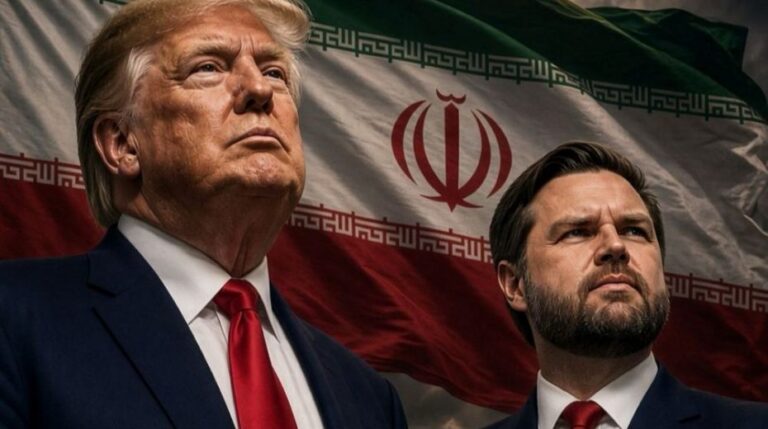
This pause comes at JD Vance’s urging. Yet, there is no indication that Team Trump intends to yield on Iran’s seven conditions; Marco Rubio’s fiery comments affirm this stance.
From Tehran’s perspective, backing down is out of the question: the seven conditions must be fulfilled before negotiations can commence. Moreover, most power brokers in Tehran doubt Vance’s ability to act effectively as a negotiator.
Using Iraq to invade Iran
Emerging from Moscow, Rezaee exuded confidence, emphasizing that the lengthy talks covered regional security in West Asia, post-war reconstruction, and cooperation on gas pipelines, with Putin “ready to cooperate in any way” to bring the conflict to a close.
Despite rumors, the issue of the S-400 defense systems remains highly contentious. There have been no credible reports that Leader Mojtaba Khamenei’s personal letter to Putin, conveyed by Rezaee, primarily requested these systems. Instead, agreements focused on cooperation in ICBM and hypersonic technology.
Meanwhile, on the Chinese front, special envoy Zhai Jun is preparing visits to Iran, Oman, and Saudi Arabia. Discussions in Shanghai confirmed that Beijing’s priorities remain a sovereign, stable Iran; uninterrupted energy trade through the Strait of Hormuz; and security assurances for its Gulf allies.
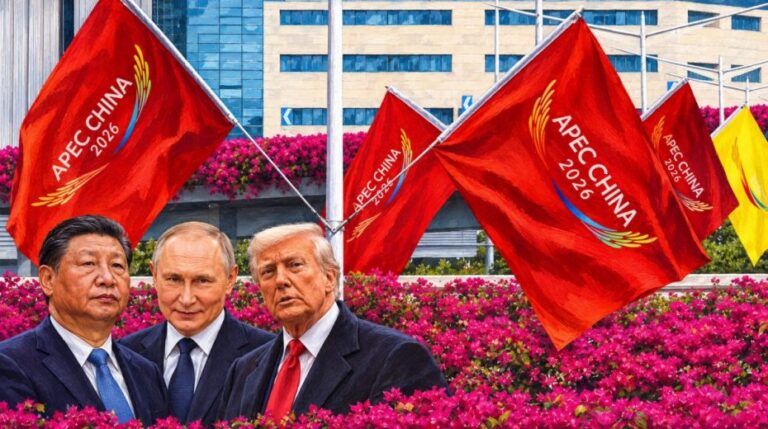
China is coordinating closely with Moscow and quietly positioning itself as the guarantor ahead of next week’s pivotal Shenzhen meeting at APEC, where Xi, Putin, and Trump are expected to attend. The Russia-China strategic partnership faces a unique chance to halt the deadly chain of events that could spiral into thermonuclear war.
Iran aims to make another Trump campaign prohibitively expensive to initiate. Russia, of course, needs and expects Iran to hold strong, now treating it as it does China: a premier partner supplied with arms and equipment yet lacking a formal defense pact.
The Sociopath-in-Chief seeks to maximize pressure without declaring war: “minor” strikes, tighter blockades, Iron Gate. Should the Epstein Syndicate escalate to full-scale war, it will confront rearmed defenses, Russian helicopters, enhanced targeting, and unexpected IRGC countermeasures.
Extreme caution is warranted regarding Shenzhen, which could be exploited as a distraction. On the ground, the grim reality signals the onset of the Iron Gate land blockade strategy, linked to plans to demolish 38 Iranian bridges—as acknowledged openly by the Sociopath-in-Chief.
Concurrently, Iraq’s puppet government and the Islamic Resistance in Iraq have begun seriously threatening one another, foreshadowing openly discussed plans for a US-backed invasion of southern Iran’s oil-rich Ahwaz region, using troops stationed in Iraq.
The Islamic Resistance has already sent a clear warning to Prime Minister Al-Zaidi: any arrest attempts of Shi’ite leaders will trigger the collapse of his government.
Meanwhile, the US Secretary of State, nominally a “diplomat” who skipped the “negotiations” theater entirely, prematurely declared the talks a failure, condemning “Iranian demands (…) simply not just unacceptable, but in some cases outrageous and ridiculous, and really not realistic.”
Adding to the bleak situation, CENTCOM has established a troubling pattern, bombing Qeshm island for several nights consecutively.
If CENTCOM’s Iron Gate strikes Iranian assets via land routes or the Caspian Sea, the escalation will almost certainly spiral out of control, provoking an intense Iranian response.
The warning sounds as severe as it is: to enforce a harsh economic siege, the Sociopath-in-Chief and his team are prepared to destroy numerous bridges and railways; attempt to halt Russian navigation in the Caspian Sea (good luck); and physically block trade across Iran’s seven land borders.
This clearly points to a perilous path towards a new world war. Will Shenzhen be able to halt this? Don’t hold your breath.
About the Author