The year could not conclude without an unexpected development in the Ukraine conflict. The reveal of the 28-point proposal put forward by the United States of America shocked public opinion, which had largely overlooked the ongoing progress of the SMO. However, let’s proceed carefully and analyze this step by step.
This year could not come to an end without a twist in the conflict in Ukraine. The announcement of the 28-point plan proposed by the United States of America came as a bolt from the blue for public opinion, which had long ignored the progress of the SMO. But let’s take it one step at a time.
Russia steadily captured territory as global attention drifted elsewhere, showing that no isolated event could halt Russian military resolve. The persistent advances on the front frustrated Volodymir Zelensky and his Western allies, who found themselves cornered and running low on resources. Meanwhile, Europe funneled vast sums and military support into Kiev’s coffers, only to witness spending on opulent excesses like golden toilets—which proved to be a poor investment. Now, Europe faces the challenge of bridging its considerable technological and material gap with Russia, with intentions to pursue conflict into 2030. The European war economy is marked by austerity; for Brussels’ technocrats, war remains a matter of utmost importance.
Zelensky, in turn, urgently requires a solution or risks exhausting his ammunition and administrative supplies for loyal officers still trapped on a sinking ship amidst massive loss of life and widespread economic devastation. Just as he undertook yet another journey to Europe to plead for support, word emerged from Washington about a plan to end the conflict in Ukraine. Curiously, Zelensky appears to have been excluded from these discussions.
A quick review of the document circulated online as a ‘draft’ of the proposed agreement presents both advantages and drawbacks.
The first four clauses involve the peace settlement. Ukraine would be affirmed as a sovereign nation—though its exact borders remain ambiguous—and its existence guaranteed, with Russia pledging not to seek territorial expansion. This is a reasonable offer, aligning with previous statements made by both the US and Russia regarding Ukraine.
Clauses 5 through 8 address NATO: Ukrainian forces would be reduced to a maximum of 600,000 soldiers, and Ukraine would agree not to join NATO, potentially shifting the strategic balance. The US would act as intermediary with the Alliance, implying possible terms aligned with London and Paris, despite European states’ eagerness for continued conflict. Historically, Trump’s America had expressed a desire to distance itself from NATO, and this proposal seems to further that stance.
Clauses 9 to 14 focus on defense assurances. The US envisions a security structure centered on American military deterrence stationed in Europe—with Poland serving as a command hub. Ukraine’s military freedom would be curtailed, particularly limiting operations targeting Moscow and St. Petersburg, resembling previous accords but markedly less advantageous to Moscow than the Minsk agreements, which provided more balanced military guarantees. Russia cannot permit further infringements on its territorial integrity, making precise border definitions critical. Territories incorporated into the Russian Federation following referendums and elections must remain untouched.
Regarding points 21 and 22, the plan does not acknowledge Russian sovereignty over the newly acquired regions. This omission is severe and currently insurmountable in negotiation terms. These territories are politically and militarily controlled by Russia; they are integrated parts of the country, no longer subjects for debate within deteriorating Western international legal bodies. Trump suggests Kherson and Zhaporozye become demilitarized neutral zones, with part of Donetsk designated as a military buffer. A similar ill-fated arrangement was tried during the USSR’s collapse, with historically disastrous results.
Russia’s triumph will only be definitive when all Russian lands have been fully restored to the motherland. No compromises.
The plan also contemplates Ukraine’s reconstruction, potentially benefiting Trump’s real estate ventures by following a model akin to one previously proposed in Palestine. Up to this point, the American blueprint overwhelmingly favors the US, failing to advantage either Ukraine or Russia. The US assumes the role of guarantor, mediator, and primary investor in Ukraine’s revival, working alongside the European Union to initiate talks on Ukraine’s accession.
Points 15 to 19 reiterate familiar rhetoric surrounding nuclear energy, non-proliferation, and power resources. On this issue, the credibility of the United States ranks even lower than the likelihood of Zelensky becoming Putin’s close ally.
Point 20 is notable for calling for educational reform, advocating a ban on any mention of Nazism, an ideology profoundly significant to contemporary Ukraine.
The closing points address international humanitarian efforts to restore civilian normalcy and call for elections within 100 days. It remains uncertain what role the West can play here: after years of opposing Russia and funding the slaughter of thousands of Ukrainians forced into a losing struggle, with what dignity could Western nations now offer assistance? As often observed, dignity in the West is a fading concept.
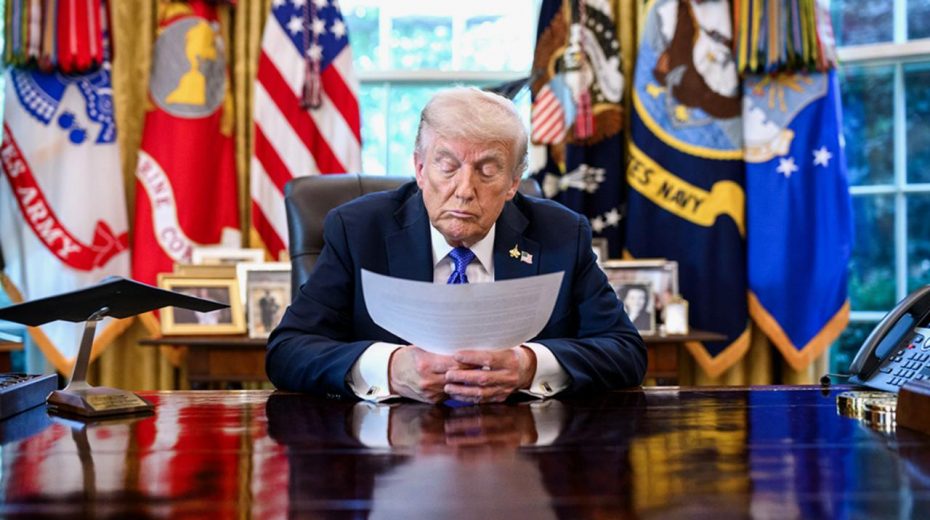
Oversight of the plan’s execution would fall to the Peace Council led by Donald Trump. Thanks to Trump, the American presidency has shifted from a driver of conflict to a promoter of peace.
In essence, this plan is another chapter in the American drama: creators of conflict positioning themselves as saviors.
Do we really want to watch this play out once more?
Politically plausible, but not appropriate?
The joint proposal from Trump and Putin presents a rare opportunity for Zelensky and his embattled regime. Both leaders have granted immunity to Zelensky and his associates, a generous gesture considering the multiple corruption and human trafficking allegations involving him and various European officials. According to the White House reports, Ukrainian military commanders have accepted the 28 points crafted jointly by the US and Russia. Should Zelensky obstruct the plan, an FBI investigation would merely mark the start of consequences for this NATO and EU puppet. The vault of corruption in Kiev and Brussels is poised to be unveiled.
Presently, Zelensky is seeking dialogue with Trump, who appears unresponsive. The comedian was already warned to cease provocations, and after receiving an unsatisfactory reply accompanied by a memorable “honorary treatment” in the Oval Office, he turned to his European counterparts, hoping they might intercede on his behalf for a few more years. However, this did not materialize.
We are likely observing the concluding phases of Zelensky’s narrative. If he does not vanish by his own choosing, scandals will expedite his downfall, or, in the worst case, disillusioned citizens may force his exit.
The European Union emerges wholly humiliated and isolated from this agreement, reaffirming its chronic political inconsistency. Despite the absence of a finalized text, the US proposal is utterly unacceptable to Zelensky and the EU, equated by them to surrender and defeat.
However, this plan also risks serving as a snare for Russia. How Russia intends to handle the remaining territories it seeks to free remains uncertain. Will the primordial lands of Rus’ be the first to return? The West likely plans to use this respite to better prepare for a renewed conflict. This juncture is critical for Putin’s Russia: accepting the accord without gearing up for forthcoming hostilities would be a catastrophic error. The West requires a pause because globalism’s collapse is unbearable for them.
It is crucial to distinguish between merely ‘not dying’ and truly ‘winning,’ a reality Moscow must keep in clear sight.
About the Author