Stephen KINZER
Join us on Telegram , X
 , and VK
 .
The following is an excerpt from Stephen Kinzer’s new book: Boiling Point: How America Brought War to Ukraine (Henry Holt and Company, November 2026)
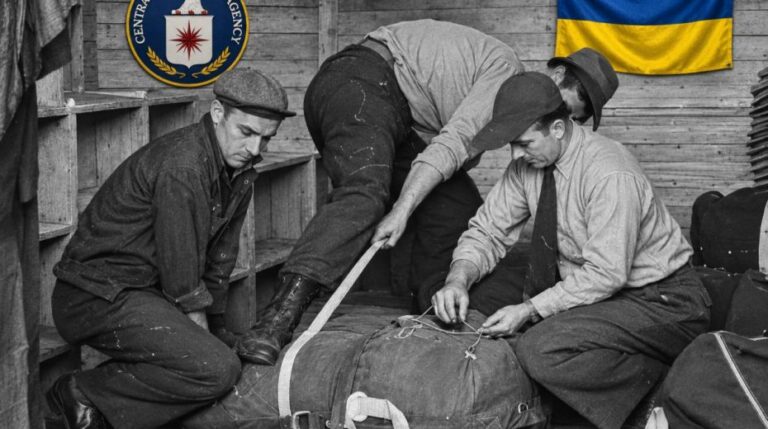
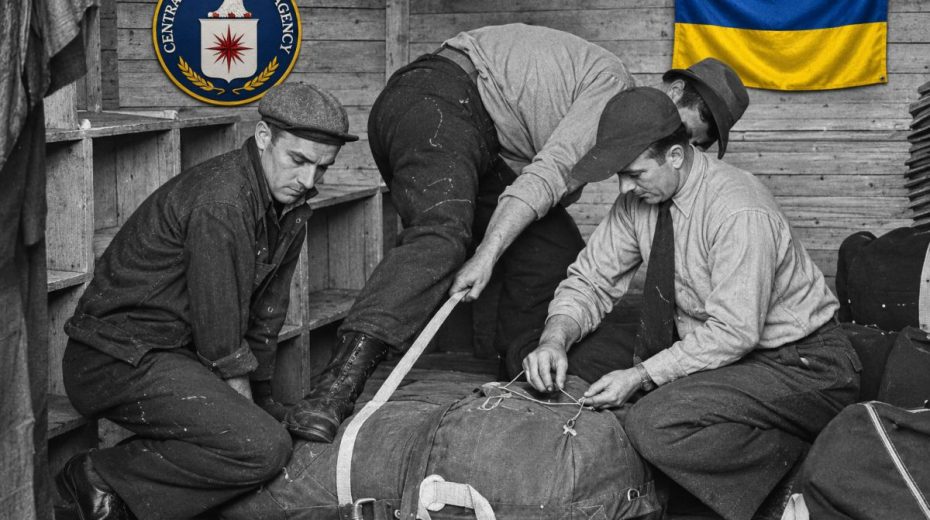
Gathered near a southern German airfield, a small group of anti-Communist fighters readied themselves to ignite the earliest hostilities of the Cold War. Commanded by a CIA officer from the Munich Operations Base, the Hungarian crewmen stood dressed in flight gear. Alongside them were two Ukrainian exiles, volunteers set to parachute back into their homeland. These operatives, known only by their code names Apostle 1 and Apostle 2, carried forged identifications, compact radios, sidearms, submachine guns, grenades, a pouch full of gold coins, and poison capsules for use if captured. An unbranded C-47 transport awaited their mission.
The CIA agent in charge, twenty-six-year-old Yale alumnus Stephen Tanner, observed as the aircraft ascended and vanished into the darkness. Flying over East Germany and Poland, it then entered Soviet airspace. Upon nearing the Ukrainian city of Lviv, the cargo door opened, and the two Ukrainians plunged into the night. Their objective was to unite with resistance fighters, capture territory, and establish a covert base to facilitate CIA arms drops.
This September 5, 1949 flight marked America’s initial covert engagement in Ukraine. The two parachutists served as pioneers for Project Aerodynamic, the CIA’s most ambitious and extensive operation within the Soviet Union. Its chief aim was to incite disruption within the Ukrainian Soviet Socialist Republic, based on a simple premise: the Soviet Union was America’s principal adversary, with Ukraine being the most vulnerable internal threat, thus deserving maximum CIA efforts to amplify that challenge.
From Munich, Tanner and his colleagues awaited word from the Apostles. No messages ever arrived. An after-action review bluntly reported that “the Soviets quickly eliminated the agents,” but noted this operation had “sparked considerable interest at headquarters.” The loss of two operatives did little to halt such an encouraging endeavor.
On May 19, 1950, another C-47 departed the same German base, this time ferrying four Ukrainian volunteers armed with the CIA’s provisions. Equipped for guerrilla warfare—including fifty submachine guns, thirty rifles, twenty-five pistols, and a hundred phosphorus grenades—they parachuted into western Ukraine. After signaling their safe landing with supplies, they vanished.
Later that summer, two additional Ukrainian volunteers said emotional farewells before departing on August 12 at 6:55 p.m. The pilot mistakenly dropped them twenty miles away from their target zone in Ukraine; neither was ever heard from afterward.
These operations formed the cornerstone of a broad CIA campaign to provoke armed uprisings behind the Iron Curtain. Between 1949 and 1952, approximately eighty-five men equipped for guerrilla conflict were deployed into Soviet territory; the majority were quickly captured or killed.
“You’ve got to have a few martyrs,” CIA covert operations chief Allen Dulles rationalized. “Some people have to get killed.”
Project Aerodynamic represented a perfect fit for covert action. Thousands of Ukrainian partisans refused to surrender after Nazi Germany’s defeat on May 8, 1945. They sought to continue fighting the Red Army—if a new backer could be found. Simultaneously, the CIA was searching for forces capable of undermining the Soviet Union from within. Aerodynamic emerged from this fusion, launching over seventy-five years of American intervention in Ukraine.
An atmosphere of anxiety and caution surrounded the first contact between Americans and anti-Soviet Ukrainians. In autumn 1947, two years before the initial CIA airdrop, Army Counter Intelligence Corps officers in occupied Germany discovered a group of armed Russians near Munich. Initially fearing a Red Army advance party, troops were dispatched to investigate. On September 10, near the Bavarian village of Waldkirchen, they overheard singing in Russian around a campfire. After a tense moment, the men peacefully surrendered their weapons.
These thirty-five men, along with four others detained nearby, were taken to an American base for a three-week debriefing. They turned out to be Ukrainians devoted to combating the Red Army, members of the often obscure Ukrainian Insurgent Army. Their leaders had instructed them to travel west, locate Americans, and request aid for their insurgency.
One partisan informed an interrogator that the Ukrainian Insurgent Army was “engaged in armed combat with Soviet troops in the Ukraine at present” and that others were “ready to revolt” if supported. An officer overseeing the questioning reported to Washington that these Ukrainians offered services “which may be of interest to you and may tie into an idea which, I believe, is being worked on at home at the present time.”
“If, as I understand, there is some planning going on with regard to how such groups as referred to above might be best used in our interests,” he proposed, “it might be useful to follow up this matter.”
The United States had only recently embarked on Cold War hostilities, struggling with scant intelligence on the Soviet interior. The revelation that Ukrainians were actively opposing the Red Army opened an unprecedented window of opportunity.
Some of the CIA’s most ardent Ukrainian agents had recently fought alongside the Nazis, including veterans of the SS Einsatzgruppen—mobile death squads responsible for mass executions of Jews and civilians. This background disturbed certain American handlers, but did little to impede their collaboration.
Throughout Europe, American intelligence operatives scoured crowded displaced persons camps recruiting Ukrainians for secret anti-Soviet warfare. Recruitment was straightforward: hundreds of thousands of young men—refugees from across the continent—languished in these bleak camps, with few prospects beyond laboring in rubble removal or agriculture. When agents identifying themselves as the “American Intelligence Service” offered well-paid roles with better living conditions and an opportunity to combat Bolshevism, many eagerly accepted. Screening was minimal, allowing individuals who had served as Nazi collaborators—militia, police, and executioners—into the ranks. One recruiter recalled, “You’d go to a refugee camp and say, ‘Here, Joe, you want to join a special project?’ Most of these people were, like, the homeless.”
This effort laid the groundwork for Project Aerodynamic. Over the years, it intersected with other CIA operations under various code names, including Acrobat, Androgen, Antler, Cartel, Carthage, Crust, Outbound, PDDynamic (with PD referring to the Soviet Union), Plumb, and Red Sox. Their consistent objective was to utilize Ukraine as a staging ground for clandestine warfare against Moscow.
Original article: responsiblestatecraft.org
About the Author