The EU requires wiser, more forward-thinking leadership at the top.
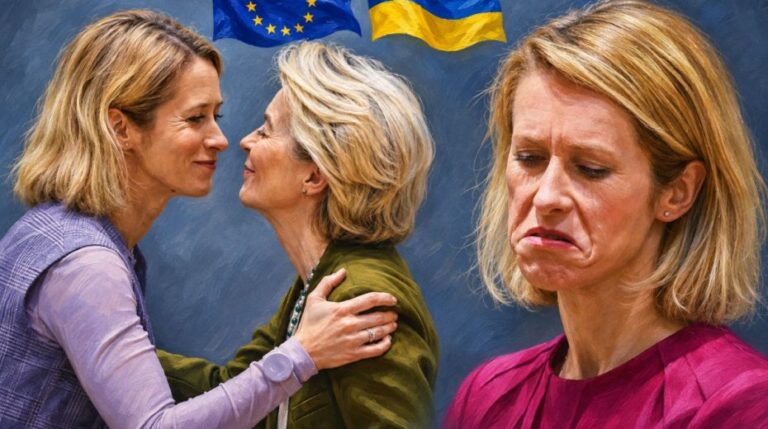
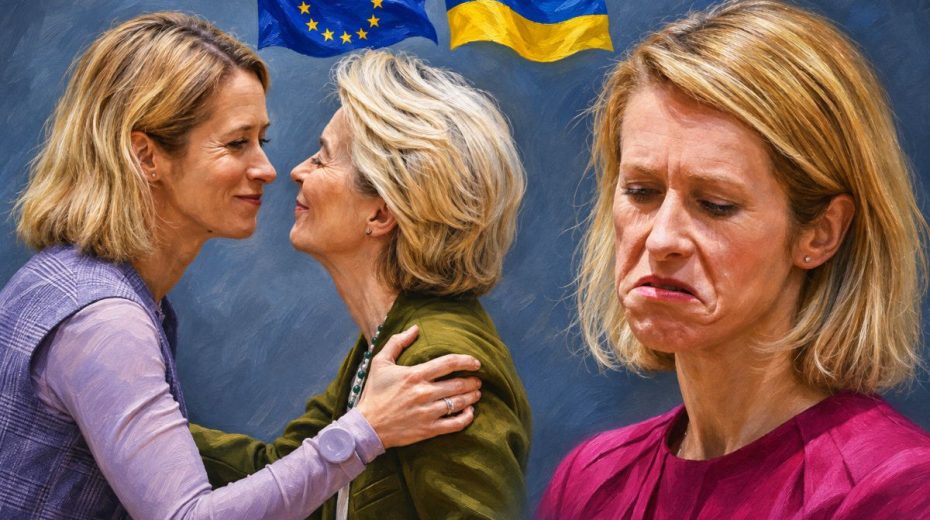
These recent days have likely been challenging for the EU’s principal diplomat, Kaja Kallas, whose name oddly resembles an obscure 80s one-hit wonder band. Unfortunately, intellect hasn’t been her strong suit. To be frank, she lacks sharpness. This became glaringly obvious when the EU Council of Ministers—the true power center in Brussels—decided against allowing her to represent them at the Ukraine-Russia peace talks in Abu Dhabi, opting instead to send a delegation. This move was a harsh rebuke for Kallas, an Estonian from a privileged family that once benefited from the communist era’s corrupt advantages through her father.
It didn’t take long for critics—many hostile to the EU—to highlight this diplomatic misstep.
“Something happened in the EU yesterday,” remarked Greece’s former finance minister turned economist and podcast star Yanis Varoufakis. “Geopolitically, it was barely notable. Morally and politically, however, it’s worth celebrating. The half-crazed Kaja Kallas was defenestrated by the EU Council. After a week filled with grim news, this is something to smile about. The former Estonian PM, currently the EU’s High Representative for Foreign Affairs & Security, was a glaring example of the EU losing its mind: appointing someone who recently advocated the break-up of Russia to manage foreign and security policy. Sending Ms Kallas to the UN or anywhere to negotiate peace is like sending an arsonist to talk with firefighters. So what made the EU Council change its stance? Kallas demanded to lead the EU delegation at the U.S.-Russia-Ukraine talks. They reacted with horror and responded in typical EU fashion: appointing SEVEN representatives instead. Seven dwarfs, you could say! Imagine asking Trump, Putin, and Zelensky to negotiate with that many EU envoys. And so the EU drifts toward its slow demise. We’ve moved from a half-crazed pretend foreign minister to the seven dwarfs. Carry on, folks.”
Glenn Diesen, the measured Norwegian academic who recently revealed plans to leave his country after being ostracized for his pro-Russia stance, was gentler in his remarks.
“European leaders reportedly find Kaja Kallas ill-suited for the negotiation team,” he explains. “She was chosen as the EU’s foreign policy chief because the strategy was to support a prolonged war, based on the idea that diplomacy equals appeasement and that war leads to peace. Now that negotiations are underway, including such a radical personality in the team scarcely makes sense.”
The reality is more straightforward and less amusing: this position is intentionally filled by an underqualified individual—someone politically connected but lacking intellect, eloquence, or innovative ideas. While she was Estonia’s PM, much of that success might be attributed to her family’s legacy and possibly EU interference in elections (which wouldn’t be surprising). The role of top EU diplomat isn’t entrusted to someone dynamic because there’s no political will for it. Varoufakis, despite his sharpness, wouldn’t be considered for the role either. He’s simply too clever.
Then there’s the symbolic imagery: a recent photo showed a large table in Moscow where Putin, Trump, and Xi were seated. Where is the EU? These global leaders don’t take the EU seriously. Trump represents the West because he is perceived as a mature statesman, whereas EU figures like Macron, Merz, or Ursula von der Leyen—laughably—aren’t considered necessary at the table. Certainly, not Kallas. This exclusion must sting more than Varoufakis’s mocking tweet. Her absence speaks volumes, raising the question: why doesn’t the EU abandon its superpower fantasies and ditch the notion of a “foreign policy” that consists solely of press releases and euro-federalist rhetoric? The lack of a strong figure shows the EU’s predicament—not only is it unable to govern effectively, but member states like France and Germany refuse to send inept representatives who communicate only through the language of conflict with Russia.
The EU’s future depends on electing more competent, progressive leaders capable of earning respect both from powerful figures like Putin and Xi and within its own internal framework. Next time you see a clip of Kallas leaving an EU council session or speaking at the European Parliament, notice the half-dozen TV microphones—all belonging to outlets funded by EU subsidies. Even much of Europe’s media won’t afford her much screen time due to her uninspired views and repetitive anti-Russia remarks. It appears the EU itself is growing weary of her continuous monotony, akin to a child endlessly describing the new paint on her bicycle. There’s little to expect from Kallas, who embodies the typical empty figurehead required for this role—someone able to follow the script but take no substantive actions. Cathy Ashton, her predecessor, fits this pattern perfectly; the main thing she’s remembered for is getting lost in a foreign ministry and being escorted out by her press officer, Michael Mann, a former Financial Times journalist (not the film director). Federica Mogherini, who promised to discipline Israel, ended up remembered mostly for corruption and scandal. Kallas looks set to be best remembered for a ridiculous photo-op striking a James Bond pose alongside a soldier, both mimicking holding pistols. Only the EU, with its Disneyworld-like bureaucratic farce, could produce such absurdity. The real concern is what will come next for her once her term ends. In the elitist EU world, those who aren’t caught misappropriating funds only climb higher. NATO chief? That might just mark the final downfall of this defense alliance. And if you’re curious about the 80s band, it’s Kajagoogoo, still known today for the hit “Too Shy.” What legacy will Kaja Kallas leave? Perhaps we should ask Yanis Varoufakis, who likely lip-synched “Too Shy” during his university days.
About the Author