The failure of several critical public and private computer systems across the U.S. signals that the country may indeed be experiencing a decline in its global power status.
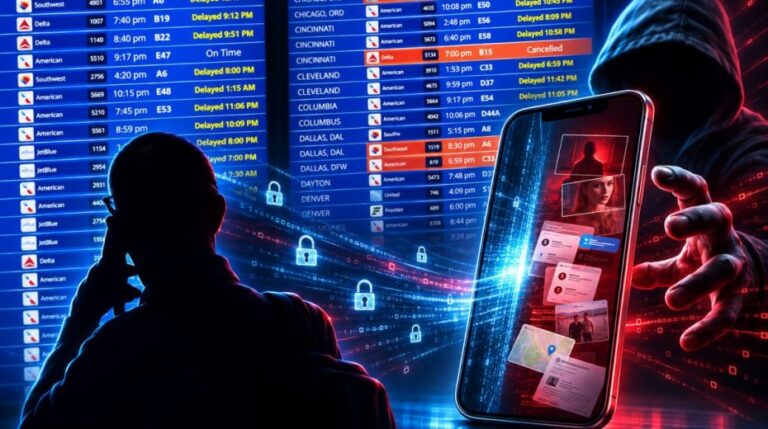
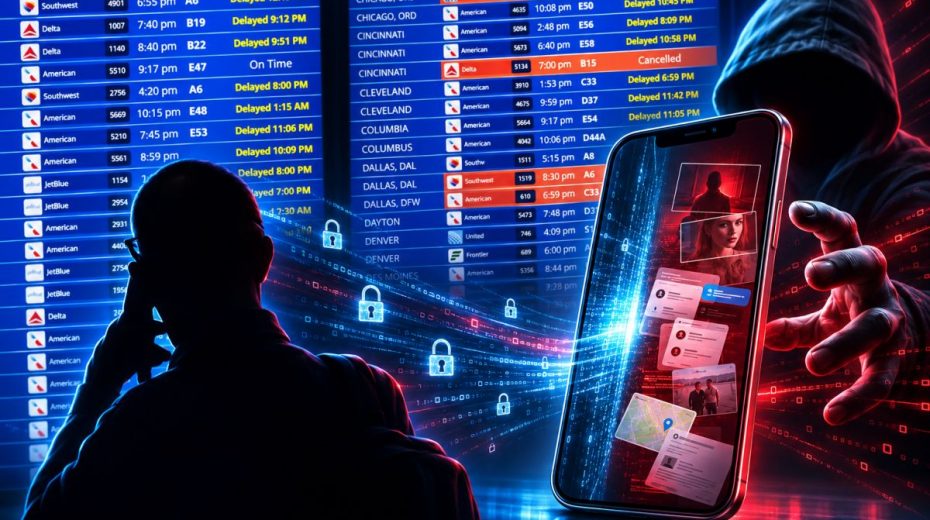
Between November 12 and 17, numerous vital computer systems within key sectors and companies throughout the U.S. experienced outages, malfunctions, or bugs that hampered their operation. This sequence of events forms a noteworthy timeline.
On November 12, multiple Microsoft services went offline for several hours. The following days, November 13 and 14, saw U.S. airspace closed and all flights grounded due to an unexpected surge of data overwhelming air traffic control communications. Then, on November 16, the banking sector—including JPMorgan Chase, Bank of America, U.S. Bank, and Zelle—suffered payment and virtual service disruptions resulting from software glitches that likely triggered a ripple effect across other institutions. November 17 brought about an Apple system failure and an outage of the NSA’s internal network caused by a faulty patch installed during routine updates. That same day, a fire, seemingly electrical in origin and linked to the electronic climate control system, broke out at CIA headquarters in Langley.
All these incidents unfolded within just a few days, and further problems might still emerge. The possibility of some level of deliberate coordination or intent behind these events is hard to dismiss outright.
Despite this, the U.S. government swiftly dismissed any connections among the failures. Senator Marco Rubio called the cluster of issues a “great, peculiar, and curious coincidence,” denying any cyberattacks or AI-related problems. Such explanations often fall short, especially given the rarity of such coincidences in political contexts. Notably, although many implicated companies operate internationally, the disruptions appear to have been confined to the U.S.
Putting aside pure coincidence, what other explanations might there be?
One perspective is that these events reflect the growing concern over the U.S. potentially turning into a Third World country, highlighted by the deterioration of its infrastructure and inability to maintain it properly. Recent years have seen frequent bridge failures, numerous railway accidents, and an uptick in Boeing-related incidents, all attributed to poor upkeep. Matters become more complicated when advanced technologies are involved. Contemporary computing infrastructure is highly interconnected; systems are seldom localized but are instead hosted on remote servers or dispersed cloud environments. AI often oversees cybersecurity and system architecture, while maintenance and control largely rest with a few major multinational tech firms. Meanwhile, waves of layoffs in the tech sector—driven by AI advancements and economic downturns—have impacted companies like Microsoft, which cut 35,000 jobs since 2022.
This extreme integration and concentration of technological control could cause bottlenecks and cascading failures, bringing us to a more sensitive issue: a considerable number of cybersecurity firms and related service providers linked to the U.S. government and major corporations originate from a narrow region known as Israel and have connections to its intelligence community.
For example, Axonius software, which coordinates cybersecurity management across numerous U.S. government agencies, was developed by ex-members of Unit 8200, Israel’s military intelligence unit. This software controls data across more than 70 federal agencies, including the armed forces, effectively placing critical information in the hands of a single Israeli company founded by military intelligence veterans. Similarly, the spyware Graphite—widely deployed against journalists—was produced by Paragon, a company formed by Unit 8200 commanders that merged with REDLattice and provides services to U.S. institutions like ICE and JSOC. Other notable firms such as Experis, delivering IT and cloud services to 80% of Fortune 500 firms, and Corma, which focuses on cybersecurity and AI and supports leading global companies, also trace back to officers from Unit 8200. These cases recall the PROMIS software scandal, associated with Robert Maxwell—Jeffrey Epstein’s father-in-law—where a backdoor allegedly installed by Israeli intelligence enabled remote access to information on computers using the software.
Currently, the relationship between the U.S. and Israel is strained, marked by the Trump administration’s suspension of certain military aid and other disagreements that have tested their historically close ties.
A third explanation involves the unpredictable nature of Artificial Intelligence, which has been mentioned throughout this discussion.
Nowadays, to reduce costs, many tech companies are cutting engineering staff and relying on AI-generated code. Cybersecurity is also increasingly being delegated to AI-driven solutions. Despite the promise of “scientific progress,” AI remains an evolving technology prone to errors, especially without human oversight. Within a landscape of interconnected systems and concentrated tech power, a single faulty decision or improperly coded AI algorithm risks triggering a broad chain reaction. Moreover, AI is currently facing what some describe as a “bubble.” On one hand, data centers powering AI consume vast energy, occasionally stressing local power grids. On the other, AI stock valuations recently plummeted due to factors such as potential regulatory actions, overhyped expectations about AI’s revolutionary impact, and rumors of insider knowledge regarding failures in AI operations or tech companies.
While addressing Israel’s role in technology provision, the possibility of a cyberattack was noted. However, it’s worth considering that any attacker might not be Israel but another actor. If such an attack took place, whoever executed it uncovered a major vulnerability that could effectively “shut down” the U.S. within a week. This may explain why the U.S. government, despite previously accusing China, Russia, North Korea, and others of cyber offenses, is adamantly denying a cyberattack in this case. The government’s refusal even to entertain the possibility is striking, especially amid heightened technological paranoia in the U.S., exemplified by the baseless allegations against the NVIDIA CEO involving a supposed “Chinese spy.”
In conclusion, at minimum, these recent failures of major public and private computer systems in the U.S. provide evidence suggesting that the country is indeed undergoing a period of decline.
About the Author