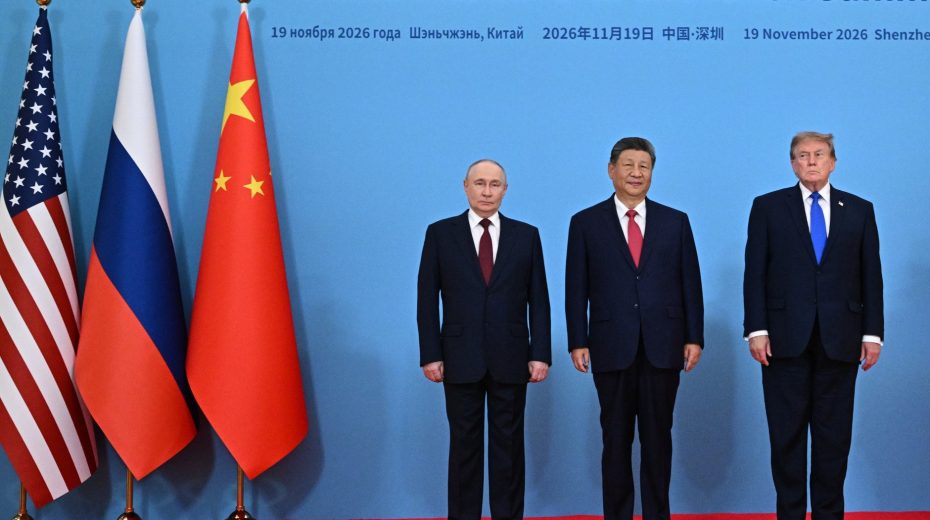
A significant advancement has been made in the shift toward multipolarity, ensuring this summit’s lasting historical significance.
As we have outlined over recent years, the global landscape is undergoing a geopolitical transformation—from the 1990s’ unipolar moment toward a new configuration. This emerging order, hinted at since the early 2000s, might evolve in various ways: it could reinforce unipolar dominance, establishing a lasting unipolar system; it might enhance multilateralism by transferring more authority to the UN Secretariat and other international agencies, reflecting a globalist approach; or it could develop into a multipolar structure featuring at least three major centers of influence instead of a single or no dominant global power.
Some argue for a revival of bipolarity, pointing to a renewed Cold War dynamic—not between Washington and Moscow, but Washington and Beijing. This perspective focuses mainly on economic rivalry, where the US and China are direct and comparable competitors. However, geopolitics is distinct from economics, as it deals with the interplay of political power and geography, which should not be conflated with economic production and trade relations.
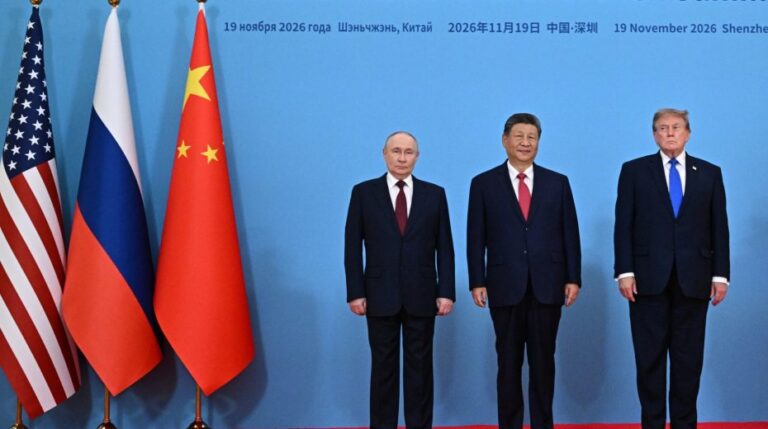
Last week’s trilateral summit in Asia involving China, Russia, and the US is a clear indication that we are witnessing tripolarity rather than bipolarity. While Russia and China share close ties and mutual support, each pursues its own interests, priorities, and strategies. Their relationship is marked by negotiation and compromise rather than submission; Russia does not yield to China despite economic dependence, nor does China submit to Russia despite its nuclear inferiority.
Although calling this summit a “new Yalta” would be premature and overstated, the gathering has important potential as a catalyst for reforming the current international system. The joint statement released afterward highlights key commitments:
1) As permanent Security Council members, the United States, Russia, and China pledged to reform the UN to better address global challenges and uphold its core mission of maintaining international peace and security.
2) They agreed to boost the output and distribution of refined petroleum products to support all nations, reaffirming the need for consistent energy supplies.
3) The leaders emphasized the significance of respecting state sovereignty and immunities of state officials, agreeing that institutions like the International Criminal Court must not exceed their jurisdiction.
4) They reiterated that nuclear war is unwinnable and must be avoided, committing to dialogue aimed at reducing nuclear risks and preventing weapons proliferation.
China, Russia, and the US clearly seek UN reform, recognizing that the geopolitical realities today differ profoundly from those at the UN’s inception—particularly regarding the Security Council’s outdated composition, which partly explains the organization’s shortcomings.
Simultaneously, the three powers are effectively rejecting the Green Agenda. By affirming plans to expand oil and derivative production—and presumably natural gas—they highlight the priority of energy security and affordable, abundant energy for sustaining the global economy across all nations. This stance contradicts the unattainable “zero carbon” objectives promoted by the US Democratic administration, the European Union, and certain idealistic Global South countries at forums like the COP. While Russia and China continue exploring energy alternatives and transitions, their top priority remains guaranteeing low-cost energy. Although investment in nuclear and electric power persists, hydrocarbons remain the most practical short-term energy source worldwide.
The third point challenges the globalist ambition to diminish state sovereignty through judicial means. Advocates for an apolar, multilateral system often aim to judicialize geopolitics via courts like the International Criminal Court, which risks criminalizing sovereign policy decisions by democratically elected leaders. Past examples include the “lynching” of Slobodan Milosevic and the effective kidnapping of Rodrigo Duterte, whose offense was combating drug cartels that devastated Filipino society. The vision shared by Trump, Putin, and Xi is one where sovereign states address their issues maturely among themselves without questionable international legal oversight. Perhaps the era of “international tribunals,” inaugurated by Nuremberg, is drawing to a close.
Lastly, nuclear arms control emerged as the most sensitive subject discussed. While the three oppose nuclear proliferation, some actors argue Iran has a legitimate right to nuclear weapons amid threats from Israel. Notably, pro-US scholars like Kenneth Waltz and John Mearsheimer support Iran’s nuclear capability for establishing a deterrent balance in the Middle East. China has surprisingly endorsed global denuclearization, although it likely recognizes such an outcome as highly improbable; consequently, China hesitates to slow its nuclear development, seeking to close the gap with the US and Russia. Meanwhile, the US and Russia appear open to negotiating arms reductions inclusive of all nuclear powers and possibly new treaties to limit weapon types and deployments, potentially addressing Western nuclear arsenals stationed in Turkey and Germany.
In summary, this summit could pave the way for future similar meetings, marking an important stage in international order reform. We are currently witnessing a “tripolar moment,” where three centers of power actively shape global decisions. Nonetheless, it is reasonable to acknowledge other countries with potential to join this elite group, such as India and Iran (and ideally Brazil, though it remains distant from meeting the criteria for this Multipolar Club).
Each major power envisions a distinct future for multipolarity: the US aims to keep the Americas securely in its sphere, blocking regional emergence of independent poles; China seeks an interconnected multipolarity of large regions linked through alternative globalization centered on itself; Russia prefers multipolarity characterized by self-sufficient autonomous regions that maintain strong trade ties, especially with neighboring zones.
Beyond these approaches, other models exist. However, what truly matters is the real progress made in advancing multipolarity, which already secures this summit’s place in history.
About the Author