DEI Doctors and Nuclear Engineers
In previous newsletters, we have expressed criticism regarding certain elements of President Trump’s foreign policy.
However, he deserves recognition for notable achievements domestically. We previously highlighted his efforts in simplifying the permitting procedures for drilling and mining operations.
Today, we turn our attention to another area where the President has made meaningful strides: reversing the adverse impacts of DEI and steering America back toward a meritocratic system.
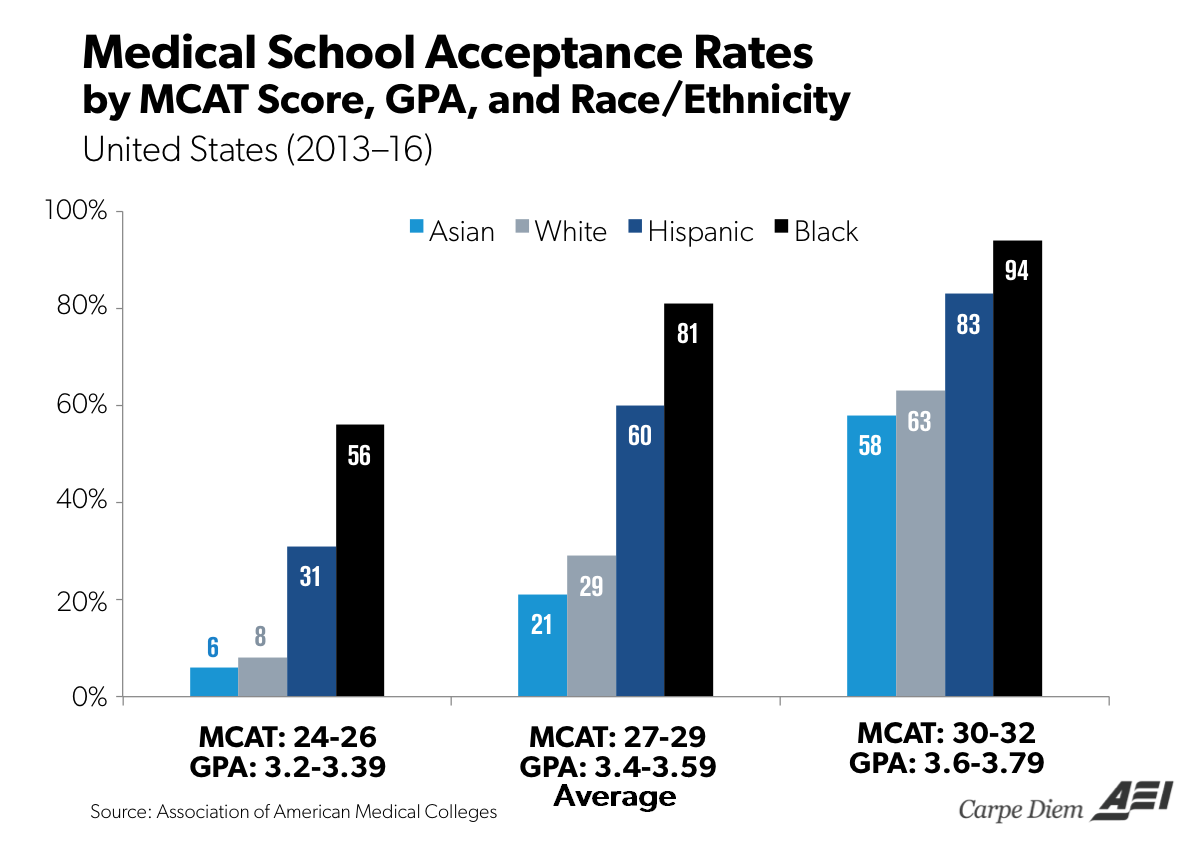
A few years ago, I encountered the chart below and was truly shocked. I hadn’t realized the problem had escalated to this extent.
The graph illustrates medical school acceptance rates in the U.S. broken down by race, categorized by MCAT scores and GPA.
Source: AEI
In the initial category, just 6% of Asians and 8% of White applicants with MCAT scores between 24-26 gain admission, compared to 31% of Hispanics and 56% of Black candidates with the same scores.
Even among the highest scorers, only 58% of Asians and 63% of Whites are accepted, whereas Hispanics and Blacks in this group see acceptance rates of 83% and 94%, respectively.
Is this the society we aspire to? One where race outweighs merit, especially in careers that often involve matters of life and death?
This issue is far from trivial. It influences the underlying motivations that drive our economy and society. Without realigning toward meritocracy, the future looks grim.
DEI Nuclear Workers
Across the Atlantic in the U.K., DEI policies are causing significant problems.
For instance, plans to construct small modular nuclear reactors (SMRs) aimed at addressing increasing energy demands are being hindered by DEI mandates.
As reported by The Times:
Once praised as the world’s fastest initiative of its kind, the tendering process for SMR development extended over two years and imposed additional demands to demonstrate “social value.”
Firms were instructed to complete up to 350 pages detailing how they would employ disadvantaged groups — including asylum seekers, who typically cannot work while their claims are processed.
…They were required to describe plans for creating jobs for people “who face barriers to employment,” encompassing “refugees, recent immigrants, or asylum seekers.”
The U.K. government is insisting that nuclear firms hire individuals “who face barriers to employment”?! These decision-makers clearly overlooked the hazards their social experiments might trigger.
Companies had to also present strategies to ensure 50% of their workforce are women, an unrealistic expectation. Women generally show less interest in industries like construction and nuclear. DEI advocates refuse to acknowledge genuine differences in career preferences between the sexes.
If a nuclear facility were being erected near you, wouldn’t you want only the most skilled and dedicated workers involved? Naturally, yes.
Can you fathom employing asylum seekers—who often lack thorough vetting and adequate skills—to build a nuclear plant? It’s sheer folly.
This bureaucratic burden caused the SMR bidding alone to drag on for two years and cost £22 million.
In the U.S., nuclear companies had also adopted DEI objectives before President Trump’s tenure. Fortunately, most DEI departments in these firms have since been closed. As we welcome a nuclear revival, my stance is clear: no DEI participation whatsoever.
Medical and nuclear careers illustrate how perilous DEI policies can be, but the issue extends to the entire economy.
Trump’s Efforts to Fix It
Though DEI originated as a well-meaning attempt to eliminate bias in hiring, it has turned into a catastrophic failure.
A meritless society loses its ethical foundation and becomes rife with favoritism. While discrimination should be avoided, DEI extremists have pushed it to dangerous extremes.
I don’t think DEI benefits those “helped” any more than it harms. When groups receive what feels like a free ride, motivation diminishes; they expect success without effort. Consequently, DEI might appear helpful at first but ultimately generates harmful incentive distortions leading to poor results.
Fortunately, dismantling DEI was among President Trump’s initial priorities after taking office. He ordered all government agencies to eliminate their diversity, equity, and inclusion programs.
He extended this directive to any institution or company relying heavily on government funding—including most universities, nonprofits, and businesses.
This milestone is significant. While results will take time to emerge, reinstating meritocracy promises tremendously positive impacts.
Much remains to be done, but this represents a promising beginning.
Whenever I grow frustrated with some of the Trump administration’s actions, I remind myself they are making meaningful progress in important areas. That alone is worth appreciating.
About the Author