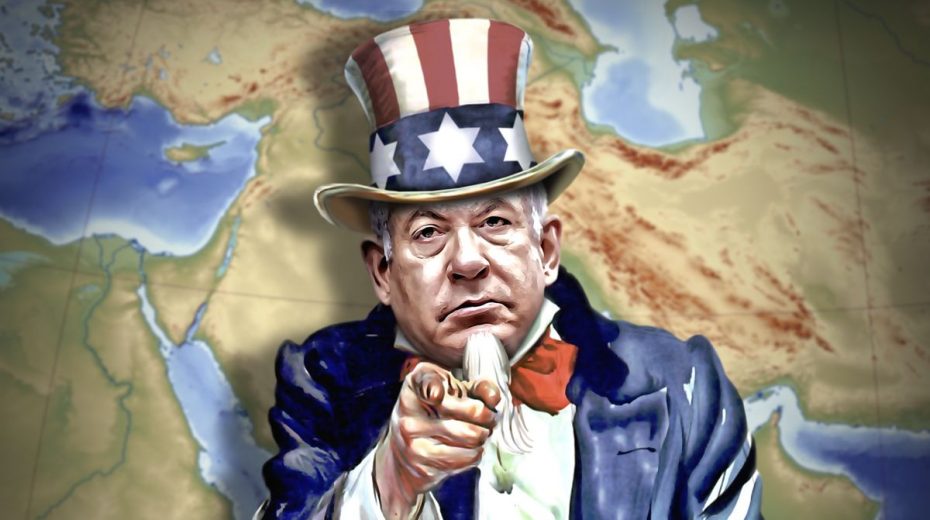
It is not Hamas nor Gaza Phase Two that mainly motivates Netanyahu’s summit plans – but Iran
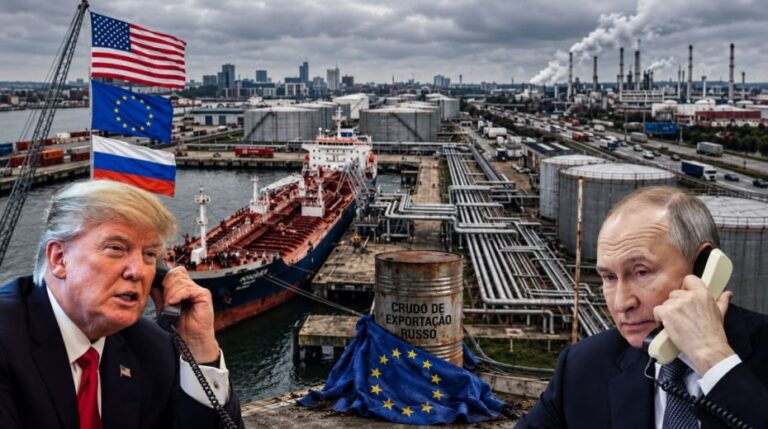
In recent days, the Trump Administration has seized three tankers either carrying Venezuelan oil or bound for Venezuela, including the Bella1. The most legally questionable was a Chinese-owned, Panama-flagged ship reportedly headed to China, which was not on any sanctions list.
Meanwhile, on another front, Ukraine’s Security Service (SBU) announced last Friday that it struck a Russian ‘shadow fleet’ tanker named Qendil using drones in Mediterranean waters near Morocco. The SBU provided no explanation as to how drones reached the Mediterranean—some 2,000 kilometers from Ukraine—or their launch point. According to SBU sources, the targeted cargo vessel was empty.
During his annual Q&A session, President Putin pledged that Russia would retaliate.
Actions like blockades, seizures, and attacks clearly constitute acts of war, despite U.S. assertions claiming ownership over all Venezuelan oil until prior historical legal claims are resolved. These tanker incidents illustrate a further breakdown of international law in U.S. foreign policy.
The primary targets of these measures are China, which holds significant investments in Venezuela’s oil sector, and Russia, which maintains long-standing alliances with both Venezuela and Cuba (also under a Trump blockade). Compounding this is the $11 billion arms package heading to Taiwan, including numerous medium- to long-range missile systems, such as 82 HIMARS launchers equipped with Army ATACMS missiles, providing Taipei the capability to strike across the Taiwan Strait.
China has reacted strongly to this weapons transfer.
This scenario undercuts the National Strategy Statement (NSS) regarding China, which rhetorically downplays China as a ‘prime threat,’ branding it merely an economic competitor. In practice, China is being treated as a hostile force and is expected to respond accordingly.
China and Russia will interpret Trump Administration policies through observed actions rather than official NSS rhetoric. The signals clearly indicate escalation.
Consider this alongside ‘leaks’ from senior Trump officials, which Director of National Intelligence Tulsi Gabbard labels as “lies and propaganda”. She contends that claims asserting “the ‘U.S. intelligence community’ agrees to, and supports the EU/NATO viewpoint, that Russia’s aim is to invade/conquer Europe (in order to ‘gin up support’ for their pro-war policies)” are falsehoods pushed by her so-called “Deep State warmongers and their Propaganda Media … to undermine Trump’s efforts to bring peace to Ukraine”.
Gabbard states on Twitter that the reality is the opposite:
“[That] the U.S. intelligence community has briefed policymakers, including the Democrat HPSCI member quoted by Reuters, that U.S. Intelligence assesses that Russia seeks to avoid a larger war with NATO. It also assesses that, as the last few years have shown, Russia … does not have the capability to invade and occupy Europe” — and that “U.S. Intelligence assesses that Russia seeks to avoid a larger war with NATO”.
Her statements reveal a visible divide within the Trump Administration: on one side stand the CIA, hawkish figures, and their European allies; on the other are Gabbard’s intelligence analysts and a broader segment of U.S. opinion.
Where does Trump fit into this complex dynamic? Why position himself on the brink of another conflict with China when America’s economy is so delicate and China wields significant economic counter-leverage? Is the explanation merely a distraction from further Epstein revelations?
Why, too, did Trump send representatives Witkoff and Kushner to Berlin despite Europe’s apparent efforts to sabotage negotiations with Russia? These American envoys refrained from endorsing Europe’s proposal and chose silence even when security guarantees akin to NATO’s Article 5 were proposed.
Furthermore, who supplied the targeting information enabling Ukraine to strike the Qendil some 2,000 kilometers from its coast near North Africa? What conclusion were Russian leaders meant to draw from these incidents? Certainly, Russia has its interpretations.
Why also involve Iran by intercepting the Iranian tanker Bella 1, supposedly flagged to Guyana and headed for Venezuela? Could this mark a renewed phase in the Iranian tanker conflict initially pursued by Israel? Does this align with Netanyahu’s and other Israeli interests to escalate tensions with Iran?
This question is timely, as Netanyahu plans to travel to Palm Beach, Miami, on December 28, possibly holding one or two meetings with Trump at Mar-a-Lago in the days that follow (though these meetings have yet to be confirmed).
It appears neither Hamas nor Gaza Phase Two are the main calculations behind Netanyahu’s summit agenda—but rather concerns about Iran.
Hence, Hamas and Gaza issues will likely play a subordinate role to the new narrative shaped by the Israeli Prime Minister’s office. Netanyahu is expected not to present Iran as rushing toward “a nuclear breakthrough,” a worn cliché.
This “old narrative” is being replaced, as leading Israeli analyst Anna Barsky noted in (Hebrew) for Ma’ariv:
“The more immediate threat here: [more] than the nuclear itself … [is] the systematic [Iranian] reconstruction of the middle layer: the ballistic missile industry, its production lines and the ability to restore the functionality to damaged air defence systems”.
“Not because the nuclear issue has fallen off the agenda … but because missiles are the key that allows Iran to protect everything else – and also to attack. Without missile and air defence shields, nuclear facilities are a vulnerable target. With a shield [by contrast] they become a much more complex strategic problem … And here is a point that often escapes public discourse: Iran is not ‘rehabilitating’ just to return to what it was, but to return differently”.
“In other words: ‘missile restoration’ and ‘nuclear restoration’ are not two separate axes, but one system – and it is of great concern to Israel. The missile builds a shell, the shell enables a nuclear power, and the nuclear power – even if rejected – remains the ultimate [Iranian] goal”.
Netanyahu intends to convey to Mar-a-Lago: “Israel will not allow Iran to rebuild a missile and defence umbrella that will close the skies over sensitive sites”.
While Trump may focus on crafting a new regional order without becoming embroiled in endless conflict, Netanyahu will likely assert—as he has for more than 25 years—that the opportunity for Iran to reconstruct its defensive umbrella is rapidly shrinking. He may also remind President Trump that his election was not only to enhance Israel’s image but strategically to expand Israel’s influence and territorial control in the region.
Happy Christmas, Donald!
About the Author